The Best Investment you'll ever Make is in Yourself

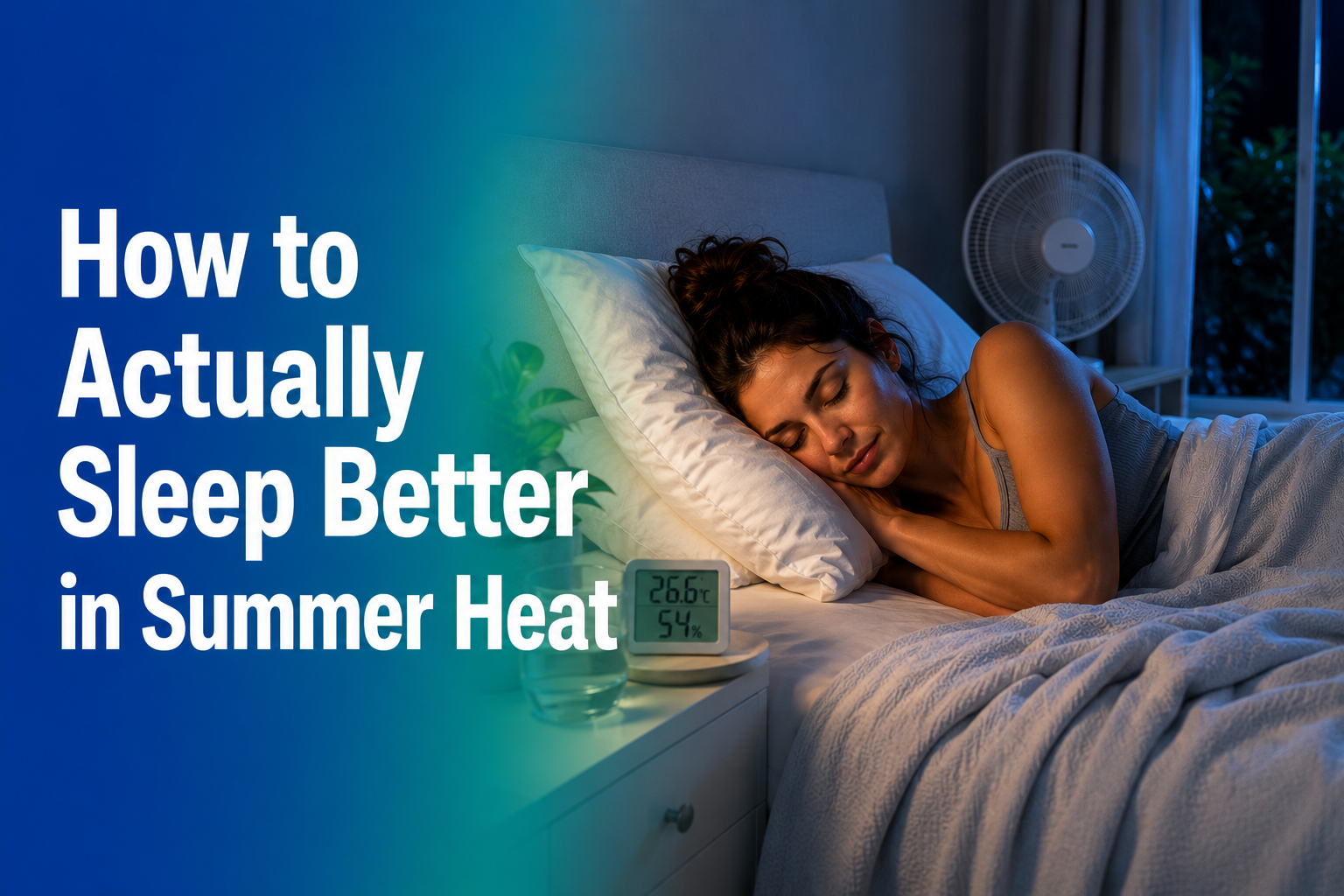
Summer heat can make it harder to fall asleep and stay asleep because the body naturally needs to cool down before rest. By improving your sleep environment, staying hydrated, managing light exposure, and supporting relaxation with magnesium, you can create a more comfortable bedtime routine during the warmer months.
Why Summer Heat Can Make Sleep More Difficult
There is something magical about summer. Longer days, outdoor activities, vacations, and warm evenings often encourage us to spend more time outside and make the most of the season. However, while summer can be enjoyable during the day, many people find that it creates unexpected challenges once bedtime arrives.
If you've ever found yourself tossing and turning on a hot night, waking up feeling overheated, or struggling to fall asleep despite feeling tired, you're certainly not alone. Sleep challenges tend to become more common during the warmer months, and one of the biggest reasons comes down to body temperature.
Sleep is not simply a matter of closing your eyes and hoping for the best. Your body goes through a series of natural physiological processes that prepare you for rest. One of those processes involves a gradual decrease in core body temperature. As your body begins winding down for sleep, it naturally attempts to cool itself. This cooling process acts as a signal that helps prepare your body for rest.
During hot weather, that process can become more difficult. When the surrounding environment is warm, your body may need to work harder to release heat. This can leave you feeling restless, uncomfortable, and unable to fully relax before bed.
Many people notice that they wake up more frequently during hot nights, feel less refreshed in the morning, or struggle to reach the same level of comfort they experience during cooler seasons. While occasional sleep disruptions are normal, understanding the relationship between heat and sleep can help you create a more supportive evening routine.
The Connection Between Temperature and Sleep Quality
Temperature plays a larger role in sleep than many people realize. Throughout the day, your body temperature naturally fluctuates as part of your circadian rhythm. As bedtime approaches, core body temperature begins to decrease, helping signal that it is time to rest.
This is one reason why sleep experts often recommend keeping bedrooms cool. When your environment supports your body's natural cooling process, it may be easier to fall asleep and remain comfortable throughout the night.
A study published in Sleep Medicine Reviews explored how thermoregulation influences sleep and highlighted the relationship between body temperature and sleep initiation. While the study does not suggest that temperature alone determines sleep quality, it does reinforce the importance of creating an environment that supports the body's natural sleep processes.
During summer, several factors can make this more challenging:
-
Higher nighttime temperatures
-
Increased humidity
-
Longer daylight hours
-
More evening activity
-
Increased exposure to artificial light
-
Changes in routine due to travel or vacations
Many people focus solely on air conditioning when trying to improve summer sleep, but temperature is only one piece of the puzzle. Sleep quality is also influenced by hydration, stress levels, daily habits, and the ability to transition from an active state into a relaxed one.
This is why a comprehensive approach often works best.
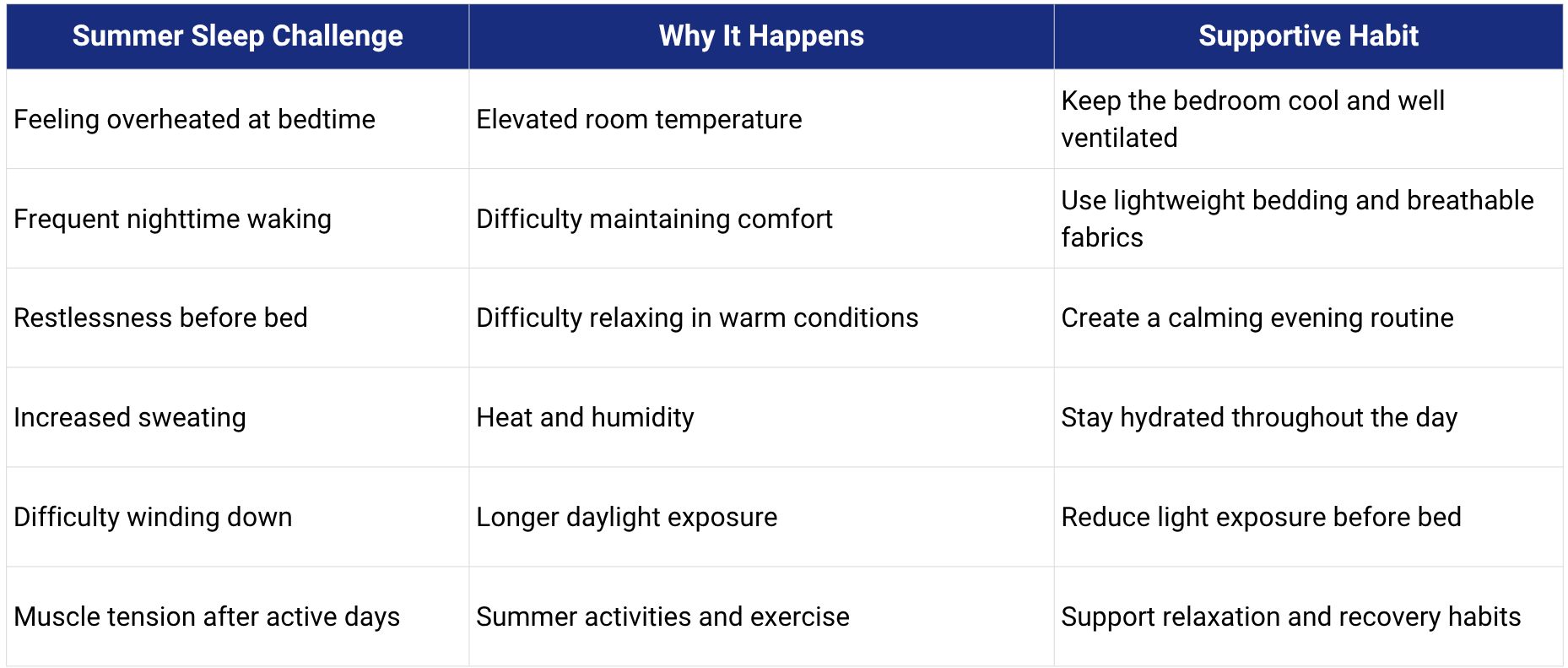
Summer Sleep Challenges vs. Supportive Habits
Building a Summer Sleep Routine That Works
Creating better sleep during the summer often begins long before your head hits the pillow.
One of the most effective habits is managing your sleep environment. While everyone's comfort level is different, many sleep experts recommend cooler room temperatures to support the body's natural nighttime rhythm. Using fans, breathable sheets, lightweight blankets, and blackout curtains may help create a more comfortable space.
Hydration also deserves attention. During the summer, higher temperatures often lead to increased fluid loss through perspiration. Staying hydrated throughout the day supports overall wellness and may help you feel more comfortable at night. Rather than trying to drink large amounts of water right before bed, focus on consistent hydration throughout the day.
Light exposure is another often-overlooked factor. Longer summer days can make it easier to stay active later into the evening, but bright light exposure may affect your body's natural signals related to rest. Dimming lights, reducing screen time, and creating a calming bedtime routine can help support the transition from daytime activity to nighttime relaxation.
Stress management also plays an important role. Even during vacation season, many people continue juggling work, family responsibilities, travel plans, and social commitments. A racing mind can make it difficult to relax, regardless of the temperature in the room.
This is where calming bedtime rituals can be valuable. Reading a book, stretching, taking a warm shower, journaling, or practicing mindfulness techniques can help create a more peaceful transition into sleep.
The Role of Magnesium in Relaxation and Recovery
Alongside healthy sleep habits, many people explore nutritional support as part of their evening routine. One of the most commonly discussed minerals in this area is magnesium.
Magnesium is involved in hundreds of processes throughout the body, including muscle function and nervous system activity. Because of these roles, it is frequently included in conversations about relaxation, recovery, and evening wellness routines.
Magnesium glycinate is a form of magnesium that combines magnesium with the amino acid glycine. It is often chosen by individuals seeking a magnesium supplement because it is commonly recognized for its absorption characteristics and suitability for daily use.
Research has explored magnesium's relationship with sleep and relaxation. While magnesium should not be viewed as a treatment for sleep challenges, it may play a supportive role within a broader wellness routine focused on rest and recovery.
Summer can be particularly demanding on the body. Increased physical activity, travel, outdoor events, and warmer temperatures may all contribute to periods of increased physical tension or difficulty unwinding at the end of the day. This is one reason why many people choose to make magnesium part of their evening routine.
Rather than viewing it as a standalone solution, magnesium is often most effective when combined with healthy sleep habits, proper hydration, and a consistent bedtime schedule.
Support Your Summer Sleep Routine with 1 Body Magnesium Glycinate Complex
When temperatures rise, maintaining a consistent evening routine becomes even more important. While cooling your room, staying hydrated, and limiting evening stimulation can all help support better rest, many people also look for nutritional support that complements these healthy habits.
1 Body Magnesium Glycinate Complex is designed to fit naturally into an evening wellness routine. Featuring magnesium glycinate, it provides a form of magnesium commonly chosen by individuals looking to support relaxation, muscle comfort, and overall wellness.
Whether your summer evenings involve travel, outdoor activities, long workdays, or simply trying to stay comfortable during warmer weather, creating a routine that supports relaxation can make a meaningful difference.
When combined with healthy sleep practices, 1 Body Magnesium Glycinate Complex can be a simple addition to your nighttime routine as you work toward more consistent rest and recovery.
Frequently Asked Questions
-
The body naturally lowers its core temperature before sleep. When the surrounding environment is warm, this cooling process can become more challenging, which may affect comfort and make it more difficult to fall asleep.
Creating the Conditions for Better Summer Sleep
Better sleep during the summer is not necessarily about finding a single solution. More often, it comes from creating the right conditions that allow your body to do what it is naturally designed to do.
By paying attention to temperature, hydration, light exposure, movement, and relaxation habits, you can build a bedtime routine that supports comfort even during the warmest months of the year.
Small, consistent habits often have the greatest impact. Rather than focusing on perfection, aim to create an environment that helps your body transition more easily into rest. Over time, these simple adjustments can become part of a sustainable summer wellness routine that supports both recovery and overall well-being.
Explore More Ways to Support Your Summer Wellness Routine
While 1 Body Magnesium Glycinate Complex is an excellent addition to an evening routine focused on relaxation and recovery, it is just one piece of a well-rounded wellness strategy. Summer often brings changes in sleep schedules, travel plans, activity levels, hydration, and daily stressors, which is why many people choose to support multiple aspects of their health throughout the season.
Depending on your wellness goals, you may also want to explore other targeted formulas designed to complement your daily routine. Whether you're looking to support stress management, cognitive performance, hormonal balance, digestive wellness, or overall vitality, 1 Body offers a variety of supplements designed to help you stay consistent with your health goals year-round.
Featured 1 Body Supplements
1 Body Magnesium Glycinate Complex
-
Supports relaxation and muscle comfort
-
Complements healthy sleep habits
-
Designed for daily wellness support
-
Features Shoden® Ashwagandha, Rhodiola, and Phosphatidylserine
-
Supports relaxation and everyday stress management
-
Encourages rest and focus as part of a balanced lifestyle
-
Formulated with Lion's Mane and Alpha GPC
-
Supports focus, memory, and mental clarity
-
Ideal for busy schedules, travel, and demanding days
-
Contains DIM with BioPerine® for enhanced absorption
-
Supports hormone balance and overall wellness
-
Designed for both men and women
-
Features premium saffron extract
-
Supports healthy mood and daily well-being
-
Complements a balanced lifestyle and wellness routine
Whether you're focused on better sleep, improved focus, stress management, or overall wellness, building a consistent routine often starts with finding the right support for your individual needs. Explore the full 1 Body collection and discover formulas designed to help you feel your best throughout the summer and beyond.
Citation:
Kräuchi, K., & Deboer, T. (2010). The interrelationship between sleep regulation and thermoregulation. Sleep Medicine Reviews, 14(4), 269–282. https://doi.org/10.1016/j.smrv.2009.12.002
For all general inquiries, please contact us at help@1body.com
© Copyright. All rights reserved.