The Best Investment you'll ever Make is in Yourself


A simple 20-minute walk may help support circulation, mood, muscle comfort, and a calmer nervous system without requiring an intense workout. When paired with hydration, stretching, and magnesium support, walking can become an easy daily habit that helps your body transition from stress and stiffness toward recovery and rest.
Why Walking Works When Your Body Feels Stressed or Stiff
A 20-minute walk can feel almost too simple to matter, especially when wellness advice often makes progress sound complicated. Many people assume that if a workout is not intense, sweaty, or exhausting, it is not doing much. In reality, gentle movement can be one of the most approachable ways to help the body shift out of a tense, sedentary, or mentally overloaded state.
When you have been sitting for hours, moving through a stressful day, or feeling physically tight, your body may not need a punishing workout. It may need circulation, fresh air, steady breathing, and a chance to loosen up. Walking gives you all of that in a way that feels natural and easy to repeat.
This is why walking is such a helpful daily wellness habit. It does not require a gym, special equipment, or a long time commitment. You can walk around your neighborhood, through a park, during a lunch break, or even indoors on a busy day. The benefit is not only in the steps; it is in the gentle rhythm that helps your body and mind feel less stuck.
A short walk can also create a helpful pause between one part of the day and the next. It can separate work from home, stress from dinner, or screen time from bedtime. That small transition may help you feel more grounded, especially when life feels rushed.
What Happens During a 20-Minute Walk
During the first few minutes of walking, your body begins moving out of stillness. Your heart rate may rise slightly, your breathing becomes more regular, and blood flow increases to working muscles. This does not have to feel intense. In fact, a comfortable pace is often ideal when your goal is stress support, muscle relaxation, and recovery.
As you continue walking, your muscles warm up, and your joints move through a natural range of motion. This can help reduce the feeling of stiffness that often builds after sitting, driving, or standing in one position for too long. A walk also encourages a steadier breathing pattern, which may help the body feel less braced and more relaxed.
Walking may also support mood. A study published in Health Psychology explored exercise duration and mood state, suggesting that even shorter bouts of exercise can positively influence how people feel. This does not mean a walk is a treatment for stress, anxiety, or sleep concerns, but it does support the idea that brief, manageable movement can be a meaningful part of a daily wellness routine.
The best part is that the shift can happen quickly. You may leave the house feeling tense or foggy and return feeling a little lighter, clearer, or more settled. That change may not be dramatic every time, but it is often enough to help you make better choices for the rest of the day.
How Walking Supports Muscle Relaxation and Evening Rest
Muscle tension is often linked to more than physical activity. Stress, posture, long screen sessions, dehydration, and poor sleep can all make the body feel tight. Walking helps because it gently activates the muscles without placing heavy demand on them, which may support circulation and help the body release some of that built-up tension.
A short walk after work or dinner can also help your day wind down more smoothly. Instead of going straight from emails, errands, or chores into bed, walking gives your nervous system a softer landing. The combination of gentle movement and steady breathing can make the evening feel less abrupt and more intentional.
This is especially helpful for people who feel tired but restless at night. Sometimes the body is physically tired, but the mind is still carrying the speed of the day. Walking will not solve every sleep issue, but it can become one of several calming cues that tell your body it is safe to slow down.
Recovery also depends on the nutrients your body has available. Muscles need hydration, minerals, and rest to feel their best. Magnesium is often included in wellness routines because it supports normal muscle function, bone health, and relaxation, which makes it a natural companion to gentle movement habits.
A 20-Minute Walk at a Glance
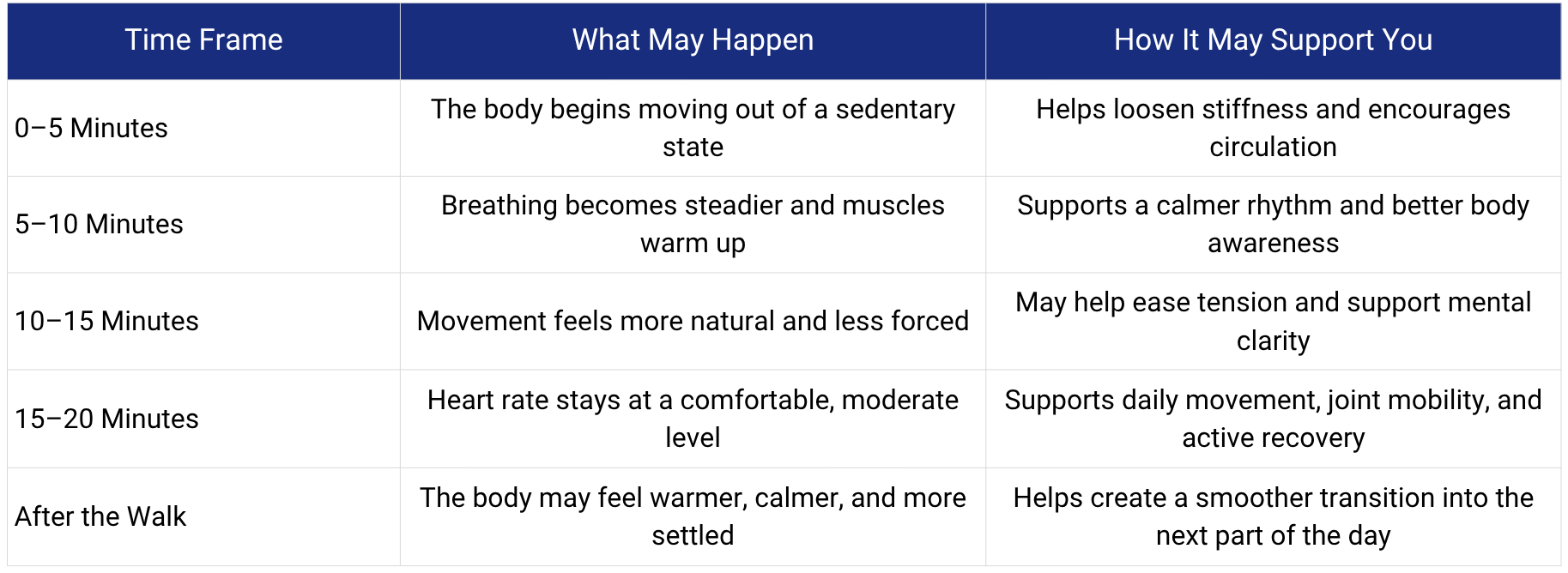
This timeline is not a strict rule, but it shows why a short walk can be surprisingly useful. The goal is not to push hard; the goal is to help your body move, breathe, and reset.
Simple Ways to Make Walking Feel Easier and More Restorative
The easiest way to build a walking habit is to remove the pressure. You do not need to hit a certain speed, distance, or step count for the walk to matter. A relaxed pace still supports movement, circulation, and a better transition out of stress.
Try walking at the same time each day so the habit becomes automatic. A morning walk can help you feel more awake, a midday walk can break up screen time, and an evening walk can help you shift toward rest. The best time is the one you can repeat consistently.
You can also make the walk feel more restorative by paying attention to your breathing. Breathe through your nose when comfortable, relax your shoulders, and let your arms swing naturally. If your mind is busy, notice simple things around you, such as the temperature, trees, sounds, or the rhythm of your steps.
Hydration matters too, especially if you are walking in warm weather or after exercise. A glass of water before or after your walk can support the routine. If your muscles often feel tight at night, pairing movement with mineral support may also help create a more complete recovery plan.
Support Active Recovery with 1 Body Magnesium Bisglycinate
Once walking becomes part of your routine, it makes sense to support the body from the inside as well. 1 Body Magnesium Bisglycinate is designed for people who want high-absorption magnesium support for muscle function, bone health, relaxation, and restful sleep routines. It fits naturally alongside gentle walking because both support a calmer, more recovery-focused lifestyle.
Magnesium bisglycinate is often chosen by people who want a gentle magnesium option that can be included consistently. After a walk, stretch, or long day on your feet, magnesium support can help round out your evening routine. It is not meant to replace hydration, movement, or sleep hygiene, but it can support the foundation your body uses to recover.
1 Body Magnesium Bisglycinate is especially helpful for adults who want a simple way to support muscles and rest without adding complicated steps. Paired with a 20-minute walk, a calm evening routine, and steady hydration, it can help you build a wellness rhythm that feels realistic and easy to maintain.
Frequently Asked Questions
-
Yes, a slow walk can still support circulation, mobility, and a calmer daily rhythm. The key is comfortable movement that you can repeat consistently.
Small Walks Can Support a Calmer Daily Rhythm
A 20-minute walk may be simple, but that is exactly what makes it powerful. It is easy to start, easy to repeat, and gentle enough to support the body without adding more stress. Whether you walk to clear your head, loosen tight muscles, support circulation, or create a smoother evening transition, the habit can become a dependable part of your wellness routine.
The most supportive routines are often built from small, steady choices. Walking, stretching, drinking water, eating nourishing meals, and supporting mineral balance can all work together to help you feel more grounded. When your body has both movement and recovery support, it becomes easier to move through the day with more comfort and calm.
1 Body Magnesium Bisglycinate
1 Body Magnesium Bisglycinate is made for adults who want gentle, high-absorption magnesium support for daily recovery, muscle comfort, bone health, and relaxation. It pairs naturally with walking, stretching, and evening wind-down habits to help support a more complete wellness routine.
Benefits include:
-
Supports healthy muscle function
-
Helps support bone health
-
Promotes relaxation as part of a balanced lifestyle
-
Supports restful sleep routines
-
Pairs well with walking, stretching, and active recovery
-
High-absorption magnesium bisglycinate formula
-
Convenient for consistent daily use
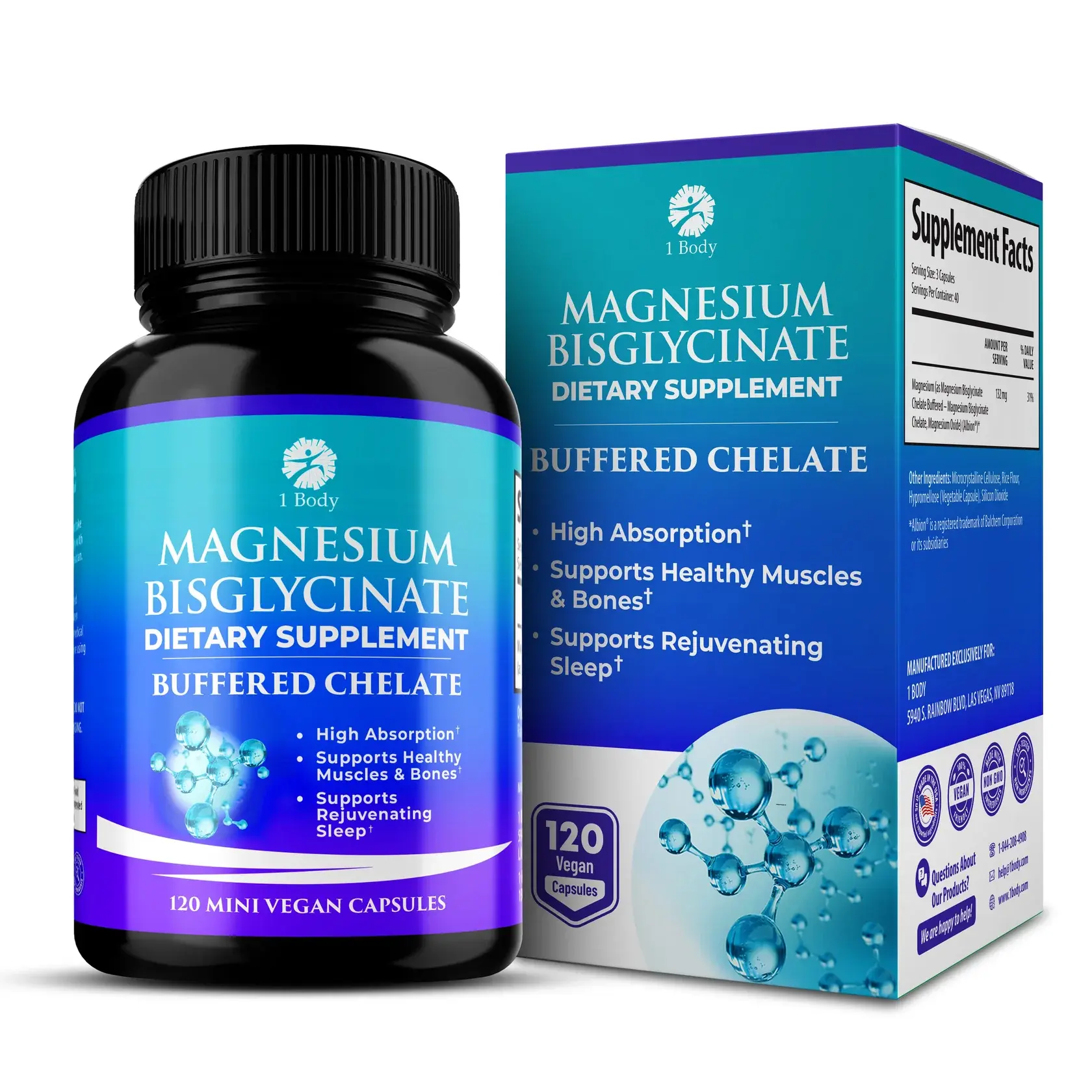
Choosing 1 Body Magnesium Bisglycinate is a simple way to support your body after daily movement. If you are building a routine around calmer evenings, muscle recovery, and better rest habits, this supplement can help make that routine feel more complete.
Citation
Hansen, C. J., Stevens, L. C., & Coast, J. R. (2001). Exercise duration and mood state: How much is enough to feel better? Health Psychology, 20(4), 267–275. https://doi.org/10.1037/0278-6133.20.4.267
For all general inquiries, please contact us at help@1body.com
© Copyright. All rights reserved.