The Best Investment you'll ever Make is in Yourself


Fall is a good time to shift toward warm, satisfying meals built around fiber-rich carbohydrates, protein, healthy fats, vegetables, and consistent hydration. Soups, root vegetables, whole grains, legumes, warming spices, and simple meal routines can support everyday energy and digestive wellness, while thoughtfully chosen supplements may complement—not replace—a balanced diet.
As temperatures cool and daylight hours become shorter, it is common for food preferences and daily routines to change. Crisp salads and iced drinks may lose some of their appeal, while soups, oatmeal, roasted vegetables, herbal tea, and warm grain bowls suddenly feel much more satisfying. That seasonal shift can be useful because warming meals often make it easier to build comforting, nutrient-dense combinations that support steady energy and help you stay consistent with your nutrition.
Fall energy support is less about finding one magical food and more about creating meals that keep you nourished through increasingly busy days. A breakfast with protein and whole grains, a lunch with vegetables and beans, or a warm dinner built around roasted root vegetables and a satisfying protein source can offer a steadier foundation than relying on repeated coffee refills or irregular snacks.
Digestive wellness can also become more noticeable as routines change. Travel ends, school schedules return, holiday foods begin appearing, and activity levels may shift. Rather than trying to “reset” the body with restrictive plans, it is usually more useful to focus on regular meals, enough fiber, adequate fluids, and foods that genuinely feel good to eat.
Why Your Food Routine Often Changes in Fall
Seasonal eating is influenced by much more than temperature. Daylight, schedule, activity, sleep, stress, and food availability all change through the year, and together they can shape appetite and meal timing.
During summer, people often eat later, spend more time outside, and choose lighter meals because of the heat. When fall arrives, mornings can become more structured and evenings may feel shorter, which often makes warm, familiar meals more appealing.
This does not mean the body suddenly requires a completely different diet. The same basic principles still apply: enough protein, plenty of plant foods, sources of fiber, healthy fats, and regular hydration. What can change is how those foods are prepared and how comfortably they fit into your routine.
For example, berries and yogurt may become oatmeal with nuts and fruit. A cold grain salad may become a warm quinoa bowl with roasted squash. Raw vegetables may shift toward soups, stews, or sheet-pan dinners. These are not “better” simply because they are warm, but they can make balanced eating feel easier during cooler months.
One study published in The American Journal of Clinical Nutrition found that greater dietary fiber intake was associated with aspects of gut microbial diversity and composition. The study does not mean that one high-fiber meal changes gut health overnight, but it supports the broader idea that fiber-rich foods can be an important part of a varied dietary pattern that nourishes the gut microbiome.
That is especially relevant in fall because many seasonal foods—such as oats, beans, lentils, squash, apples, pears, and root vegetables—can help increase dietary variety and fiber intake without making meals feel overly complicated.
Build Fall Meals Around Steady, Satisfying Energy
The easiest way to support steadier daily energy is to build meals that are satisfying enough to carry you through the next few hours. That usually means combining more than one food group rather than relying heavily on a single source of carbohydrates.
Start with protein. Eggs, fish, poultry, tofu, Greek yogurt, cottage cheese, beans, lentils, or another preferred protein source can help make meals feel more complete. Then add a fiber-rich carbohydrate such as oats, brown rice, quinoa, potatoes, sweet potatoes, beans, or whole-grain bread.
Healthy fats can round things out. Nuts, seeds, avocado, olive oil, tahini, and fatty fish add richness and may help meals feel more satisfying. Finally, add vegetables or fruit for color, texture, vitamins, minerals, and plant compounds.
A warm breakfast might be oatmeal with chia seeds, walnuts, berries, and yogurt. Lunch could be lentil soup with whole-grain bread and a side salad. Dinner might be roasted sweet potatoes, sautéed greens, salmon, and a drizzle of olive oil.
None of these meals needs to be perfect. The goal is simply to avoid the cycle of skipping meals, relying on caffeine, and then becoming so hungry later that it feels difficult to make a balanced choice.
It can also help to prepare components rather than full recipes. Roast a tray of vegetables, cook a pot of quinoa, wash greens, or prepare a soup that lasts several days. A few ready-to-use ingredients can make a warm, balanced meal much easier to assemble.
Support Digestion Without Overcomplicating It
Digestive wellness is often framed as though the digestive system needs constant “cleansing” or stimulation, but for most people the basics are more useful. Regular meals, dietary fiber, adequate fluids, movement, and a varied diet all support normal digestion.
Warming foods can be pleasant and comforting, but they should not be promoted as inherently easier to digest for everyone. Some people tolerate raw foods well year-round, while others simply prefer cooked foods when the weather cools.
Cooked vegetables may feel gentler for some people because their texture is softer. Soups and stews also make it easy to combine vegetables, legumes, whole grains, and fluids in one meal. That can be especially helpful during weeks when your schedule becomes busier.
Aromatic spices such as ginger, cinnamon, turmeric, cumin, fennel, and black pepper can add flavor and make seasonal meals feel more satisfying. It is safer to think of them as culinary ingredients that add variety and plant compounds rather than as tools that “stimulate digestion” or guarantee better circulation.
Fiber deserves special attention. It is found in plant foods such as vegetables, fruits, legumes, nuts, seeds, and whole grains. Increasing fiber gradually may be more comfortable than making a sudden jump, especially if your usual diet is lower in plant foods.
If certain foods consistently cause pain, severe bloating, diarrhea, constipation, or another persistent digestive symptom, a healthcare professional can help determine whether something else is contributing. Food-related discomfort should not automatically be blamed on the season.
Hydration Still Matters When the Weather Cools
One of the easiest habits to overlook in fall is hydration. Hot weather naturally reminds people to drink more, while cooler air may make thirst feel less noticeable.
Water is still important, and warm beverages can make regular fluid intake easier. Unsweetened herbal tea, warm water with lemon, soups, and broths can all contribute to daily fluid intake.
Broths are useful because they are comforting and versatile, but they should not be described as healing the gut lining or providing guaranteed digestive benefits. Depending on how they are prepared, they may contain protein, minerals, sodium, and fluid, making them a convenient part of a meal rather than a treatment.
It is also worth watching caffeine. A second or third coffee may feel tempting when afternoons become darker, but too much caffeine later in the day can interfere with sleep for some people. Poor sleep can then make next-day energy feel even more difficult.
A simple rule is to support energy with food, hydration, movement, and rest first, then use caffeine as something you enjoy rather than something you depend on to compensate for skipped basics.
A Simple Fall Food and Wellness Matrix
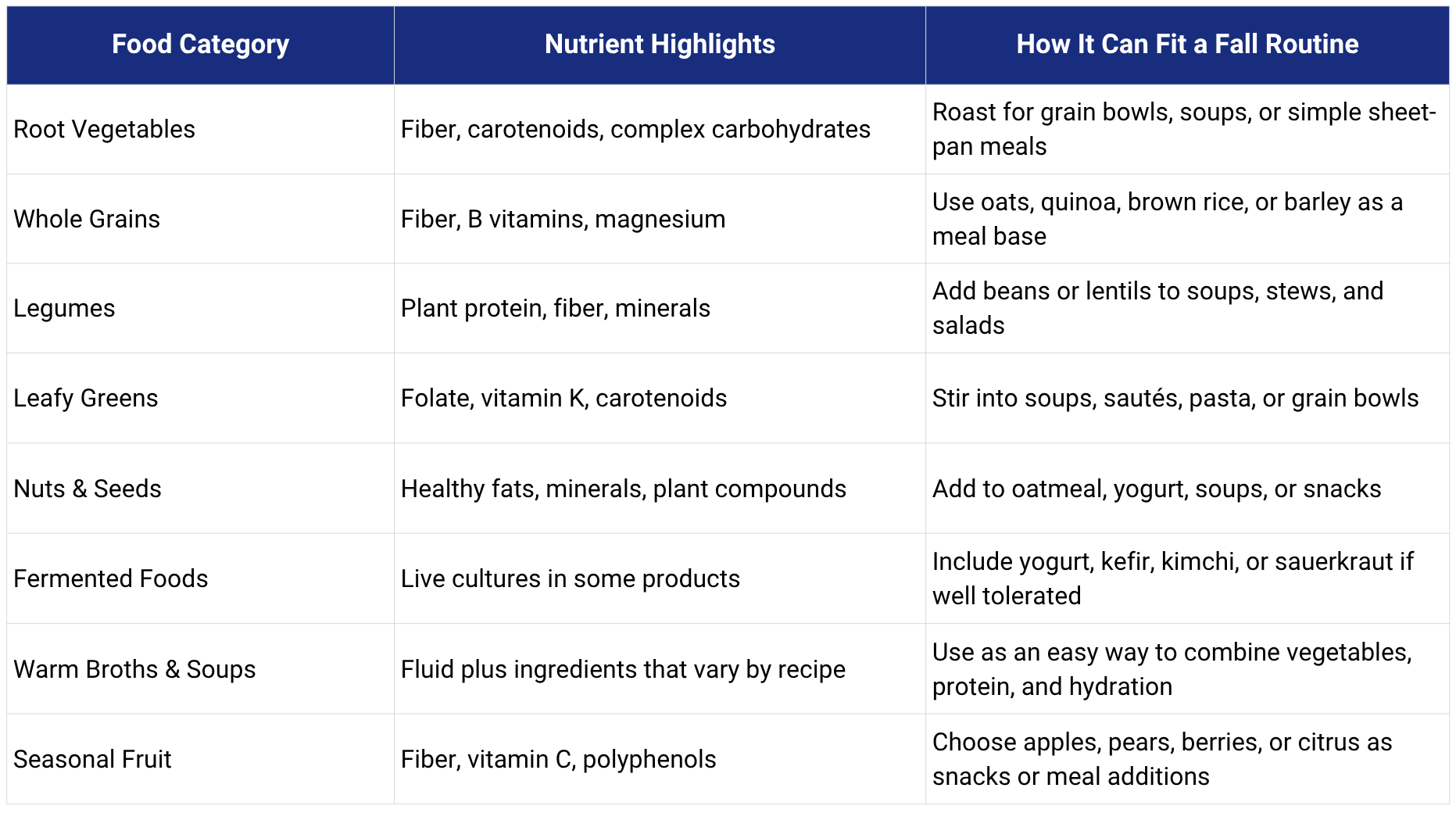
A matrix like this works because it focuses on food patterns rather than rigid rules. You can mix and match according to your preferences, dietary needs, and schedule.
Where Targeted Nutritional Support May Fit
After a consistent foundation of whole foods, hydration, movement, and sleep is in place, some adults choose dietary supplements to complement their routine.
1 Body Probiotics 60 Billion CFUs is designed to provide targeted digestive wellness support with multiple probiotic strains, along with prebiotics, digestive enzymes, and zinc. A probiotic supplement should not be presented as a cure for bloating, digestive disorders, or immunity concerns, but it may fit the routine of someone looking for additional microbiome-focused nutritional support.
1 Body Hair, Skin & Nails takes a different approach by providing a broad blend of vitamins, minerals, and botanical ingredients selected for beauty-from-within wellness. Its formula includes biotin, B vitamins, vitamins A, C, D, and E, zinc, horsetail extract, and saw palmetto, making it a natural companion to a nutrient-dense diet during a season when colder air and changing routines may make hair, skin, and nail care feel more important.
These two products can be positioned together because they support different parts of the same wellness story. One focuses on digestive and microbiome support, while the other complements nutritional support for hair, skin, and nails.
Neither product should replace balanced meals, medical care, or professional evaluation for persistent digestive, skin, hair, or nail concerns. Anyone who is pregnant or breastfeeding, takes medication, has a diagnosed health condition, or is preparing for surgery should review supplement use with a qualified healthcare professional.
Frequently Asked Questions
-
Shorter daylight hours, changing schedules, reduced activity, sleep disruption, and inconsistent meals may all influence energy. Persistent or worsening fatigue should be discussed with a healthcare professional rather than assumed to be seasonal.
Let Fall Food Feel Nourishing, Not Complicated
Fall is a natural time to make meals warmer, slower, and a little more comforting, but seasonal nutrition does not need to become another complicated wellness project. The most useful changes are often simple: cook a pot of soup, roast vegetables for the week, prepare oatmeal in the morning, keep water nearby, and make sure each meal contains enough protein and fiber to feel satisfying.
These small choices can support a more consistent rhythm as schedules become busier and daylight becomes shorter. They can also make it easier to maintain digestive wellness without relying on restrictive plans, cleanses, or exaggerated promises.
Use the season as an opportunity to add variety rather than remove foods unnecessarily. Try a new whole grain, rotate different beans, use seasonal vegetables, or add fermented foods if you enjoy and tolerate them.
Most importantly, listen to your body. If digestive symptoms, fatigue, hair loss, skin changes, or another concern becomes persistent, uncomfortable, or disruptive, seek professional guidance. Seasonal habits can support everyday wellness, but they should never be used to explain away symptoms that deserve a closer look.
1 Body Probiotics 60 Billion CFUs and 1 Body Hair, Skin & Nails
1 Body Probiotics 60 Billion CFUs and 1 Body Hair, Skin & Nails offer two complementary ways to support a well-rounded fall wellness routine. The probiotic formula focuses on digestive and microbiome support, while Hair, Skin & Nails provides a broad range of vitamins, minerals, and botanicals selected to complement beauty-from-within nutrition.†
Product features and wellness-supporting qualities include:
-
Probiotics 60 Billion CFUs provides a multi-strain probiotic blend
-
Includes prebiotics to complement probiotic support
-
Includes digestive enzymes
-
Includes zinc
-
Designed to support digestive wellness and gut microflora balance†
-
Hair, Skin & Nails features a 26-ingredient formula
-
Includes biotin and a range of B vitamins
-
Provides vitamins A, C, D, and E
-
Includes zinc, horsetail extract, and saw palmetto
-
Designed to support normal hair, skin, and nail wellness†
-
Convenient options for adults building a more complete seasonal nutrition routine

Together, these products may be a thoughtful choice for adults who want to complement nutrient-dense fall meals with targeted digestive and beauty nutrition. They are best used alongside varied whole foods, hydration, movement, sleep, and appropriate professional care rather than as substitutes for those foundations.
†These statements have not been evaluated by the Food and Drug Administration. These products are not intended to diagnose, treat, cure, or prevent any disease.
Reference
Tap, J., Furet, J.-P., Bensaada, M., Philippe, C., Roth, H., Rabot, S., Lakhdari, O., Lombard, V., Henrissat, B., Corthier, G., Fontaine, E., Doré, J., & Leclerc, M. (2015). Gut microbiota richness promotes its stability upon increased dietary fibre intake in healthy adults. Environmental Microbiology, 17(12), 4954–4964. https://doi.org/10.1111/1462-2920.13006
For all general inquiries, please contact us at help@1body.com
© Copyright. All rights reserved.