The Best Investment you'll ever Make is in Yourself

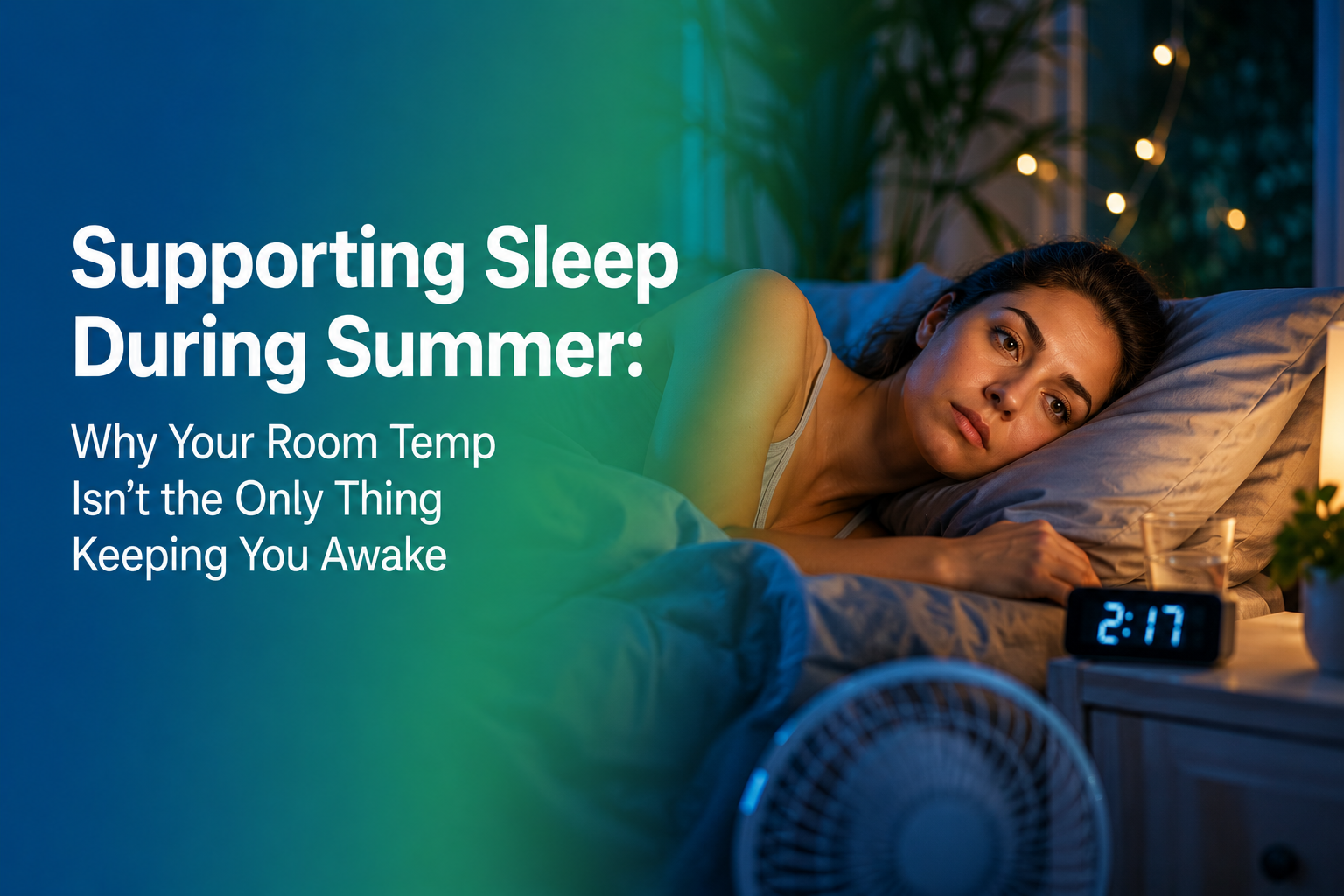
Struggling with summer restlessness? A cool room can help, but your body’s internal temperature rhythm, hydration, mineral balance, and nervous system relaxation also play a role. Magnesium bisglycinate may help support a calmer nighttime routine when summer heat makes sleep feel harder.
When summer heat hits, most people immediately blame the bedroom. The AC is not cold enough, the fan is not strong enough, the sheets feel too heavy, and every small movement feels warmer than it should. While your sleep environment absolutely matters, it is not the only reason you may feel restless at night. Your body is also working behind the scenes to regulate temperature, manage stress, stay hydrated, and shift from daytime alertness into nighttime relaxation.
This is why summer sleep support is about more than turning down the thermostat. A cooler room can make bedtime more comfortable, but your internal “wind-down” process matters just as much. If your body feels tense, depleted, overstimulated, or unable to settle, you may still toss and turn even in a well-cooled room. That is where nutrients like magnesium become part of the bigger conversation around relaxation, muscle comfort, and healthy sleep habits.
Why Summer Nights Can Feel So Restless
Hot weather can make sleep feel lighter, shorter, and more interrupted because your body has to work harder to stay comfortable. During the evening, your body naturally begins preparing for rest by gradually lowering core body temperature. This cooling process helps signal that it is time to slow down. When your environment stays warm and humid, that process can feel less smooth, especially if your bedroom traps heat or your bedding does not breathe well.
There is also the issue of summer routines. Longer daylight hours, later dinners, travel, social events, screen time, and inconsistent schedules can all shift your normal sleep rhythm. Even if you feel physically tired, your nervous system may still feel switched on. That combination of heat, stimulation, and routine disruption can make it harder to drift off comfortably.
For many people, summer restlessness shows up in small but frustrating ways. You may feel sleepy on the couch, but suddenly alert once you get into bed. You may wake up around 2 or 3 a.m. feeling warm and uncomfortable. You may feel like you slept, but not deeply enough to wake up refreshed. These patterns do not always mean something is “wrong”; they may simply mean your body needs more consistent support during a season that naturally places extra stress on your sleep routine.
Your Body Has Its Own Internal Cooling System
A comfortable bedroom helps, but your body also relies on internal temperature regulation. Before sleep, the body typically shifts heat away from the core and toward the skin. This is one reason warm hands and feet can sometimes make it easier to feel sleepy, while an overheated core can make you feel restless. Summer heat can interfere with that balance because your body is already trying to cool itself down throughout the day.
Hydration plays a role here, too. When you sweat more, you lose fluids and electrolytes. If you are not replenishing consistently, you may feel more tense, sluggish, or uncomfortable at night. This does not mean you need to overdrink water before bed, which can lead to bathroom wakeups, but it does mean your daytime hydration habits matter. A steady approach to fluids and mineral-rich foods can help support overall comfort.
Your nervous system is another important part of the equation. When your body feels physically stressed from heat, poor sleep, or a packed schedule, it may be harder to shift into a relaxed state. You might notice more racing thoughts, body tension, or the feeling that you are tired but not calm. That is why summer sleep support should include both external habits, like cooling the room, and internal habits, like supporting relaxation and mineral balance.
The Magnesium Connection During Hot Weather
Magnesium is an essential mineral involved in many normal body processes, including muscle function, nerve signaling, and relaxation pathways. It is often discussed in relation to nighttime routines because it plays a role in helping the body maintain a calmer state. During summer, when sweating, stress, and disrupted routines are more common, paying attention to magnesium intake can be a practical part of overall wellness.
Magnesium is found in foods like leafy greens, nuts, seeds, legumes, and whole grains, but many people do not consistently eat enough magnesium-rich foods every day. On busier summer days, meals can become more irregular, lighter, or more convenience-based, which may make nutrient consistency harder. This is one reason some people add a magnesium supplement to their evening routine.
Magnesium bisglycinate is a popular form because it is magnesium bound to glycine, an amino acid associated with calming support. This form is often chosen by people who want a gentler option compared with certain other magnesium forms. A randomized, double-blind, placebo-controlled study in adults reporting poor sleep quality found that magnesium bisglycinate supplementation was associated with modest improvements in insomnia severity compared with placebo, though the researchers noted that more research is still needed and future studies should include longer durations and objective sleep measures.
That is an important distinction: magnesium bisglycinate should not be framed as a cure or guaranteed sleep solution. It is better understood as a supportive nutrient that may fit into a consistent nighttime routine alongside cooling strategies, better hydration, reduced screen exposure, and a regular sleep schedule.
Magnesium Bisglycinate vs. Other Magnesium Forms
Not all magnesium supplements feel the same in the body. Some forms are commonly used for general magnesium intake, while others are known for different tolerability or digestive effects. Magnesium bisglycinate is often preferred for evening use because it is generally considered gentle and well-suited for people who want relaxation support without choosing a harsher form.
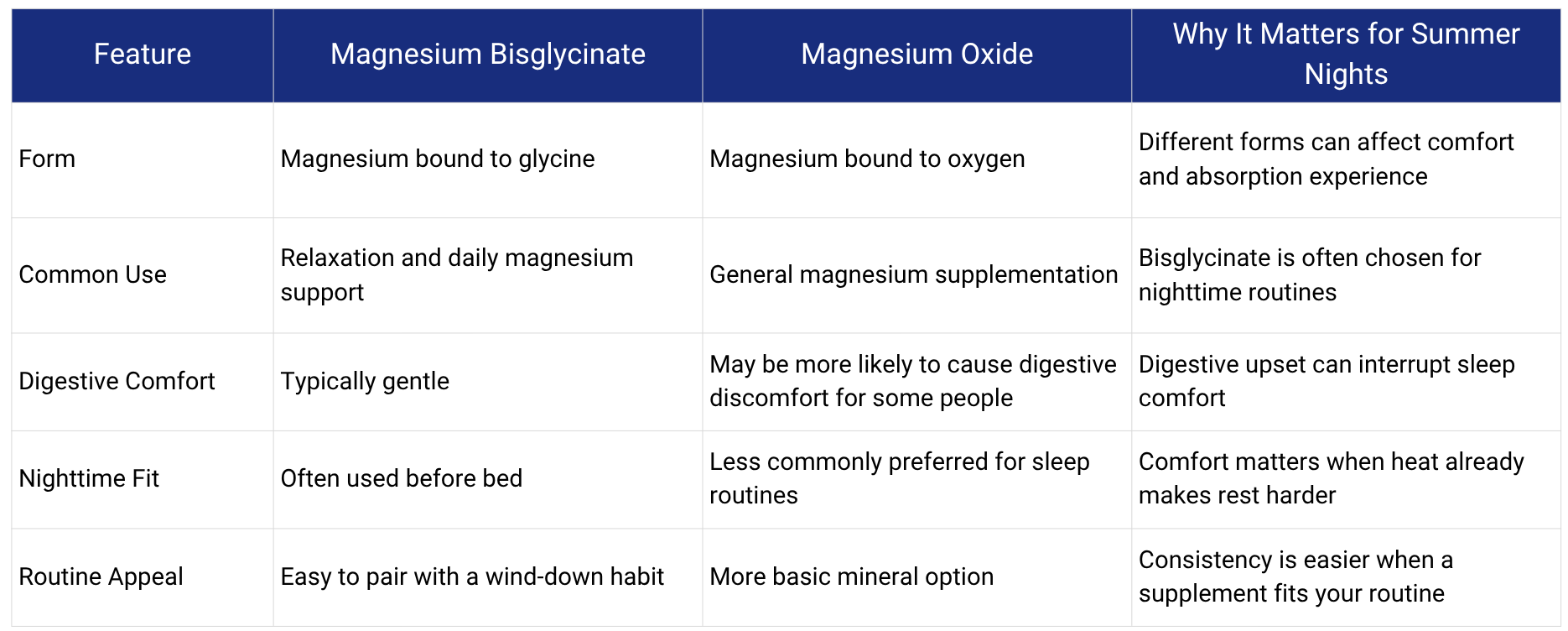
Choosing a magnesium form is not just about the label; it is about how it fits your lifestyle. If your goal is to build a calmer summer bedtime routine, a gentle form like magnesium bisglycinate can make the habit feel easier to maintain.
Building a Better Summer Wind-Down Routine
A better summer sleep routine starts earlier than bedtime. During the afternoon and evening, try to reduce the number of things that keep your body in “go mode.” This can include limiting late caffeine, eating heavy meals too close to bed, and giving yourself time away from bright screens. Even a short transition routine can help your body understand that the day is ending.
Your room still matters, of course. Lightweight bedding, breathable sleepwear, blackout curtains, and airflow can make a noticeable difference. If you use air conditioning, aim for comfort rather than extreme cold. A room that is too cold may cause you to wake up later feeling uncomfortable, especially if your body temperature shifts during the night.
Hydration should also be handled throughout the day, not all at once before sleep. Pair water with mineral-rich foods, especially if you have been sweating, exercising, or spending time outdoors. Then, in the evening, create a simple routine that is easy to repeat: dim lights, cool the room, take your supplement if it fits your plan, stretch lightly, and give yourself a screen-free buffer before bed. Small habits become more powerful when they are consistent.
Where 1 Body Magnesium Bisglycinate Fits In
This is where 1 Body Magnesium Bisglycinate can naturally become part of your summer sleep support routine. It is designed for people who want a simple way to support relaxation, muscle comfort, and daily magnesium intake without overcomplicating their nighttime habits. Instead of relying only on the AC or hoping the heat will not bother you, you can build a routine that supports your body from the inside and outside.
Because magnesium bisglycinate is paired with glycine, it fits well into a bedtime ritual focused on calm, comfort, and consistency. It is not about forcing sleep or making dramatic promises. It is about giving your body nutritional support as you prepare to wind down, especially during seasons when heat, stress, and disrupted schedules can make rest feel less dependable.
If summer nights leave you feeling restless, tense, or unable to fully relax, 1 Body Magnesium Bisglycinate may be a helpful addition to your evening routine. Pair it with a cool room, lighter bedding, hydration, and a steady sleep schedule for a more complete approach to nighttime wellness.
Frequently Asked Questions
-
Summer heat can make it harder for the body to cool down at night, which may affect how comfortable and settled you feel in bed. Warm rooms, humidity, sweating, and inconsistent summer routines can all make it more difficult to relax into a restful nighttime rhythm.
Support Rest From the Inside Out
A cool room can make summer nights more comfortable, but it is not the full answer. Your body also needs to regulate temperature, calm the nervous system, stay hydrated, and maintain healthy mineral balance. When those pieces are ignored, even the best fan or AC setting may not be enough to help you feel truly settled.
Summer sleep support works best when you combine smart environmental changes with internal support. Magnesium bisglycinate fits naturally into that approach because it supports relaxation, muscle function, and daily magnesium intake in a gentle, routine-friendly way. If hot nights have been leaving you restless, it may be time to think beyond the thermostat and give your body more complete nighttime support.
1 Body Magnesium Bisglycinate
1 Body Magnesium Bisglycinate is made for people who want a simple, gentle way to support their evening routine. It features magnesium bisglycinate, a form commonly chosen for relaxation-focused wellness because it pairs magnesium with glycine.
Add it to your summer wind-down routine to help support calm, comfort, and healthy magnesium levels before bed. Pair it with breathable bedding, a cool room, and consistent sleep habits for a more complete approach to summer rest.
Shop 1 Body Magnesium Bisglycinate and support your nighttime routine from the inside out.
Citation Kaltsatou, A., Notley, S. R., & Kenny, G. P. (2020). Effects of exercise-heat stress on circulating stress hormones and interleukin-6 in young and older men. Temperature, 7(4), 389–393. https://doi.org/10.1080/23328940.2020.1768032
For all general inquiries, please contact us at help@1body.com
© Copyright. All rights reserved.