The Best Investment you'll ever Make is in Yourself


April is Stress Awareness Month, but for most of us, stress isn’t something that’s limited to a specific time of year—it’s a constant companion. Whether it’s the pressure of work deadlines, personal commitments, or the constant demands of daily life, stress tends to find a way into our routines. While short bursts of stress can help us stay focused and productive, prolonged, chronic stress can harm our overall health, leaving us feeling drained, anxious, and out of control.
Chronic stress doesn’t just affect our mood; it can lead to a host of physical problems, including headaches, digestive issues, and an increased risk of chronic diseases. So, how do we break the cycle and regain control of our stress levels? The answer lies in understanding how stress affects our nervous system and implementing strategies that can help manage it more effectively.
The Cortisol-Brain Connection
To understand how to reduce stress, it’s crucial to first understand the role of cortisol, often called the "stress hormone." When you face a stressful situation, your adrenal glands release cortisol, which helps you respond quickly by preparing your body to fight, flee, or freeze. However, when stress becomes chronic, your adrenal glands stay activated, releasing cortisol constantly, which keeps your brain in a state of high alert.
This continuous state of heightened stress prevents your body from returning to its natural, calm state — a phase known as "rest and digest." Over time, this imbalance locks you out of recovery mode, affecting your immune function, digestion, and overall health.
The key to managing chronic stress lies in reducing cortisol levels and activating the parasympathetic nervous system — the "rest and digest" system. This is where small, daily shifts in your routine can have a big impact. By consciously reducing stress, you can bring your body and mind back into balance.
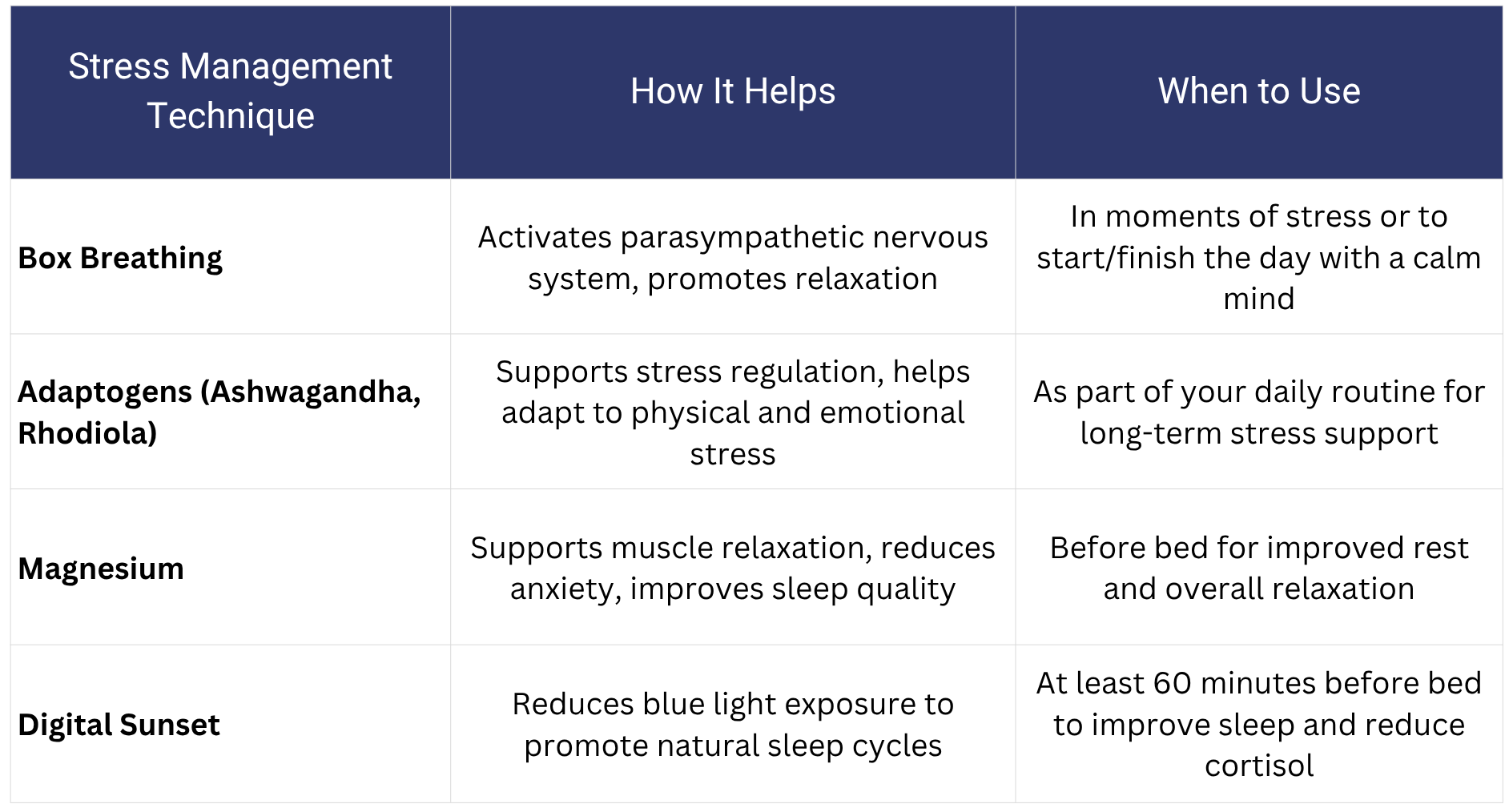
Successfully managing stress is not about eliminating it entirely but learning how to manage it effectively. A toolkit of simple, science-backed strategies can help you reset your nervous system, reduce the strain of ongoing stress, and improve mental clarity, energy, and overall health.
Box Breathing
One of the most effective ways to activate your parasympathetic nervous system is through box breathing. This technique involves a four-step process: inhaling for 4 seconds, holding your breath for 4 seconds, exhaling for 4 seconds, and holding again for 4 seconds. By focusing on your breath, you create a pause in your stress response and bring your body back to a calm, relaxed state.
Box breathing is a simple technique that can be practiced at any time — whether in moments of stress or at the start and end of your day to set a calm tone. This practice is an excellent tool to help shift your nervous system from fight-or-flight into a more peaceful state.

Adaptogens
Adaptogens like Ashwagandha and Rhodiola are herbs that help regulate your body’s response to stress. These natural substances support your ability to adapt to physical and emotional stress, reduce cortisol levels, and maintain balance in your body.
Adding adaptogens to your routine can significantly improve your stress resilience. Start by incorporating Ashwagandha into your daily routine — either in supplement form or as a calming tea. Over time, you’ll notice an increased ability to handle the challenges of daily life with greater ease.
Magnesium
Magnesium, often referred to as the "relaxation mineral," supports muscle relaxation and helps the production of GABA, a neurotransmitter that promotes calmness. Many people are deficient in magnesium, which can lead to symptoms like muscle tension, anxiety, and disrupted sleep patterns.
Taking magnesium before bed is a powerful way to improve sleep quality, calm your nervous system, and support overall relaxation. By adding magnesium to your evening routine, you prepare your body for rest and recovery, setting the stage for a better night’s sleep.

Digital Sunset
In today’s digital age, exposure to blue light from screens is a major contributor to stress and sleep disturbances. Blue light suppresses the production of melatonin, the hormone that regulates your sleep cycle, making it harder for your body to wind down at night.
To combat this, implement a "digital sunset" by avoiding screens at least 60 minutes before bed. By reducing your exposure to blue light in the evening, you allow your body to start its natural wind-down process, lowering cortisol levels and improving the quality of your sleep. This simple habit can help reset your body’s circadian rhythm and prepare you for restful sleep.
Frequently Asked Questions
-
Chronic stress often manifests in both physical and emotional symptoms. If you’re constantly feeling on edge, experiencing fatigue, trouble concentrating, or struggling with sleep, these may be signs of chronic stress. Physical symptoms such as headaches, muscle tension, or digestive issues also point to a body under prolonged stress.
If you find yourself feeling “tired but wired” — constantly alert, but unable to relax — it’s time to take action. Chronic stress can be draining, but there are ways to break the cycle and regain your balance.
Ashwagandha Complex
If you're looking for a natural way to help manage stress, Ashwagandha Complex is a powerful option. With its high concentration of withanolides, this supplement is designed to help regulate cortisol levels, boost energy, and improve mood, all while reducing the negative effects of stress.
Incorporating Ashwagandha Complex into your daily routine can help you feel more balanced, resilient, and better equipped to handle life’s challenges.
For all general inquiries, please contact us at help@1body.com
© Copyright. All rights reserved.