The Best Investment you'll ever Make is in Yourself


Seasonal changes in daylight, temperature, schedules, and stress can influence when you feel alert, tired, or ready for bed. Morning light, a consistent sleep schedule, calming evening habits, regular movement, balanced nutrition, and thoughtfully chosen nutritional support can help you build a steadier sleep routine as the seasons change.
When evenings begin arriving earlier and mornings stay darker for longer, sleep can start to feel different almost without warning. You may find yourself getting sleepy earlier in the evening but still struggling to settle once you get into bed, or you may wake feeling less refreshed even though your bedtime has not changed. For others, the challenge is not falling asleep at all but maintaining enough energy and focus during the day to keep a healthy sleep-wake rhythm intact.
Seasonal sleep changes are not unusual. Light exposure, household schedules, work demands, activity levels, stress, temperature, and eating patterns all influence how the body prepares for rest. The key is not to force yourself to follow the exact same routine year-round, but to adjust a few daily habits so your schedule remains supportive even when the environment around you changes.
Rather than thinking of sleep as something that begins the moment your head touches the pillow, it can be more helpful to view it as the result of what happens throughout the entire day. Morning light, daytime movement, regular meals, evening stimulation, and the amount of stress you carry into bedtime can all shape how easy it feels to wind down.
Why Sleep Can Feel Different When the Seasons Change
Light is one of the strongest signals involved in the body’s circadian rhythm, the internal timing system that helps organize sleep and wakefulness across the day. As sunrise and sunset shift through the year, the timing of those environmental signals changes too.
A study published in Current Biology examined how people’s circadian timing responded to natural light-dark cycles across different seasons. The researchers found that exposure to natural daylight was associated with shifts in circadian timing, reinforcing the idea that environmental light plays a meaningful role in how the body organizes its daily rhythm. The study does not mean that seasonal sleep problems can be solved simply by standing outside in the morning, but it supports the broader value of paying attention to light exposure when routines begin to feel out of sync.
Seasonal sleep changes are rarely caused by daylight alone. In cooler months, people often spend more time indoors, move less after work, eat later, and rely more heavily on artificial light in the evening. During busy fall and winter periods, work deadlines, school schedules, travel, and holidays may also increase mental load.
Temperature can influence sleep comfort as well. A room that is too warm, too cold, or inconsistent throughout the night may make it harder to remain comfortable, especially if bedding and sleepwear have not been adjusted for the season.
This is why seasonal sleep support works best when several small habits are considered together rather than focusing on one hormone, supplement, or bedtime trick.
Morning Light May Matter More Than You Think
A better night can sometimes begin with a more intentional morning. Natural daylight helps provide the body with a clear signal that daytime has started, which can support a more consistent daily rhythm.
Try opening your blinds or curtains soon after waking and spending a few minutes outside when practical. A short walk, time on the porch, or even having breakfast near a bright window can make the morning feel more defined, particularly when sunrise occurs later than it did during summer.
Consistency matters too. If weekday wake times are dramatically different from weekend wake times, your internal schedule may feel less predictable. You do not need to wake at exactly the same minute every day, but staying within a reasonable range can help keep the rest of your routine more stable.
Pair morning light with another habit you already do, such as drinking water, preparing breakfast, or taking a short walk. Linking habits together makes them easier to maintain without turning your morning into a complicated checklist.
Movement during the day can reinforce this pattern. Even a brief walk, stretching session, or light workout may help create a clearer contrast between active daytime hours and quieter evening hours.
Make Your Evening Routine Work With the Season
Many people focus heavily on bedtime but overlook the hour leading up to it. That transition period can be especially useful during seasonal changes because it gives the body and mind a chance to move gradually from activity toward rest.
Start by reducing unnecessary stimulation. Bright overhead lighting, work emails, intense television, social media, and constant notifications can make the evening feel more active than restful. Try dimming lights, putting your phone away for a short period, or choosing quieter activities such as reading, stretching, listening to music, or preparing for the next morning.
A consistent sequence can be helpful even if it is simple. For example: finish your final major task, prepare a glass of water, lower the lights, wash up, stretch for a few minutes, and read. Repeating the same sequence can make bedtime feel less abrupt.
The sleep environment matters too. As temperatures change, review your bedding, room temperature, and airflow. A comfortable room can make it easier to settle without constantly adjusting blankets or waking because you are too warm or cold.
Avoid turning bedtime into a performance. The more pressure you place on yourself to “sleep perfectly,” the harder it may feel to relax. The goal of a wind-down routine is to create better conditions for rest, not guarantee a specific outcome.
Support Your Body With Movement, Meals, and Hydration
Sleep quality can be influenced by habits that seem unrelated to sleep at first. Meal timing, caffeine use, hydration, and activity all contribute to how the day feels by the time evening arrives.
Regular movement can support a healthy daily rhythm and provide an outlet for physical tension. You do not need a strenuous workout late in the day; a walk, light resistance training, yoga, or stretching can all fit into a balanced routine.
Meals also deserve attention. Skipping food through the day and eating a very large meal close to bedtime can leave some people feeling uncomfortable or overly alert. A steadier approach is to eat regular meals built around protein, fiber-rich carbohydrates, healthy fats, and plant foods.
Hydration matters, but timing can help. Drink regularly throughout the day rather than trying to catch up with a large amount of water right before bed, especially if nighttime bathroom trips already interrupt your sleep.
Caffeine is another common factor. It may feel like the easiest way to push through darker afternoons, but late-day caffeine can interfere with sleep in some people. If you notice trouble falling asleep, consider whether coffee, tea, pre-workout products, or energy drinks have shifted later into the day as your seasonal schedule has changed.
Stress Can Follow You Into the Bedroom
Seasonal schedule changes can bring more than a different bedtime. Fall and winter often introduce busier calendars, school obligations, travel planning, year-end work, and additional family responsibilities.
Stress can leave the mind active long after the day is technically over. You may lie down and suddenly remember everything you still need to do, replay conversations, or mentally prepare for tomorrow. That experience is common, but it can make nighttime feel less restorative.
Rather than trying to force your mind to become quiet instantly, give it somewhere to put unfinished thoughts. Writing tomorrow’s priorities on paper can help prevent them from circling repeatedly in your head. Even a simple three-item list can create a sense that the task has been acknowledged and does not need to be solved at midnight.
Slow breathing, stretching, or a warm shower can also help create a transition away from the day. These habits should be viewed as supportive practices, not as treatments for anxiety or insomnia.
It is also useful to distinguish everyday stress from ongoing sleep problems. If poor sleep continues for weeks, affects your ability to work or drive, or occurs alongside heavy snoring, gasping, significant mood changes, or unusual daytime sleepiness, a healthcare professional can help determine whether something more than seasonal adjustment is involved.
A Simple Seasonal Sleep-Support Plan
The most useful routine is often one that is easy to repeat. Instead of trying to fix everything at once, choose a few habits that match the part of the day where you struggle most.
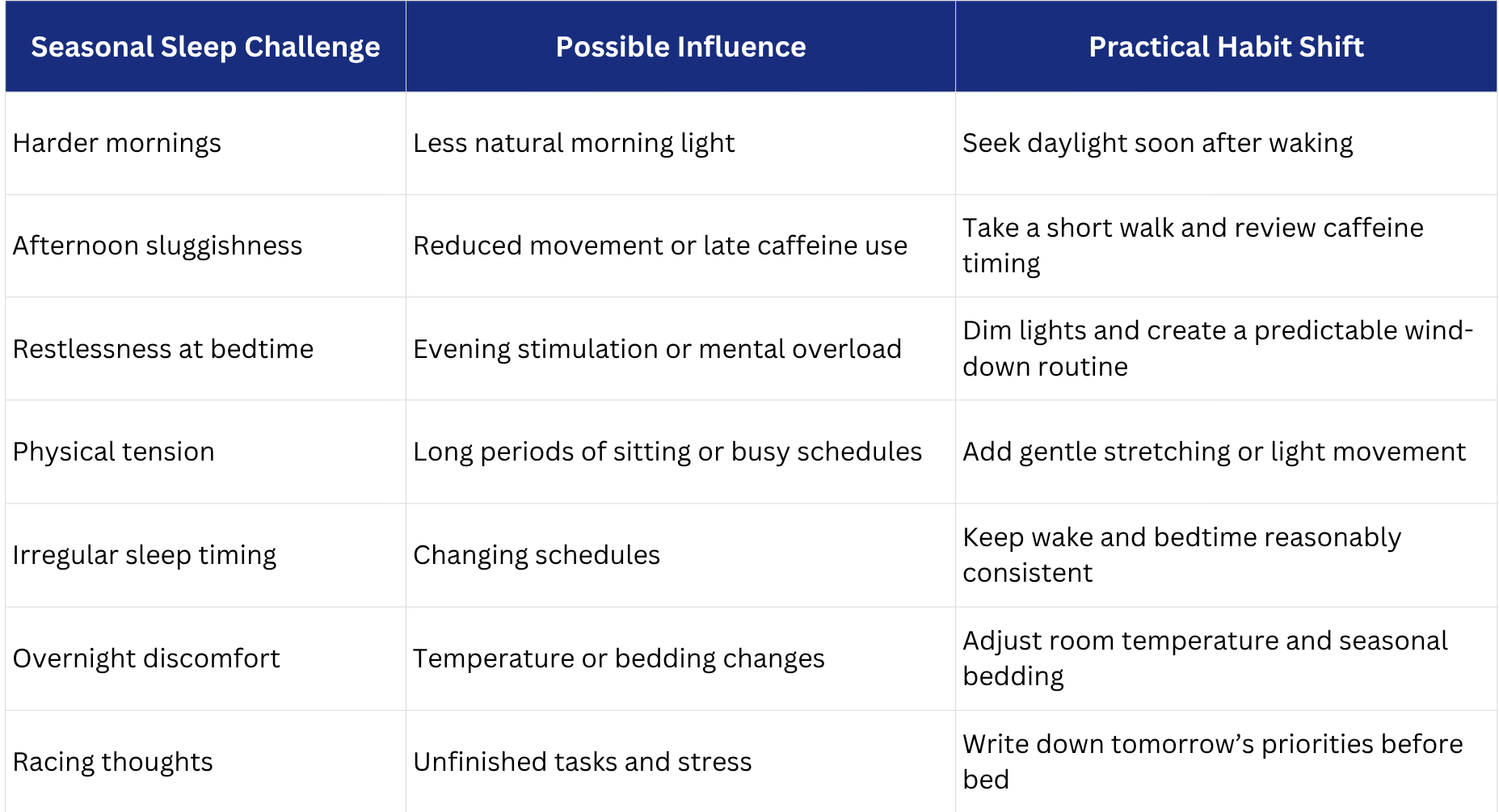
The table is not meant to diagnose the cause of poor sleep. It simply helps connect everyday experiences with habits that may make your routine feel more supportive.
Where Nutritional Support May Fit
After light exposure, movement, nutrition, hydration, and evening routines are in place, some adults choose supplements to complement their wellness plan. Supplements should not be presented as cures for insomnia, anxiety, cortisol disorders, or other medical conditions, but they may provide targeted nutritional support as part of a broader routine.
1 Body Magnesium Bisglycinate Buffered Chelate features magnesium in a chelated formula and is positioned to support normal muscle function, relaxation, and everyday wellness. The product shown also comes in 120 mini vegan capsules, making it a convenient option for adults who want to include magnesium in an established daily routine.
1 Body Adrenal Support takes a different approach. Its formula features Shoden® Ashwagandha, L-Tyrosine, Rhodiola, Eleuthero, Schisandra, and B vitamins and is designed to complement healthy stress-response habits, calm energy, and everyday focus.†
Together, these products can be positioned around different parts of the same seasonal wellness story: magnesium for muscle and relaxation support, and Adrenal Support for adults who want nutritional and botanical support during demanding or stressful periods. Neither should replace good sleep habits, medical care, or evaluation when symptoms persist.
Frequently Asked Questions
-
Changing sunrise and sunset times can influence the environmental cues that help regulate your circadian rhythm, while seasonal schedules may also affect movement, meals, and bedtime. The effect varies by person, so persistent sleep disruption should not automatically be blamed on the season.
Better Seasonal Sleep Starts With Consistency
Seasonal sleep changes are easier to manage when you focus on rhythm rather than perfection. A steadier wake time, morning light, daytime movement, regular meals, thoughtful caffeine timing, and a predictable evening routine can make the transition from one season to another feel less disruptive.
The goal is not to force your body into exactly the same sleep pattern all year. It is to recognize when the environment has changed and adjust your habits accordingly. A later sunrise may call for more intentional morning light, while a busier fall schedule may require stronger boundaries around evening work.
Pay attention to patterns rather than single difficult nights. One restless evening is not the same as weeks of poor sleep, and persistent changes deserve appropriate evaluation rather than increasingly complicated self-care routines.
When nutritional support fits your needs, it works best as one piece of the larger picture. Restful evenings are usually built from the combination of what you do during the day, how you manage stress, and how intentionally you transition into the night.
Build a More Supportive Evening Routine With 1 Body
1 Body Magnesium Bisglycinate Buffered Chelate and 1 Body Adrenal Support offer two complementary ways to support an adult seasonal wellness routine. Magnesium Bisglycinate provides targeted magnesium support for normal muscle function and relaxation, while Adrenal Support combines Shoden® Ashwagandha, L-Tyrosine, Rhodiola, Eleuthero, Schisandra, and B vitamins to complement everyday stress-management and focus routines.†
Product features and wellness-supporting qualities include:
-
Magnesium Bisglycinate Buffered Chelate formula
-
Supports normal muscle function†
-
Supports relaxation as part of an evening routine†
-
Supports bone health†
-
120 mini vegan capsules
-
Adrenal Support features Shoden® Ashwagandha
-
Includes L-Tyrosine and Rhodiola
-
Includes Eleuthero and Schisandra
-
Provides B vitamins
-
Designed to support a healthy stress-response routine†
-
Supports calm energy and everyday focus†
-
Both formulas are intended to complement healthy habits rather than replace them

For adults who want a more intentional seasonal routine, these two formulas can complement different parts of the day: Magnesium Bisglycinate as part of an evening-focused wellness plan and Adrenal Support as part of a broader approach to everyday stress and energy management. Review the complete Supplement Facts panels and speak with a qualified healthcare professional if you take medication, have a medical condition, are pregnant or breastfeeding, or are unsure whether either formula is appropriate for you.
†These statements have not been evaluated by the Food and Drug Administration. These products are not intended to diagnose, treat, cure, or prevent any disease.
Reference
Stothart, G., McHill, A. W., Depner, C. M., Birks, B. R., Moehlman, T. M., Ritchie, H. K., Guzzetti, J. R., Chinoy, E. D., LeBourgeois, M. K., Axelsson, J., & Wright, K. P., Jr. (2017). Circadian entrainment to the natural light-dark cycle across seasons and the weekend. Current Biology, 27(4), 508–513. https://doi.org/10.1016/j.cub.2016.12.041
For all general inquiries, please contact us at help@1body.com
© Copyright. All rights reserved.