The Best Investment you'll ever Make is in Yourself


A change in season is a useful reminder to check in with digestion, hydration, sleep, movement, intimate wellness, and overall energy. Small habits such as eating more fiber-rich foods, drinking consistently, wearing breathable clothing, protecting sleep, and supporting a balanced microbiome can help create a steadier daily routine without turning wellness into another full-time job.
A new season often changes more than what we wear. Daylight shifts, temperatures move up or down, schedules become busier, and eating habits can change almost without notice. You may find yourself reaching for different foods, spending more time indoors, sleeping at different hours, or feeling like your digestion and energy are not following quite the same rhythm they did a few weeks earlier.
For women, a seasonal wellness check-in can be especially useful because so many parts of health are connected to everyday routines. Gut health, intimate wellness, hydration, sleep, stress, movement, and nutrition all influence how supported you feel throughout the day. The goal is not to assume every change is hormonal or seasonal, but to notice what has shifted and make small adjustments before minor discomfort becomes part of your normal routine.
This is also a good time to simplify. Instead of trying to “reset” everything at once, focus on a few areas that create the strongest foundation: regular meals, enough fluids, consistent sleep, gentle movement, and habits that support both digestive and intimate wellness.
Why a New Season Is a Good Time to Check In With Your Body
Seasonal transitions tend to disrupt routines in clusters. A cooler month may mean less time outside, fewer spontaneous walks, heavier meals, more travel, and longer stretches indoors. A warmer season may mean increased sweating, more time in tight activewear, changing hydration needs, and different eating schedules.
None of these changes is automatically a problem, but together they can influence how you feel.
You may notice that your digestion becomes less predictable when your diet changes. Energy may dip if your sleep schedule drifts. Skin may feel drier when indoor heating increases, while intimate comfort may feel different when clothing, sweating, travel, or hygiene habits change.
The most useful response is not to diagnose yourself based on one symptom. Instead, look for patterns. Ask yourself whether the change is temporary, whether it improves when your routine becomes more consistent, and whether there are signs that deserve professional attention.
A seasonal check-in can be as simple as asking:
-
Am I eating enough fiber-rich foods?
-
Am I drinking regularly throughout the day?
-
Has my sleep schedule changed?
-
Am I moving less than I was a month ago?
-
Have I noticed persistent digestive or intimate discomfort?
-
Am I giving myself enough time to recover from busy days?
These questions keep the focus on practical support rather than perfection.
Start With Your Gut and Daily Nutrition
Gut health is influenced by many factors, including diet, stress, medications, sleep, illness, activity, and individual biology. As the seasons change, food choices often change too, which makes nutrition a natural place to begin your wellness check-in.
Fiber-rich foods are especially useful because they help support normal digestion and provide fuel for many of the microbes that live in the gastrointestinal tract. Vegetables, fruits, oats, beans, lentils, whole grains, nuts, and seeds can all contribute to a varied dietary pattern.
You do not need to overhaul your entire diet overnight. A gradual approach is often more comfortable, especially if your current intake of fiber-rich foods is relatively low. Try adding one new plant food to meals rather than dramatically increasing several sources at once.
Seasonal eating can make this easier. In cooler weather, oatmeal, soups, lentils, roasted vegetables, apples, pears, squash, and whole grains fit naturally into comforting meals. During warmer months, berries, salads, yogurt, fresh vegetables, and fruit can provide variety without making meals feel heavy.
Hydration matters for digestion as well. Fiber works best as part of an overall pattern that includes adequate fluids. Water, unsweetened herbal tea, soups, and water-rich foods can all contribute.
It is also important not to interpret every digestive change as a microbiome problem. Persistent pain, blood in the stool, unexplained weight loss, severe bloating, chronic diarrhea, or ongoing constipation should be discussed with a healthcare professional rather than managed only with diet or supplements.
Give Intimate Wellness the Same Everyday Attention
Intimate health is often treated as something to think about only when discomfort appears, but everyday habits can help support comfort and awareness throughout the year.
The vaginal microbiome is a complex ecosystem, and in many healthy women it commonly includes Lactobacillus species. A landmark study by Ravel and colleagues examined vaginal microbial communities in hundreds of reproductive-age women and found distinct community patterns, many of which were dominated by different Lactobacillus species. The study did not show that any supplement can prevent or treat an intimate health condition, but it helped establish just how diverse and individualized the vaginal microbiome can be.
That individuality is important. There is no single “perfect” microbiome that looks exactly the same in every woman.
Practical intimate wellness habits are usually simple. Choose breathable underwear when possible, change out of wet or sweaty clothing instead of remaining in it for long periods, avoid unnecessary fragranced products in the vaginal area, and maintain regular hydration.
Urinary wellness deserves attention too. Some women are more sensitive to changes in hydration, travel routines, sexual activity, or delaying bathroom breaks. Drinking regularly and urinating when you need to are straightforward habits that can support general urinary comfort.
Cranberry and D-Mannose are frequently included in women’s wellness products, but they should not be presented as treatments for urinary tract infections or other medical conditions. Painful urination, blood in the urine, fever, pelvic pain, strong or unusual odor, unusual discharge, or persistent irritation should be evaluated by a qualified healthcare professional.
A supplement may have a role in a broader routine, but symptoms that suggest an infection should not be self-treated with nutritional products.
Protect Your Energy With Sleep, Hydration, and Movement
Women’s wellness is often discussed through the lens of nutrients and hormones, but some of the most useful support comes from ordinary habits that are easy to overlook.
Sleep is one of them. Changes in daylight and work schedules can make bedtimes and wake times less consistent from season to season. A regular sleep schedule, a calmer final hour before bed, and limiting excessive late-night stimulation can help make rest feel more predictable.
Movement matters too. You do not need an intense exercise routine to support overall wellness. Walking, stretching, strength training, yoga, cycling, or another activity you enjoy can help maintain mobility, support cardiovascular health, and break up long periods of sitting.
Hydration also becomes easy to forget when temperatures cool. In hot weather, thirst provides a frequent reminder, but during colder months many people simply drink less because they do not feel as thirsty.
A practical strategy is to attach water to existing habits. Have a glass with breakfast, keep a bottle near your workspace, drink with lunch, and have another glass with dinner. This is more realistic than trying to “catch up” late in the day.
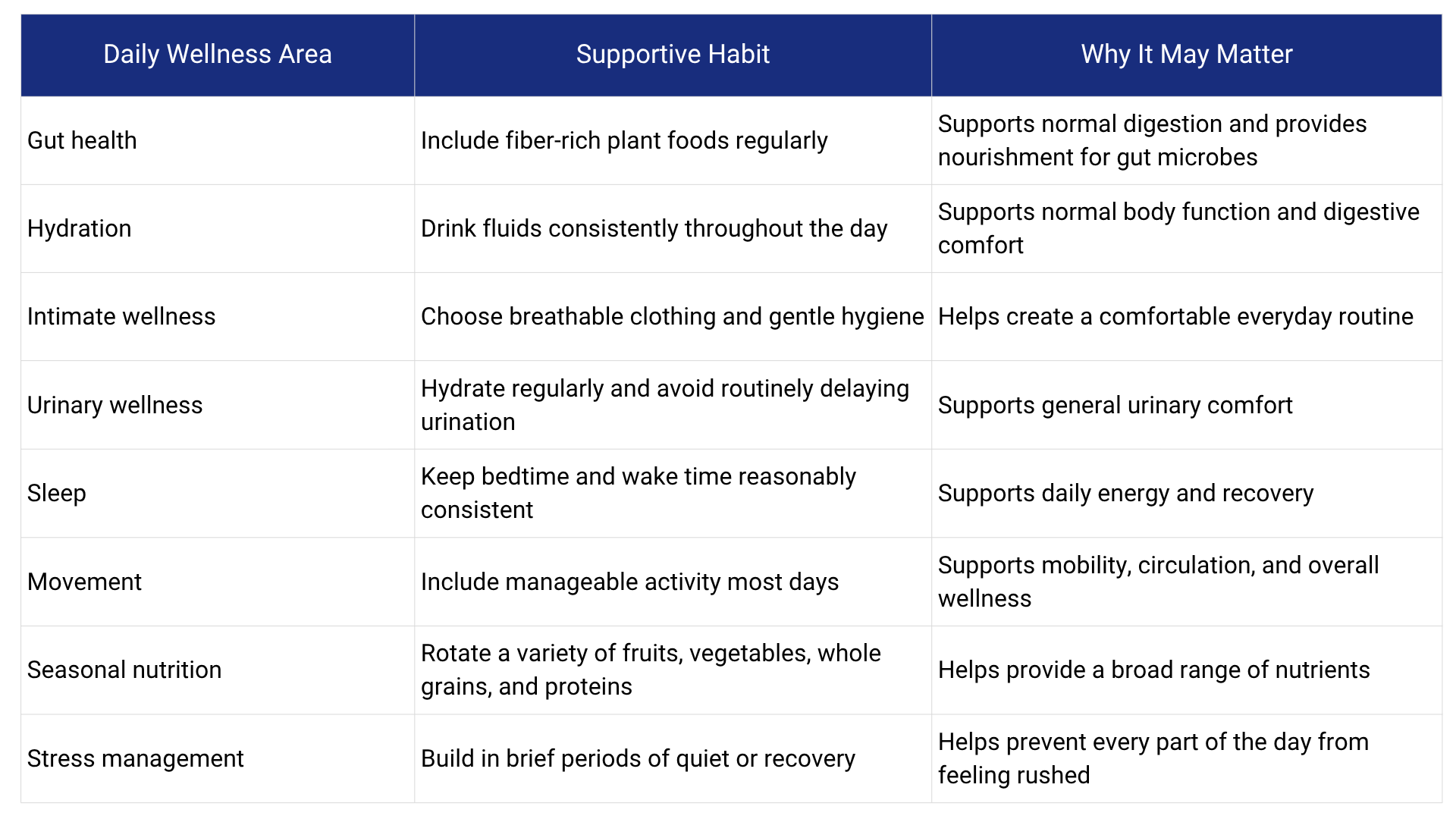
Here is a simple seasonal wellness matrix you can use as a guide:
Build a Seasonal Routine That Is Easy to Maintain
The most effective wellness routine is rarely the most complicated one. It is the routine you can continue when work becomes busy, travel interrupts your schedule, or family responsibilities expand.
Choose a few daily anchors instead of trying to manage a long checklist.
Breakfast can become the cue to drink water and eat something with fiber. Your lunch break can become the time for a short walk. Changing into comfortable clothes after work can remind you to get out of damp or restrictive clothing. Brushing your teeth at night can signal that screen time is winding down.
Consistency does not mean following the routine perfectly. Missing one day is not a failure. Return to the next available opportunity instead of trying to compensate with an unrealistic wellness plan.
It can also help to notice what your body repeatedly tells you. If you always feel more sluggish after several nights of poor sleep, that is useful information. If your digestion changes when travel reduces your fiber or water intake, you have identified an area you can support more intentionally next time.
Seasonal health should feel like observation and adjustment, not constant correction.
Where Targeted Women’s Wellness Support Can Fit
Once food, hydration, sleep, movement, and everyday intimate-care habits are established, some women choose a targeted probiotic supplement to complement their routine.
1 Body Women’s Probiotics Advanced 50B CFUs is formulated with probiotic support alongside ingredients such as prebiotics, D-Mannose, vitamin C, and cranberry. The combination is designed to complement digestive, microbiome, intimate, and everyday women’s wellness without positioning the product as a treatment for infections, digestive disorders, or pH-related medical conditions.†
A women’s probiotic can be habit-stacked with a dependable part of the day, such as breakfast or another meal, according to the product directions. This keeps it in the category of daily nutritional support rather than something you remember only when discomfort appears.
Individual responses to probiotics vary. Anyone who is pregnant or breastfeeding, immunocompromised, taking medication, managing a diagnosed medical condition, or experiencing persistent urinary, vaginal, or digestive symptoms should speak with a qualified healthcare professional before adding a new supplement.
Frequently Asked Questions
-
Changes in daylight, sleep timing, movement, workload, nutrition, and stress can all influence daily energy. Persistent or worsening fatigue should be evaluated rather than automatically attributed to the season.
Use the Season as a Gentle Wellness Reset
A seasonal health check-in does not need to involve restrictive diets, elaborate routines, or the idea that your body requires a complete “detox.” Often, the most useful changes are surprisingly ordinary: drink more consistently, eat enough fiber, protect your sleep, move regularly, and pay attention to changes in digestion or intimate comfort.
These habits create a baseline that makes it easier to notice when something genuinely feels different. They also give you practical tools to adjust when travel, temperature, work, or family responsibilities disrupt the routine you had before.
Give yourself permission to adapt rather than maintain exactly the same habits all year. A cooler season may call for warmer meals and more intentional hydration, while warmer weather may require greater attention to sweat, breathable clothing, and fluid intake.
When additional nutritional support fits your needs, choose formulas that clearly explain what they contain and avoid products that promise to cure infections, correct every hormone problem, or guarantee a specific result. A thoughtful supplement should complement the habits and professional care that already support your health.
Support Your Routine With 1 Body Women’s Probiotics Advanced 50B CFUs
1 Body Women’s Probiotics Advanced 50B CFUs combines probiotic support with prebiotics, D-Mannose, vitamin C, and cranberry in a formula created to complement women’s everyday digestive and intimate wellness routines. It is designed to fit alongside balanced nutrition, regular hydration, gentle hygiene, movement, and appropriate healthcare rather than replace those foundations.†
Formula and wellness-supporting features include:
-
Provides 50 billion CFUs
-
Features multiple probiotic strains
-
Includes prebiotic support
-
Includes D-Mannose
-
Provides vitamin C
-
Includes cranberry
-
Designed to support digestive wellness†
-
Supports a balanced microbiome routine†
-
Complements everyday intimate wellness†
-
Supports normal immune function through included nutritional ingredients†
-
Convenient for inclusion in a consistent daily routine
-
Intended as nutritional support rather than treatment for urinary, vaginal, or digestive conditions

For adults who want to keep their nutritional routine consistent as daylight and schedules change, 1 Body Methylated Vitamin B Complex offers a straightforward way to include a broad range of B vitamins in one daily formula. It fits naturally alongside morning light, balanced meals, regular movement, and restorative sleep, reflecting 1 Body’s warm, accessible approach to combining nature-inspired wellness with thoughtful formulation.
†These statements have not been evaluated by the Food and Drug Administration. This product is not intended to diagnose, treat, cure, or prevent any disease.
Reference
Stothart, G., McHill, A. W., Depner, C. M., Birks, B. R., Moehlman, T. M., Ritchie, H. K., Guzzetti, J. R., Chinoy, E. D., LeBourgeois, M. K., Axelsson, J., & Wright, K. P., Jr. (2017). Circadian entrainment to the natural light-dark cycle across seasons and the weekend. Current Biology, 27(4), 508–513. https://doi.org/10.1016/j.cub.2016.12.041
For all general inquiries, please contact us at help@1body.com
© Copyright. All rights reserved.