The Best Investment you'll ever Make is in Yourself

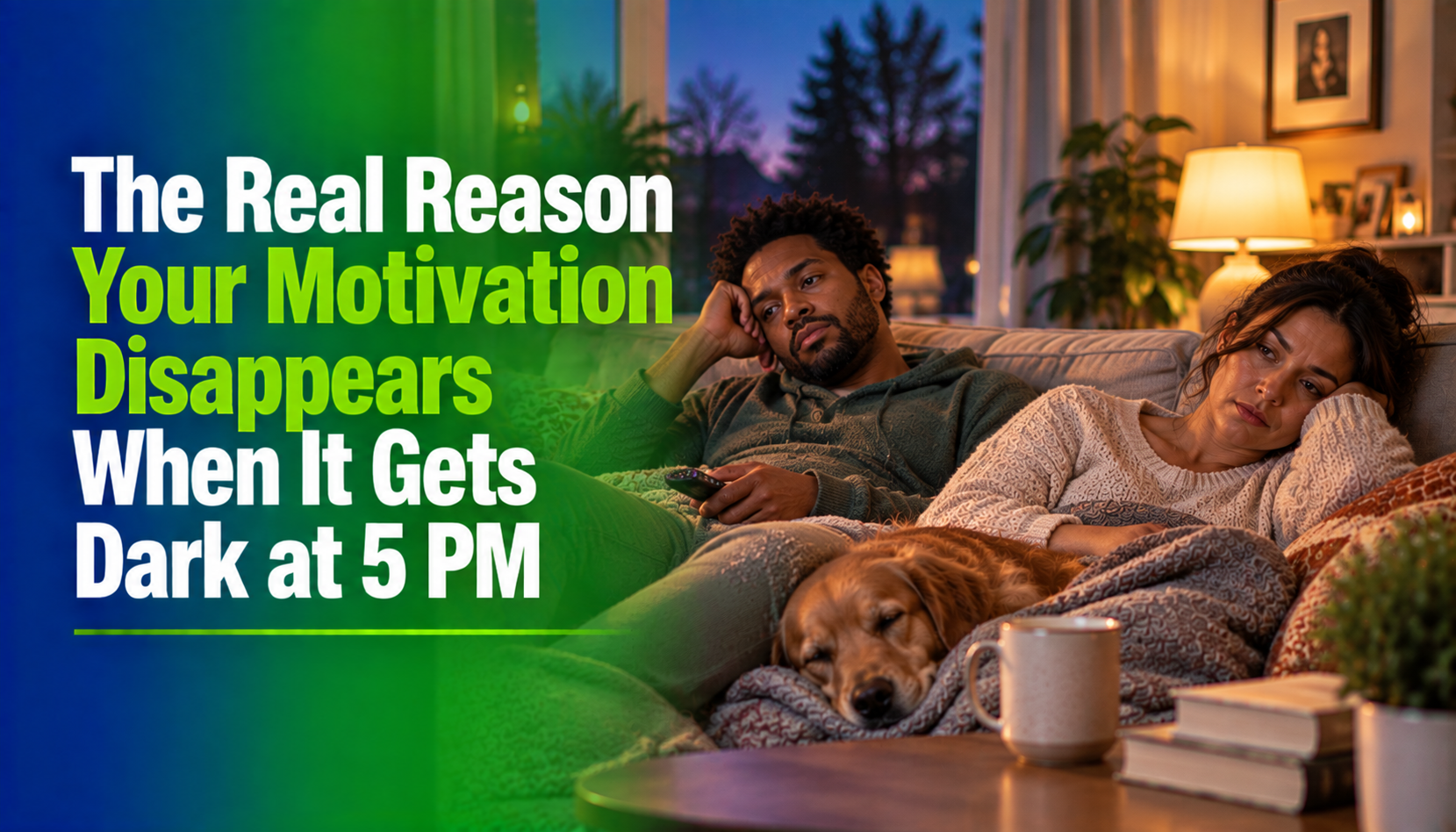
Early sunsets can make motivation and evening energy feel different because light is one of the strongest cues involved in your circadian rhythm. Shorter days often arrive alongside less outdoor activity, schedule changes, increased stress, and different sleep habits, so a supportive seasonal routine should focus on morning light, movement, balanced meals, consistent sleep, and realistic stress-management habits rather than blaming one hormone or system.
There is something strangely convincing about darkness at 5 PM. You can have a perfectly productive afternoon, glance out the window, see that the sun has already disappeared, and suddenly feel as though the day should be over. The couch becomes more appealing, dinner feels like a major project, and the workout or household task that seemed manageable an hour earlier can lose most of its appeal.
That does not automatically mean your motivation is “broken,” nor does it necessarily mean your hormones are out of balance. Early sunsets arrive with several changes at once: less natural light, cooler weather, less outdoor movement, busier fall and winter schedules, and a stronger visual signal that the active part of the day is ending.
Seasonal energy and motivation are influenced by that entire picture. Light helps set the timing of the body’s internal clock, but sleep, stress, nutrition, exercise, workload, and personal habits also shape how alert or sluggish you feel in the early evening.
The goal is not to somehow convince your body that it is still July. A better approach is to create clear daytime cues, protect your energy during the afternoon, and build an evening routine that lets you remain functional without expecting yourself to operate at full intensity until bedtime.
Why Early Darkness Can Change the Way Your Evening Feels
Your body pays attention to environmental light even if your calendar says your day is far from finished. Natural daylight is an important timing signal for the circadian system, which helps organize patterns of sleep, wakefulness, alertness, and other daily biological processes.
When summer sunsets happen late, light naturally extends farther into the evening. You might finish work while the sun is still up, go for a walk, run errands, or meet friends without feeling like nighttime has started.
By late fall or winter, that same 5 PM window can look completely different. The sky is dark, temperatures may be colder, and you may have already spent most of the day indoors.
That contrast can affect behavior as much as biology. Darkness may make you less likely to go outside, more likely to change into comfortable clothes immediately, and more likely to settle into sedentary evening habits. Once those behaviors repeat, they can become part of the seasonal rhythm.
Research supports the idea that natural light exposure matters to circadian timing. In a study published in Current Biology, researchers examined human circadian timing under natural summer and winter light-dark conditions and found seasonal differences in how the internal clock aligned with environmental light. The study does not mean that early sunsets directly “cause” low motivation, but it does reinforce the importance of natural light as a seasonal timing cue.
Your Circadian Rhythm Responds to Light, Not the Clock on the Wall
One reason early darkness feels powerful is that your circadian system does not care that you still have emails to answer, dinner to prepare, or laundry to fold.
Light reaching the eyes provides information about the time of day. As evening darkness develops, melatonin secretion generally rises as part of the body’s normal preparation for sleep. That process is more complex than “darkness equals instant melatonin,” however, and the timing varies according to individual circadian patterns, prior light exposure, sleep schedules, and evening lighting.
So if you feel sleepier after sunset, it does not necessarily mean that melatonin suddenly “spiked” at exactly 5 PM. Your experience may reflect the combined effect of darkness, accumulated fatigue from the day, lower activity, meal timing, and your usual evening routine.
Morning light can be particularly useful because it helps reinforce the daytime side of the rhythm. Opening the curtains soon after waking, getting outside when practical, or taking a short morning walk can create a stronger contrast between morning and evening.
Daytime light also matters. If you spend almost every hour under relatively dim indoor lighting, the body receives less of the natural variation between bright daytime and dark nighttime environments.
You do not need to stare directly at the sun or follow a complicated light protocol. Simply creating more opportunities for safe natural daylight, especially earlier in the day, can support a more defined daily rhythm.
Why the 5 PM Energy Dip Is Usually More Than One Thing
It is easy to blame early darkness for every seasonal slump, but by the time 5 PM arrives, your body has already experienced an entire day.
Maybe you skipped breakfast, sat through several hours of meetings, drank a second or third coffee, ate a rushed lunch, and barely left your desk. Add darkness outside, and the resulting lack of motivation may feel much stronger.
Food plays a role because irregular meals can leave the afternoon feeling unpredictable. A balanced lunch containing protein, fiber-rich carbohydrates, healthy fats, and vegetables is usually a better foundation than relying on caffeine and snacks to carry you to dinner.
Hydration matters too. Cooler weather often makes thirst less noticeable, so people may drink less than they did during summer without realizing it.
Movement can also disappear as daylight changes. If you used to walk after work but now head directly inside because it is dark and cold, your daily activity may drop considerably over several weeks.
Caffeine deserves a closer look as well. An afternoon coffee may temporarily feel useful when darkness begins early, but consuming caffeine too late can interfere with sleep in some people. Poorer sleep can then make the following afternoon feel harder, leading to another caffeine boost and an ongoing cycle.
This is why seasonal motivation support is usually more successful when you look at the whole day rather than trying to solve the 5 PM slump at 4:55.
Stress, Schedule Changes, and the Myth of “Overworked Adrenals”
Fall and winter can also be stressful. Work deadlines, school schedules, holiday planning, family responsibilities, travel, and financial pressures frequently increase at the same time daylight decreases.
Stress influences how energetic and focused you feel, but it is important to use accurate language when talking about the adrenal glands. The idea that ordinary seasonal stress causes otherwise healthy adrenal glands to become “overworked” or “depleted” is not an established medical diagnosis.
Your adrenal glands are involved in producing hormones such as cortisol, and cortisol normally follows a daily rhythm. Stress, sleep, illness, medications, and other factors can influence that rhythm, but feeling drained at 5 PM does not by itself show that cortisol is “imbalanced.”
A safer and more useful approach is to talk about stress-response wellness. You can support your ability to handle demanding days through sleep, movement, balanced nutrition, realistic boundaries, and activities that give your mind a clear transition between work and rest.
This distinction matters because persistent fatigue can have many causes. Anemia, thyroid disorders, sleep apnea, medication effects, depression, nutrient deficiencies, infection, and other conditions can all influence energy, so ongoing symptoms should not automatically be attributed to stress or adrenal function.
Use Light, Movement, and Food to Support Your Evening Rhythm
You cannot control when the sun sets, but you can change the signals surrounding your day.
Start with light. Get natural daylight earlier whenever possible. If you work indoors, consider stepping outside during lunch instead of waiting until after work when the sun may already be gone.
Then protect movement. If your summer routine involved an evening walk, move it earlier rather than dropping it entirely. A midday walk, short indoor workout, or several brief movement breaks can keep activity from disappearing simply because winter evenings are darker.
Meals can help anchor the day too. Eating consistently may make it easier to distinguish actual physical fatigue from the low energy that comes from going too long without food.
When evening arrives, use lighting intentionally. You do not need to sit in darkness at 5 PM simply because the sun has set. Use comfortable indoor lighting while you cook, spend time with family, or finish necessary tasks, then gradually lower stimulation closer to bedtime.
A clear transition can make a big difference. Instead of moving directly from work into scrolling on the couch, create a short reset: change clothes, drink water, walk for ten minutes, start dinner, or put on music. These small rituals tell your brain that the workday has ended without telling it that the entire day is over.
A Simple Early-Sunset Wellness Plan
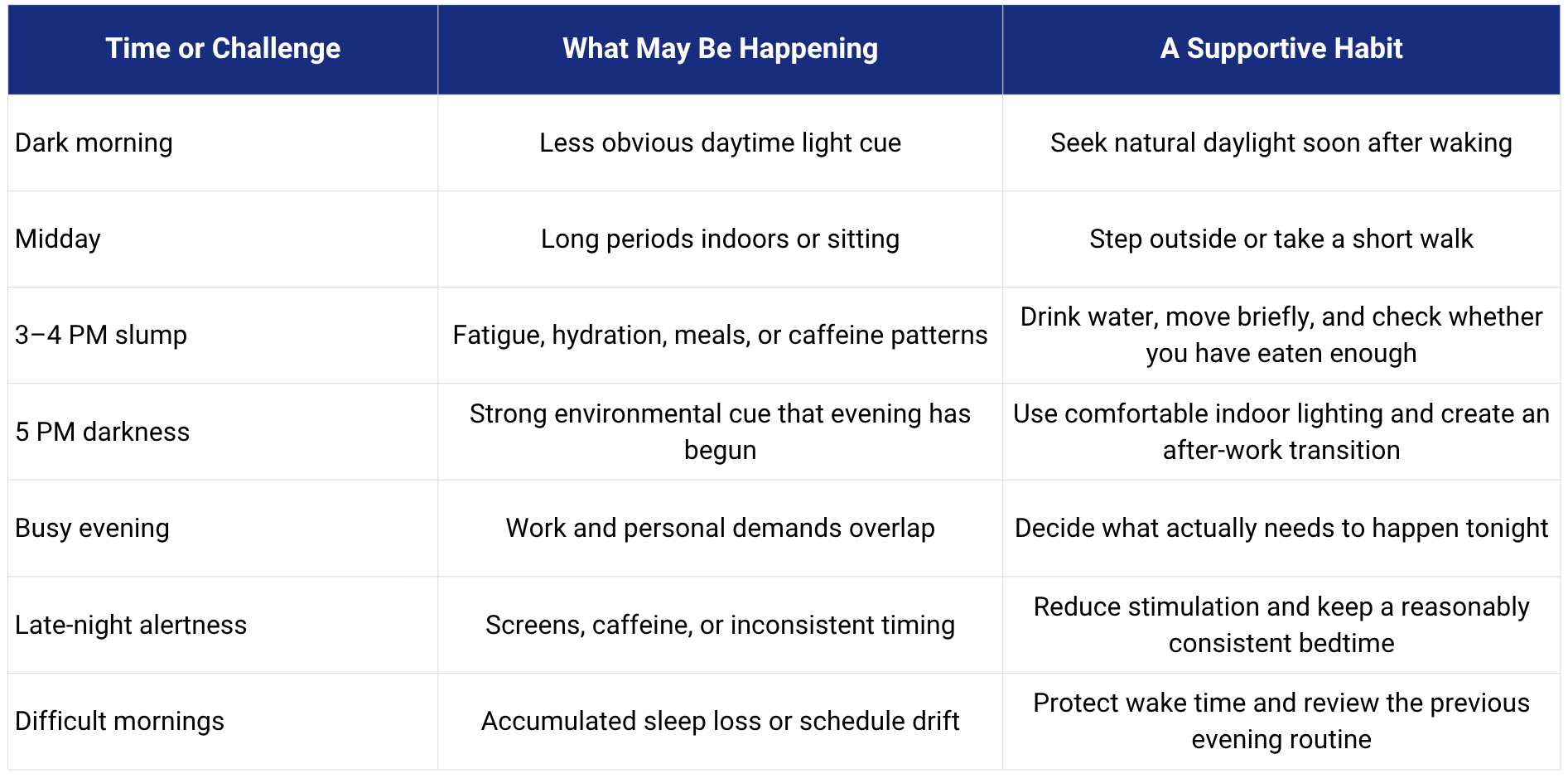
The goal is not to eliminate every afternoon dip. It is to make sure the season does not gradually remove the habits that normally help you feel steady.
Where 1 Body Adrenal Support Can Fit
Once sleep, light exposure, meals, hydration, movement, and stress-management habits are established, some adults choose a dietary supplement to complement their routine.
1 Body Adrenal Support features Shoden® Ashwagandha, L-Tyrosine, Rhodiola, Eleuthero, Schisandra, and B vitamins. The formula can be positioned as nutritional and botanical support for everyday stress-response wellness, calm energy, and focus rather than as a way to “repair” adrenal glands, normalize cortisol, or treat fatigue.†
That makes it especially easy to incorporate into a broader seasonal routine rather than treating it as a fix for the 5 PM slump. For example, it may be paired with an established morning or mealtime habit according to the product directions while daylight, movement, balanced nutrition, and sleep remain the foundation.
Adults taking medication, managing a medical condition, preparing for surgery, or who are pregnant or breastfeeding should discuss new supplements with a qualified healthcare professional. Persistent fatigue, major mood changes, or significant difficulty functioning also deserve professional evaluation rather than increasing supplementation on your own.
Frequently Asked Questions
-
Early darkness can strengthen evening cues while reduced daylight, less movement, accumulated fatigue, meal timing, and sleep habits may also influence how you feel. It is more accurate to view the 5 PM slump as a combination of factors rather than an instant melatonin switch.
You Do Not Have to Fight the Season
Early sunsets can make the day feel shorter, but they do not have to erase your entire evening. Often, the most useful response is to adjust when your supportive habits happen rather than expecting yourself to maintain an identical summer schedule through winter.
Get more daylight earlier. Move before darkness makes activity less appealing. Eat enough during the day, watch late caffeine, drink consistently, and create a clear transition when work ends.
It is also okay for winter evenings to feel quieter. Supporting seasonal wellness does not mean forcing yourself to be maximally productive until bedtime. Sometimes the healthier adjustment is deciding which evening tasks matter and allowing the rest to wait.
Most importantly, keep seasonal fatigue in perspective. A changing light environment can influence your routine, but it does not explain every symptom. When low energy or motivation becomes persistent, professional care is more useful than assuming your adrenal glands or cortisol must be the problem.
Think of the season as an invitation to create stronger rhythms, not to battle your biology. A few consistent cues can help your days feel more intentional even when the sun disappears much earlier than you would like.
Support Your Seasonal Routine With 1 Body Adrenal Support
1 Body Adrenal Support combines Shoden® Ashwagandha, L-Tyrosine, Rhodiola, Eleuthero, Schisandra, and B vitamins in a formula designed to complement everyday stress-response wellness and focus. It fits most naturally alongside an established routine built around sleep, daylight, movement, balanced nutrition, hydration, and healthy boundaries rather than being positioned as a treatment for fatigue or adrenal dysfunction.†
Formula and wellness-supporting features include:
-
Features Shoden® Ashwagandha
-
Includes L-Tyrosine
-
Includes Rhodiola
-
Includes Eleuthero
-
Includes Schisandra
-
Provides B vitamins
-
Designed to support everyday stress-response wellness†
-
Supports calm energy as part of a balanced routine†
-
Supports everyday focus†
-
Easy to pair with an established morning or mealtime habit
-
Complements sleep, nutrition, movement, and stress-management practices
-
Intended as nutritional and botanical support rather than treatment for adrenal or cortisol disorders
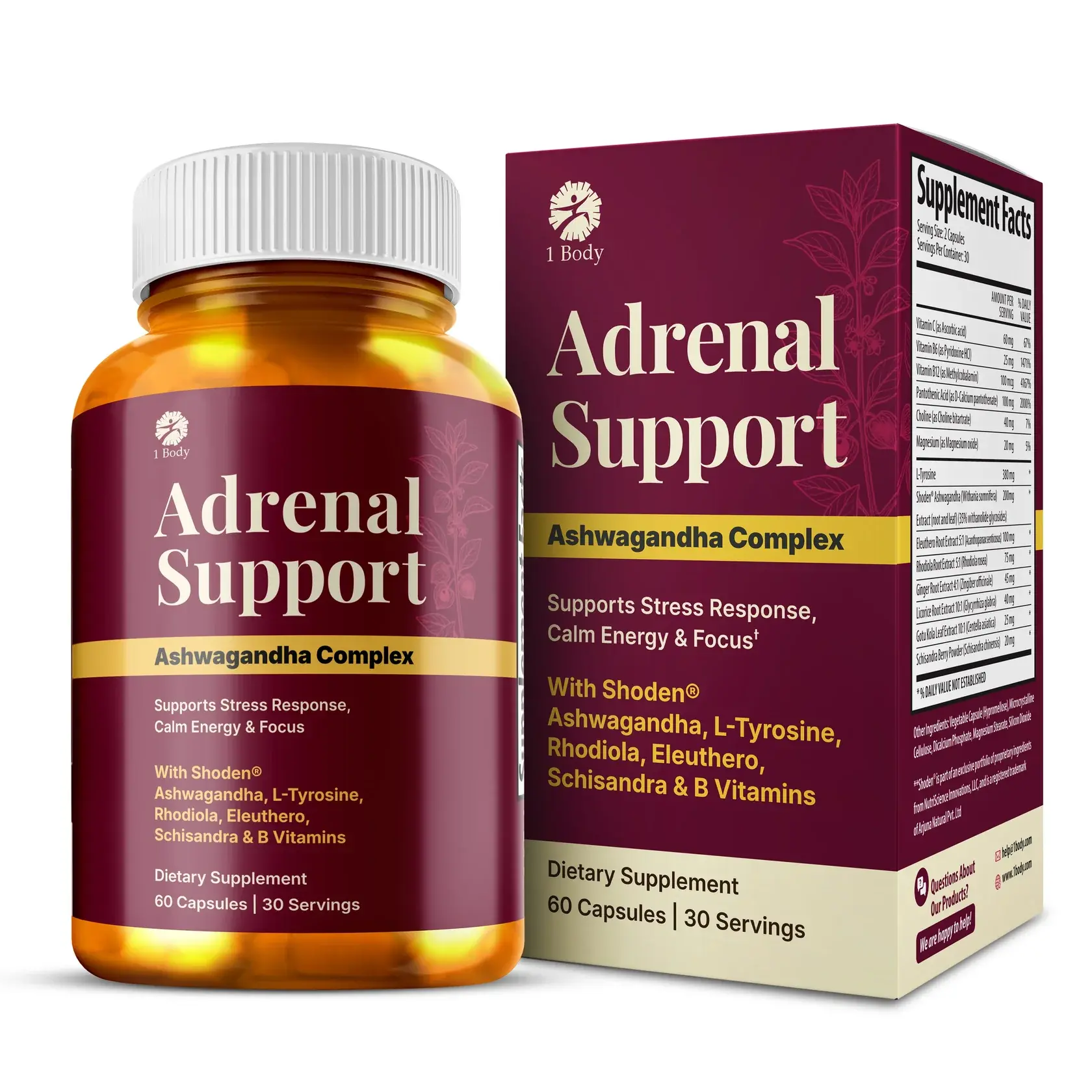
For adults who want additional support as fall and winter schedules become more demanding, 1 Body Adrenal Support offers a convenient way to add targeted botanical and nutritional ingredients to an already healthy routine. Its straightforward positioning reflects 1 Body’s “Nature’s Gifts, Refined by Science” philosophy while keeping the focus where it belongs: consistent habits, realistic expectations, and transparent wellness support.
†These statements have not been evaluated by the Food and Drug Administration. This product is not intended to diagnose, treat, cure, or prevent any disease.
Reference
Stothart, G., McHill, A. W., Depner, C. M., Birks, B. R., Moehlman, T. M., Ritchie, H. K., Guzzetti, J. R., Chinoy, E. D., LeBourgeois, M. K., Axelsson, J., & Wright, K. P., Jr. (2017). Circadian entrainment to the natural light-dark cycle across seasons and the weekend. Current Biology, 27(4), 508–513. https://doi.org/10.1016/j.cub.2016.12.041
For all general inquiries, please contact us at help@1body.com
© Copyright. All rights reserved.