The Best Investment you'll ever Make is in Yourself

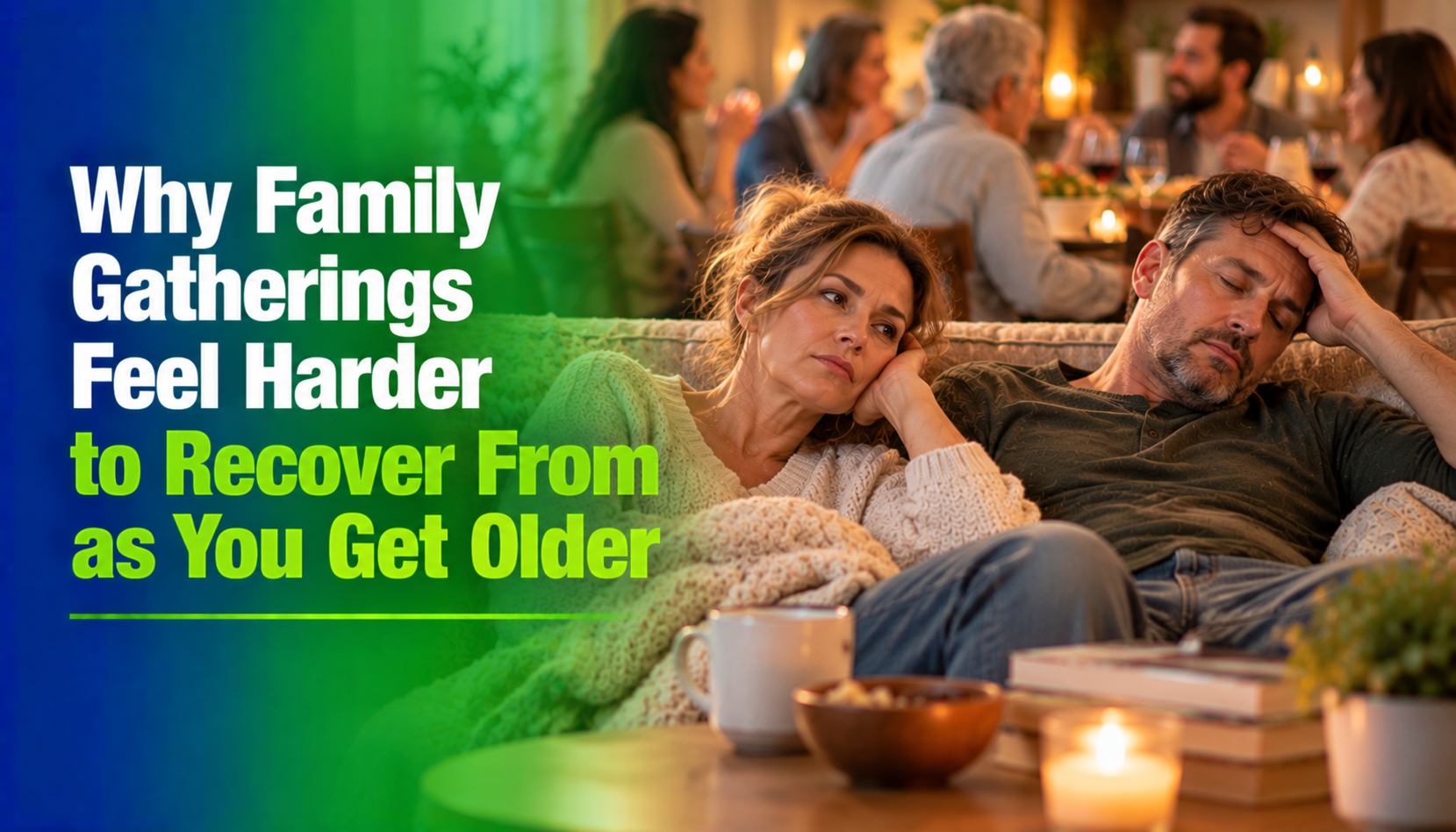
Family gatherings can be joyful and still leave you surprisingly tired afterward. Changes in sleep, travel, meal timing, social stimulation, and everyday responsibilities can make recovery feel slower with age, so protecting your routine and creating space to unwind may help you feel more grounded after a busy weekend.
Why a Happy Weekend Can Still Leave You Drained
There is a particular kind of tiredness that can follow a family gathering. You may have had a wonderful time, laughed for hours, eaten your favorite foods, and genuinely enjoyed seeing people you love—yet by the time everyone leaves, you feel as though your whole system needs a quiet day to catch up.
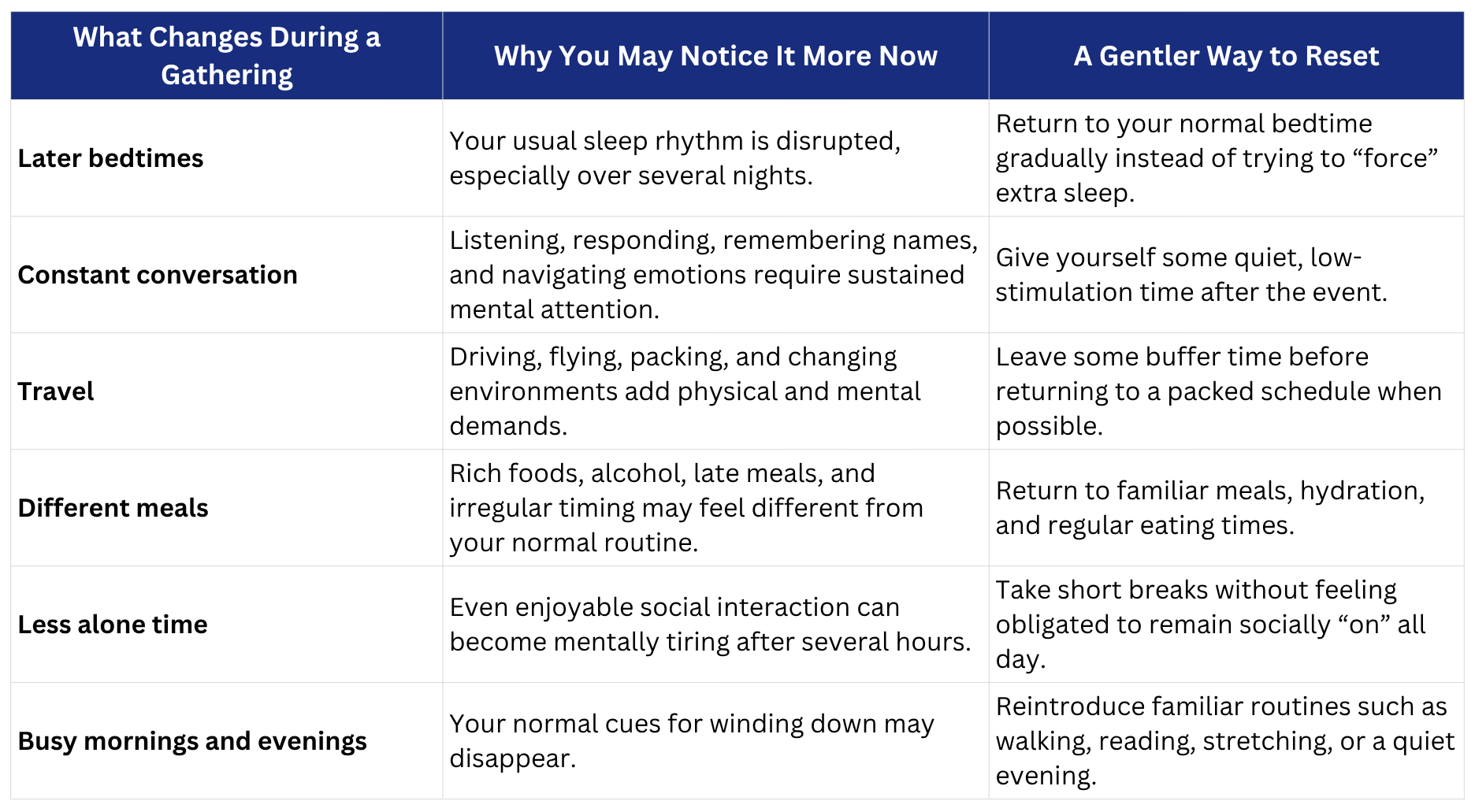
That feeling can become more noticeable as you move through adulthood. It is tempting to interpret it as simply “getting older,” but the reality is usually more layered. A family weekend can combine late nights, travel, unusual meals, extra noise, constant conversation, alcohol, less exercise, different sleeping arrangements, and very little time alone. Even positive experiences ask your brain and body to adapt.
This is why topics such as stress recovery, healthy cortisol rhythm, sleep support, relaxation, nervous system support, mental fatigue, and recovery after social events become increasingly relevant as life gets fuller. The goal is not to avoid family gatherings or assume that feeling tired afterward means something is wrong. It is to understand why a few days outside your normal rhythm can feel more demanding than they used to.
As responsibilities increase, many adults also arrive at social events with less spare capacity than they had years earlier. You may be managing work, children, aging parents, travel plans, meals, finances, and dozens of small decisions before the gathering even begins. By Sunday evening, the exhaustion may reflect the entire week rather than the dinner table alone.
Sleep Disruption Adds Up Faster Than You Think
Sleep is often one of the first things to shift during a family visit. Maybe you stay up talking until midnight, wake earlier because other people are moving around the house, sleep in a guest room, or spend the night in a hotel where every unfamiliar sound seems louder than it should.
One imperfect night is usually manageable. Several nights of shorter or more fragmented sleep, however, can leave the next few days feeling noticeably different.
Sleep also changes across adulthood. Research reviewed by Mander, Winer, and Walker (2017) describes age-related changes in sleep architecture and sleep regulation, including changes in sleep depth, continuity, and timing. That does not mean everyone suddenly becomes a poor sleeper after a certain birthday, but it helps explain why an all-night conversation or a weekend of irregular sleep may not feel quite as effortless as it once did.
The effect can extend beyond feeling sleepy. When rest is disrupted, patience may feel shorter, concentration may require more effort, and ordinary tasks can seem surprisingly demanding. That makes Monday morning after a packed family weekend feel very different from Monday after two quiet, well-rested days at home.
Your Social Battery Is Part of the Picture
Social fatigue is real even when you genuinely enjoy the people around you. Conversation requires constant attention: listening, interpreting tone, remembering details, reading expressions, deciding what to say next, and moving between different personalities.
Family dynamics can add another layer. You may find yourself slipping into old roles without realizing it—the responsible sibling, the peacekeeper, the entertainer, the person who organizes everything, or the one everyone comes to with questions. None of those roles are necessarily negative, but they can require energy.
There is also the simple issue of stimulation. A quiet weekday might involve one or two conversations at a time. A family gathering may mean children playing, television in the background, music, food preparation, multiple conversations, phones ringing, and people moving around continuously.
For someone who normally has predictable pockets of quiet during the day, that can feel like running twenty browser tabs at once.
This does not necessarily mean your “social battery” is shrinking as you get older. More often, your preferences, responsibilities, sleep patterns, and tolerance for disruption may be changing. You may simply know your normal rhythm better now, so you notice more quickly when you have been pulled far away from it.
Small Routine Changes Can Make Recovery Easier
Recovering from a busy gathering does not need to become another task on your wellness checklist. A few simple choices can make the transition back to normal life feel much smoother.
Start before the gathering if possible. If you know Saturday will be full, resist the urge to make Friday equally packed. Going into an intense weekend already exhausted makes it harder to tell whether the gathering itself drained you or whether you simply never had much energy available in the first place.
During the event, keep a few normal habits intact. Drink water throughout the day, eat regular meals, step outside for a short walk, and take a few minutes of quiet when you need them. These small anchors can make an unfamiliar schedule feel less disruptive.
Afterward, avoid treating recovery as something you need to “win.” You do not have to immediately clean the entire house, answer every email, unpack everything, meal prep for the week, and catch up on errands the minute the last guest leaves.
Instead, create a transition. Put on comfortable clothes, make a simple meal, lower the stimulation in the house, and return to your usual bedtime. If you have the flexibility, give yourself a calmer evening rather than trying to squeeze productivity out of the final hours of the weekend.
Your body does not necessarily need an elaborate recovery routine. Often, it simply needs familiar signals that the high-activity part of the weekend is over.
Supporting Your Reset After the Gathering
For people who want nutritional support alongside those habits, 1 Body Cortisol Balance offers an option designed around everyday stress-response wellness, relaxation, rest, and focus.† The formula combines Shoden® Ashwagandha, Rhodiola, Phosphatidylserine, Magnesium, and L-Theanine, bringing together several familiar ingredients in one daily formula.
The key is to think of it as support for your routine rather than as something that “fixes” stress or makes you recover instantly. A supplement cannot replace sleep, boundaries, quiet time, nutritious meals, or the simple decision to leave Monday evening less crowded.
That distinction matters because the best wellness routines are usually the ones that feel realistic. If you already know that long family weekends leave you mentally switched on long after everyone has gone home, a formula designed to support relaxation, rest, and everyday focus may complement the habits you are already trying to build.†
Frequently Asked Questions
-
Yes, long periods of conversation, travel, altered sleep, different meals, and changes in routine can all contribute to temporary fatigue. If tiredness is severe, persistent, or unexplained, it is worth discussing with a healthcare professional rather than assuming it is simply social exhaustion.
Give Yourself Permission to Recover Differently
Getting older does not mean you suddenly become incapable of handling a busy weekend. It often means you have become more aware of what helps you feel like yourself—and what happens when those routines disappear for several days.
A gathering can be joyful and tiring at the same time. You can love seeing your family and still need an evening alone afterward. You can enjoy a late dinner and still recognize that three late nights in a row no longer feel particularly appealing.
That awareness can actually make gatherings easier. Instead of waiting until you are completely drained, you can protect small parts of your usual routine, build in moments of quiet, and give yourself a softer landing once the weekend ends.
The goal is not to eliminate every ounce of fatigue. It is to make recovery feel less like an emergency and more like a normal part of caring for yourself after a full, meaningful few days.
A Thoughtful Option for Stress and Relaxation Support
1 Body Cortisol Balance is formulated for adults who want additional nutritional support for relaxation, rest, everyday stress-response wellness, and focus.† With Shoden® Ashwagandha alongside Rhodiola, Phosphatidylserine, Magnesium, and L-Theanine, it offers a convenient way to add targeted support without turning your post-gathering routine into another complicated project.
-
Supports relaxation†
-
Supports restful routines†
-
Supports everyday focus†
-
Formulated with Shoden® Ashwagandha
-
Includes Rhodiola and Phosphatidylserine
-
Includes Magnesium and L-Theanine
-
Designed for everyday stress-response wellness†
-
Convenient daily formula

If busy weekends tend to leave you feeling as though your mind is still running after the house has finally gone quiet, 1 Body Cortisol Balance may be worth considering as part of your regular wellness routine. Pair it with consistent sleep, nourishing meals, hydration, movement, and genuine downtime so the supplement remains what it is intended to be: one supportive part of a bigger picture.
†These statements have not been evaluated by the Food and Drug Administration. This product is not intended to diagnose, treat, cure, or prevent any disease.
Reference
Mander, B. A., Winer, J. R., & Walker, M. P. (2017). Sleep and human aging. Neuron, 94(1), 19–36. https://doi.org/10.1016/j.neuron.2017.02.004vcd
For all general inquiries, please contact us at help@1body.com
© Copyright. All rights reserved.