The Best Investment you'll ever Make is in Yourself


Fall naturally creates opportunities for slower routines, smaller gatherings, and more meaningful conversations. By protecting your energy, planning simple social rituals, and supporting rest and emotional balance, you can use the season to rebuild relationships without overloading your schedule.
Autumn has a way of changing the pace of everyday life. The heat begins to soften, evenings arrive a little earlier, and many of the fast-moving plans of summer give way to quieter routines. Instead of trying to fit another outing into a packed weekend, people may feel more drawn to shared meals, neighborhood walks, warm drinks, and conversations that are not rushed by the next activity.
That slower rhythm is one reason fall can be a meaningful time to reconnect with people. Meaningful relationships rarely grow through grand gestures alone. They are usually strengthened through repeated contact, small moments of attention, familiar routines, and the feeling that someone has made space for you in their life.
Reconnecting does not have to mean organizing a large gathering or filling every evening with plans. It may look like reaching out to a friend you have not spoken with recently, inviting a family member to dinner, joining a local class, or creating a regular Sunday phone call. The goal is not to become more social for the sake of being busy. It is to build connection in a way that feels warm, sustainable, and genuinely supportive.
Why Autumn Naturally Encourages Slower, More Meaningful Connection
Summer socializing often revolves around movement. There are vacations, outdoor events, family trips, sports, festivals, and long days that make it easy to move quickly from one plan to another. These experiences can be enjoyable, but they do not always create the conditions for deeper conversation.
Fall tends to bring people closer to home. Cooler temperatures encourage indoor gatherings, while earlier sunsets make evenings feel more naturally contained. A shared soup, a cup of tea, a walk through changing leaves, or a casual gathering around the table can create a sense of comfort that makes conversation feel less hurried.
There is also something helpful about the return of routine. After the unpredictability of summer, work and school calendars often become more structured. Regular schedules make it easier to create repeating social habits, such as a weekly coffee, a monthly dinner, or a standing walk with a neighbor.
Familiarity matters because connection grows more easily when people do not have to keep starting from zero. Seeing the same person regularly creates a natural opening for trust, shared memories, and more honest conversations. A recurring plan can become a dependable point of contact during a season that may otherwise feel busy or emotionally demanding.
Fall can also encourage reflection. As the year begins moving toward its final months, people often think more about what has changed, what they value, and which relationships they want to protect. That reflective quality can make it easier to reach out with intention rather than waiting for a perfect reason.
How Social Connection Supports Everyday Well-Being
Connection is often described as an emotional benefit, but its importance reaches into many areas of daily life. Supportive relationships can provide encouragement, practical help, perspective, companionship, and a sense of belonging. A trusted conversation can make a difficult week feel more manageable, while a regular social routine can provide structure when motivation is low.
A large meta-analysis published in PLOS Medicine reviewed 148 studies involving more than 300,000 participants. The researchers found that stronger social relationships were associated with a greater likelihood of survival during the study periods. This does not prove that social connection prevents illness or guarantees a particular outcome, but it supports the broader idea that relationships are an important part of overall health.
The value of connection is not measured only by the number of people in your life. One dependable relationship may provide more emotional support than dozens of casual contacts. Quality, consistency, trust, and the ability to be honest often matter more than having a large social circle.
Social connection can also influence daily habits. People may be more likely to take a walk when a friend is waiting, cook a balanced meal when sharing it with someone, attend an appointment when encouraged by family, or maintain a healthier routine when they feel supported.
The reverse can happen when someone feels isolated. Sleep, motivation, appetite, movement, and self-care may become harder to maintain. That does not mean loneliness is a personal failure. It means that connection is a real need, and rebuilding it deserves patience rather than judgment.
Make Reconnection Easier With Simple Seasonal Rituals
The idea of “reconnecting” can feel vague, especially when life is already full. A ritual makes it more practical by giving connection a specific time, place, or activity.
A seasonal ritual might be as simple as inviting someone for a Saturday morning walk, hosting a soup night once a month, visiting a farmers market together, or calling a relative while preparing dinner. These routines reduce the pressure to plan something new every time.
Shared activities can also help when conversation feels difficult. Baking, gardening, walking, volunteering, visiting a bookstore, or working on a small project gives people something to do together. The activity creates natural pauses and makes the interaction feel less like an interview.
The following table offers a few ways to turn common fall moments into opportunities for connection:
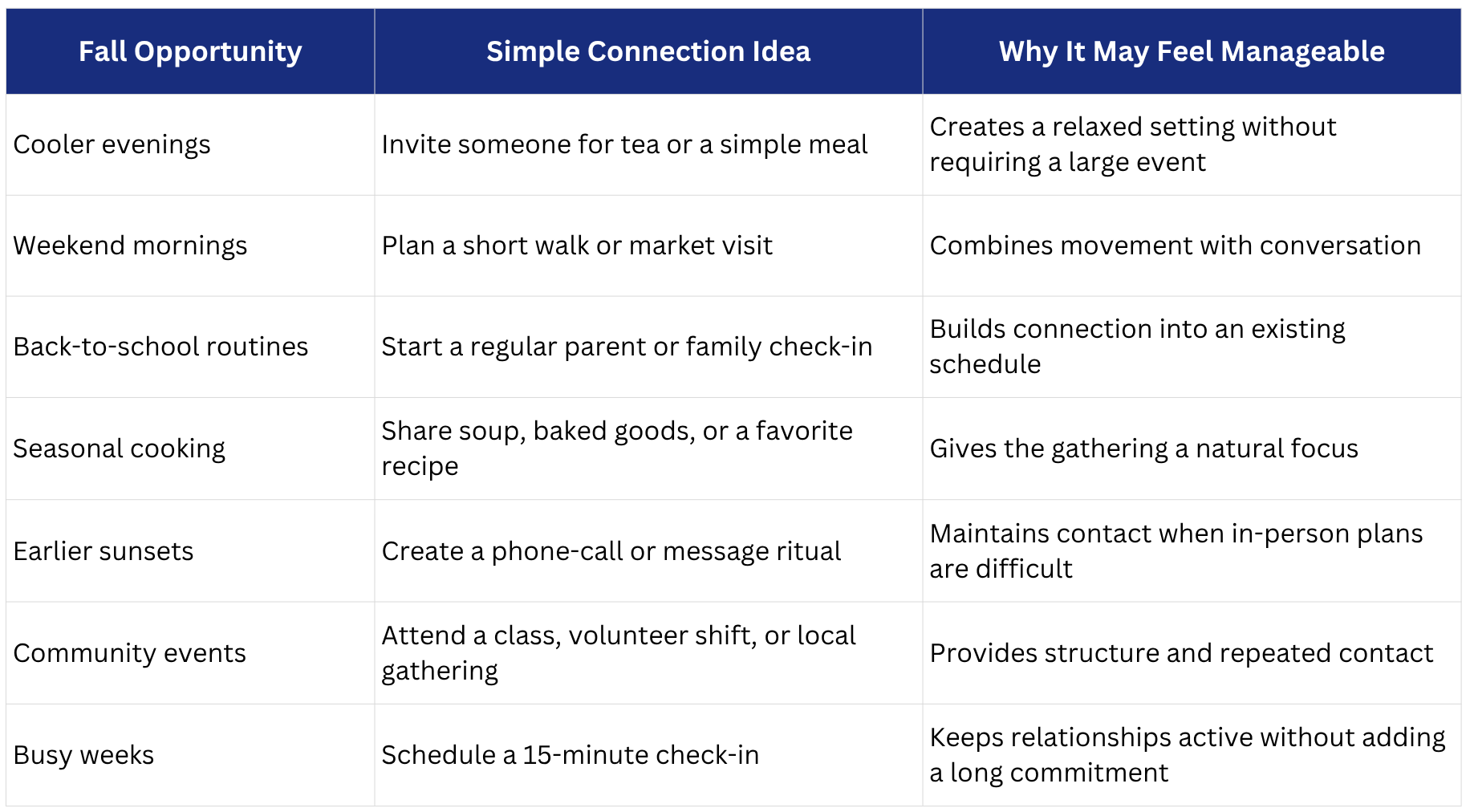
A small plan completed consistently is more useful than an ambitious plan that becomes exhausting. If a full dinner feels like too much, choose coffee. If meeting in person is difficult, send a voice message or schedule a brief call.
The aim is to create enough regularity that connection becomes part of the season rather than something you remember only when loneliness or distance becomes especially noticeable.
Support Your Energy Before, During, and After Social Time
Connection can be nourishing, but socializing also requires energy. When you are already tired, stressed, or mentally overloaded, even enjoyable plans may feel difficult to begin.
Preparing your body can make social time feel more manageable. Eat before leaving the house, drink water, and give yourself a few quiet minutes between responsibilities. Arriving hungry, rushed, or overstimulated can make it harder to feel present.
It can also help to lower the pressure. You do not need to be entertaining, cheerful, or deeply insightful at every gathering. Sometimes connection simply means being there, listening, and allowing the conversation to unfold naturally.
For people who feel socially drained, shorter plans can be especially useful. A forty-five-minute coffee may feel more approachable than an open-ended evening. Knowing when the plan will end can reduce anticipatory stress and make it easier to say yes.
Recovery matters too. After a gathering, allow time to decompress without immediately filling the next hour with work, errands, or screens. A quiet drive home, a warm shower, or a few minutes of stretching can help create a gentle transition.
Stress can affect how we connect. When the mind is preoccupied, it may become harder to listen, respond patiently, or feel emotionally available. This does not mean that stress makes someone uncaring; it means the nervous system may need support before social connection feels natural again.
Create a Fall Connection Plan That Feels Sustainable
A sustainable social plan should fit your actual life, not an idealized version of it. Begin by choosing one or two people or communities you want to reconnect with rather than trying to repair every relationship at once.
Next, choose a realistic frequency. Weekly may work for a close friend, while monthly may be more appropriate for extended family or a community group. Consistency matters more than intensity.
It can help to write the plan into your calendar. Social connection is often treated as optional, which means it gets pushed aside when work or errands become busy. Scheduling it gives the relationship a visible place in your routine.
You can also create different levels of connection for different energy days. On a high-energy day, you might meet in person. On a lower-energy day, you could send a message, share a photo, or make a short call. This keeps the relationship active without turning connection into another source of pressure.
Boundaries belong in the plan as well. Reconnecting does not mean saying yes to every invitation or staying in relationships that feel unsafe, dismissive, or consistently one-sided. Healthy connection should include respect, reciprocity, and room for honest limits.
If social anxiety, grief, depression, or major life changes are making connection especially difficult, professional support may help. A counselor, therapist, support group, or community organization can provide structure and guidance while you rebuild confidence.
Nutritional Support for a Calmer Seasonal Routine
After sleep, movement, balanced meals, boundaries, and meaningful social habits are in place, some adults consider a dietary supplement as part of a broader wellness routine. Supplements cannot create relationships or replace professional care, but they may complement habits that support relaxation, rest, and focus.
1 Body Cortisol Balance is formulated with Shoden® Ashwagandha, rhodiola, phosphatidylserine, magnesium, and L-theanine. The formula is designed to support relaxation, encourage rest, and promote everyday focus as part of a balanced routine.†
This makes it a natural fit for adults who want nutritional support while navigating busier fall schedules, end-of-year responsibilities, or the emotional energy that comes with rebuilding social routines. The product should not be positioned as a treatment for anxiety, loneliness, depression, or a cortisol disorder, and individual experiences may vary.
Anyone taking medication, managing a medical or mental health condition, preparing for surgery, or who is pregnant or breastfeeding should speak with a qualified healthcare professional before beginning a new supplement.
Frequently Asked Questions
-
Cooler weather, earlier evenings, and smaller indoor settings may encourage slower conversations and less activity-focused socializing. The season does not guarantee closeness, but it can create a comfortable setting for more intentional connection.
Let Fall Become a Season of Belonging
Fall offers more than cooler weather and changing leaves. It creates an opportunity to reconsider how you spend your time, which relationships deserve more attention, and what kind of social rhythm feels genuinely supportive.
Reconnection does not need to be dramatic. It can begin with one invitation, one phone call, one shared meal, or one regular place where familiar faces begin to appear. Over time, repeated contact can grow into trust, and trust can grow into a stronger sense of belonging.
The most meaningful social life is not necessarily the busiest one. It is the one that includes people and spaces where you can be present without constantly performing.
Support that process by protecting sleep, eating regularly, moving your body, setting boundaries, and allowing time to recover after demanding days. When nutritional support is appropriate, choose a formula that complements those habits rather than promising to replace them.
1 Body Cortisol Balance
1 Body Cortisol Balance brings together Shoden® Ashwagandha, rhodiola, phosphatidylserine, magnesium, and L-theanine in a thoughtfully formulated daily supplement. It is designed to complement healthy stress-management habits by supporting relaxation, encouraging rest, and promoting everyday focus.†
Product features and wellness-supporting qualities include:
-
Features Shoden® Ashwagandha
-
Includes rhodiola
-
Provides phosphatidylserine
-
Includes magnesium
-
Includes L-theanine
-
Formulated to support relaxation†
-
Designed to encourage rest†
-
Supports everyday focus†
-
Complements sleep, movement, balanced nutrition, and healthy boundaries
-
Offers convenient daily nutritional support
-
Non-GMO and gluten-free formula
-
Intended to support wellness rather than treat a medical condition
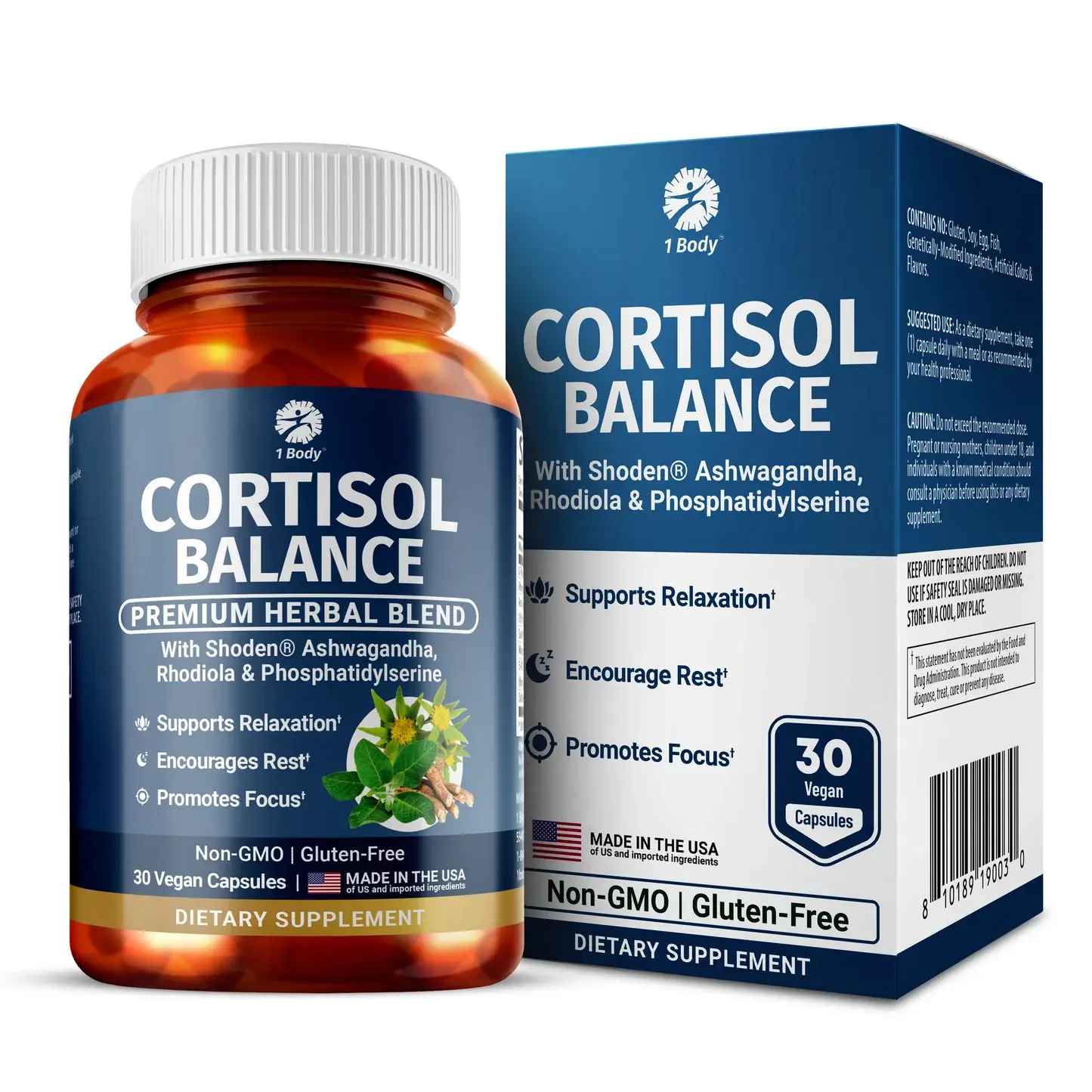
1 Body Cortisol Balance may be a thoughtful choice for adults who want nutritional support while building calmer routines and making more space for meaningful relationships. Its blend of botanicals, amino acids, phospholipids, and minerals fits naturally into a fall wellness plan centered on rest, presence, and connection.
†These statements have not been evaluated by the Food and Drug Administration. This product is not intended to diagnose, treat, cure, or prevent any disease.
Reference
Holt-Lunstad, J., Smith, T. B., & Layton, J. B. (2010). Social relationships and mortality risk: A meta-analytic review. PLOS Medicine, 7(7), e1000316. https://doi.org/10.1371/journal.pmed.1000316
For all general inquiries, please contact us at help@1body.com
© Copyright. All rights reserved.