The Best Investment you'll ever Make is in Yourself


Fall can quietly change the way you eat, move, hydrate, and sleep, all of which can influence how predictable your digestion feels from day to day. A steadier routine built around fiber-rich foods, hydration, movement, fermented foods, and thoughtful digestive support can help make the seasonal transition feel a little easier.
Why Fall Can Change Your Digestive Routine
There is something about fall that naturally changes our rhythm. The mornings feel cooler, the days get shorter, schedules become busier, and the foods we reach for often become warmer, richer, and more filling. None of those changes are inherently bad, but together they can make digestion feel different from what you were used to during summer.
A person who spent July eating salads, fruit, grilled vegetables, and lighter meals may suddenly move toward soups, casseroles, baked dishes, creamy sauces, and holiday-style comfort foods. At the same time, colder weather can mean fewer walks, less spontaneous outdoor activity, and sometimes less water because we simply do not feel as thirsty.
That combination matters because digestion responds to routine. The amount of fiber you eat, how much fluid you drink, how often you move, the size of your meals, and even the times you eat can all influence how comfortable your digestive system feels.
This is one reason people start searching for things like gut health support, probiotics for digestion, digestive enzymes, prebiotics, occasional bloating support, and microbiome balance as the season changes. Often, the goal is not to “fix” the gut overnight. It is simply to make everyday digestion feel more predictable again.
There is also some scientific evidence that the human gut microbiome can change seasonally. A frequently cited study by Smits and colleagues found seasonal cycling in the gut microbiome of the Hadza hunter-gatherers in Tanzania, whose dietary patterns varied significantly across the year. That study does not mean everyone’s gut microbiome changes in the same way each fall, but it does offer an interesting reminder that diet, environment, and season can influence the microbial communities living in the digestive tract.
The Food Shift From Summer to Fall
One of the simplest explanations for seasonal digestive changes is also the most obvious: we eat differently.
Fall foods tend to be more concentrated and filling. A bowl of roasted squash soup, a rich stew, or a baked pasta dish may be comforting when the weather cools, but those meals can also contain more fat, starch, and total volume than a typical summer lunch. If your eating pattern changes quickly, your digestive system may need time to adjust.
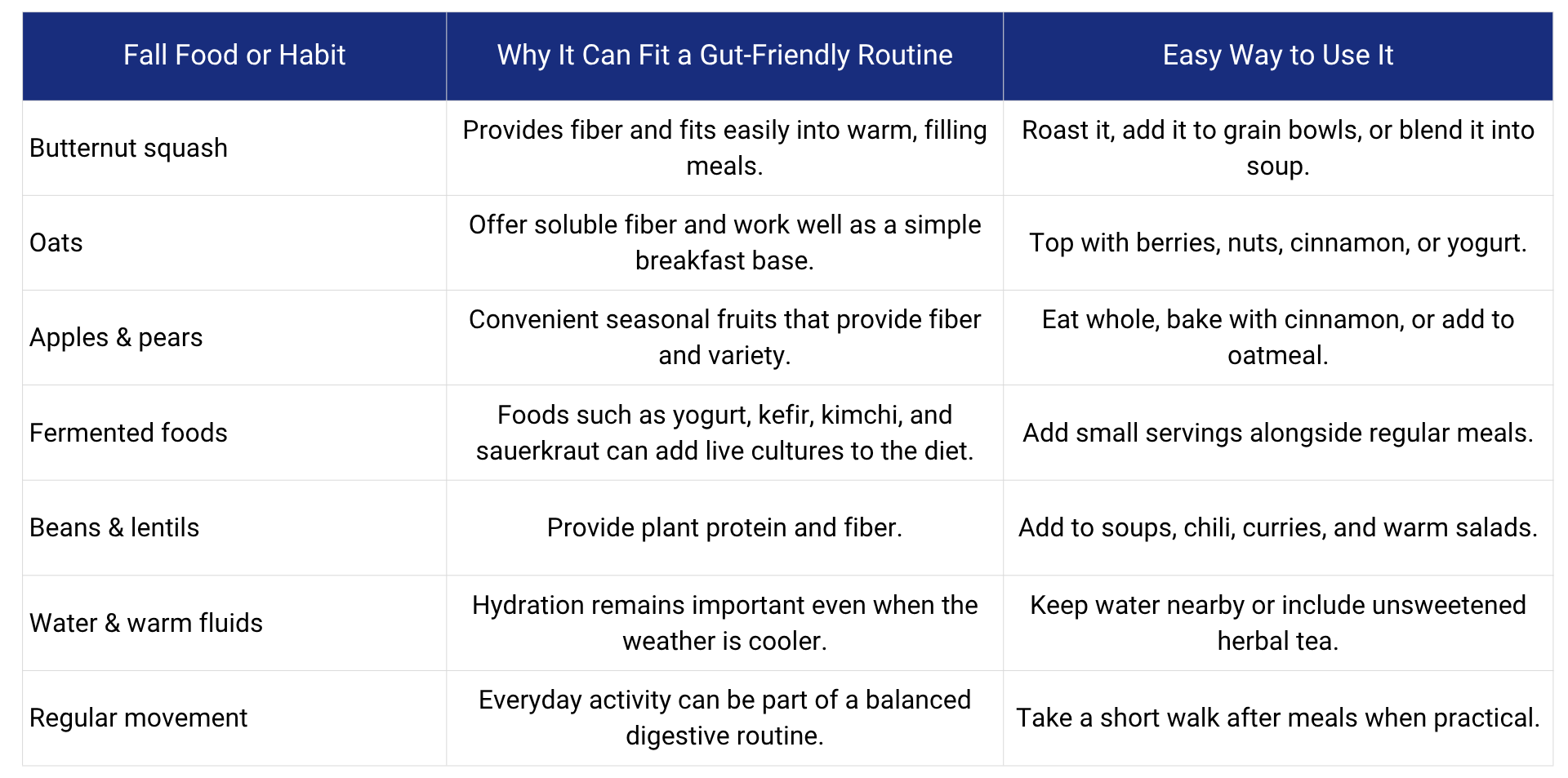
Fiber can be especially important during this transition. Some fall foods naturally provide plenty of it, including squash, apples, pears, oats, beans, lentils, carrots, sweet potatoes, and Brussels sprouts. Fiber supports normal digestive function and also provides substrate for many of the beneficial bacteria in the gut.
The goal is not to suddenly double your fiber intake overnight. Increasing fiber too quickly can sometimes make gas or bloating feel more noticeable, especially if fluid intake does not increase alongside it. A gentler approach is usually easier: add a serving of vegetables to dinner, include oats or fruit at breakfast, and rotate different plant foods through the week.
Hydration, Movement, and the Gut
Hydration is easy to overlook once the weather cools down. In summer, heat is a constant reminder to drink. In fall, you can go several hours without thinking about water at all.
That matters because fluid is part of normal digestive function, particularly when your diet contains more fiber. Fiber works best when it has enough fluid available, so adding more oats, vegetables, beans, or whole grains while cutting back on water can sometimes leave you feeling less comfortable rather than more.
You do not need to obsess over a perfect number of ounces. A more practical approach is to make fluids visible and easy to reach. Keep a water bottle on your desk, drink a glass with meals, and use warm options such as caffeine-free tea when cold water feels less appealing.
Movement also deserves attention. Cooler weather often changes activity levels without us realizing it. A walk that felt automatic in August can quietly disappear from the schedule in October.
You do not need a complicated workout plan to support general wellness. Walking, stretching, household activity, and other regular movement can help keep the day from becoming completely sedentary. A short walk after a meal can also become a useful transition between eating and the rest of your evening.
These habits may sound basic, but that is exactly why they are worth emphasizing. Digestive wellness often responds better to several consistent, manageable habits than to one dramatic change.
Building a More Comfortable Fall Routine
If your digestion tends to feel less predictable during fall, it can help to simplify rather than add more complexity.
Start with meal timing. Long stretches without eating followed by one very large evening meal can feel different from a more balanced schedule. If your workday gets busier in fall, even a small effort to make breakfast, lunch, and dinner more consistent can help create a steadier rhythm.
Next, think about food variety. Your gut microbiome is exposed to whatever you regularly eat, so variety across plant foods can be a useful dietary goal. Instead of relying on the same two vegetables every day, rotate squash, carrots, leafy greens, apples, pears, oats, beans, lentils, onions, garlic, and other foods you enjoy.
Fermented foods can also fit naturally into the season. A little sauerkraut alongside roasted vegetables, yogurt with breakfast, or kefir blended into a smoothie can add variety without requiring a complete change in your meals.
Finally, pay attention to how your habits change when holiday season begins. Travel, restaurant meals, desserts, alcohol, and irregular meal times can all make digestion feel less predictable. There is no need to avoid celebrations; simply maintaining a few anchors—water, fiber, regular meals, movement, and sleep—can make the overall routine feel much steadier.
When Extra Digestive Support Makes Sense
Once the basics are in place, some people like adding a daily probiotic to their routine for additional digestive and microbiome support.† The idea is not to replace fiber-rich foods, hydration, or movement, but to complement those habits with a formula that fits easily into everyday life.
1 Body Probiotics 60 Billion CFUs is designed as a comprehensive daily digestive wellness formula. It combines 60 billion CFUs from 8 probiotic strains with FOS prebiotics, a digestive enzyme blend containing protease, amylase, and lipase, and zinc, all in delayed-release capsules.
The different components serve different roles within the formula. Probiotic strains provide beneficial microorganisms, while FOS acts as a prebiotic ingredient. The digestive enzyme blend includes enzymes associated with the breakdown of proteins, carbohydrates, and fats, making the formula especially relevant for people who want a broad approach rather than a probiotic-only product.
That can be particularly appealing during fall, when meal variety and richness often increase. Instead of positioning a probiotic as something that needs to “correct” your digestion, it is more useful to think of it as one optional layer of support within a routine that already includes balanced meals, fluids, movement, and fiber.†
Frequently Asked Questions
-
Changes in food choices, meal size, hydration, activity, sleep, and daily schedules can all influence how predictable digestion feels. Seasonal routines vary from person to person, so it can help to look at several habits rather than assuming one specific cause.
Give Your Gut a Little More Consistency This Fall
Fall does not automatically cause digestive problems, but it does change many of the habits that influence how we feel after meals. Richer foods, less movement, lower fluid intake, inconsistent schedules, and holiday eating can accumulate gradually until your usual routine feels very different.
The most useful response is often not a dramatic reset. It is returning to a few basics: eat a variety of plant foods, include fiber gradually, stay hydrated, keep moving, and aim for a reasonably consistent eating schedule.
From there, optional digestive support can complement the foundation you have already built. The goal is not perfect digestion every day, because bodies naturally vary. The goal is a routine that feels manageable, nourishing, and easier to maintain as the season changes.
A Daily Option for Seasonal Digestive Support
1 Body Probiotics 60 Billion CFUs brings together probiotics, prebiotics, digestive enzymes, and zinc in one delayed-release capsule formula designed to support digestive and microbiome wellness.† It is a practical option for people who want broader daily gut support while continuing to prioritize food, hydration, movement, and other healthy habits.
-
60 billion CFUs from 8 probiotic strains
-
Includes FOS prebiotics
-
Contains protease, amylase, and lipase
-
Includes zinc
-
Delayed-release capsules
-
Designed to support digestive wellness†
-
Designed to support microbiome balance†
-
Easy to incorporate into a daily routine
If you want a straightforward way to add probiotic, prebiotic, and digestive enzyme support to your fall routine, 1 Body Probiotics 60 Billion CFUs offers those elements in one formula. It can be a useful complement to a varied diet and consistent wellness habits without replacing the basics that keep your digestive routine grounded.

†These statements have not been evaluated by the Food and Drug Administration. This product is not intended to diagnose, treat, cure, or prevent any disease.
Reference
Smits, S. A., Leach, J., Sonnenburg, E. D., Gonzalez, C. G., Lichtman, J. S., Reid, G., Knight, R., Manjurano, A., Changalucha, J., Elias, J. E., Dominguez-Bello, M. G., & Sonnenburg, J. L. (2017). Seasonal cycling in the gut microbiome of the Hadza hunter-gatherers of Tanzania. Science, 357(6353), 802–806. https://doi.org/10.1126/science.aan4834
For all general inquiries, please contact us at help@1body.com
© Copyright. All rights reserved.