The Best Investment you'll ever Make is in Yourself

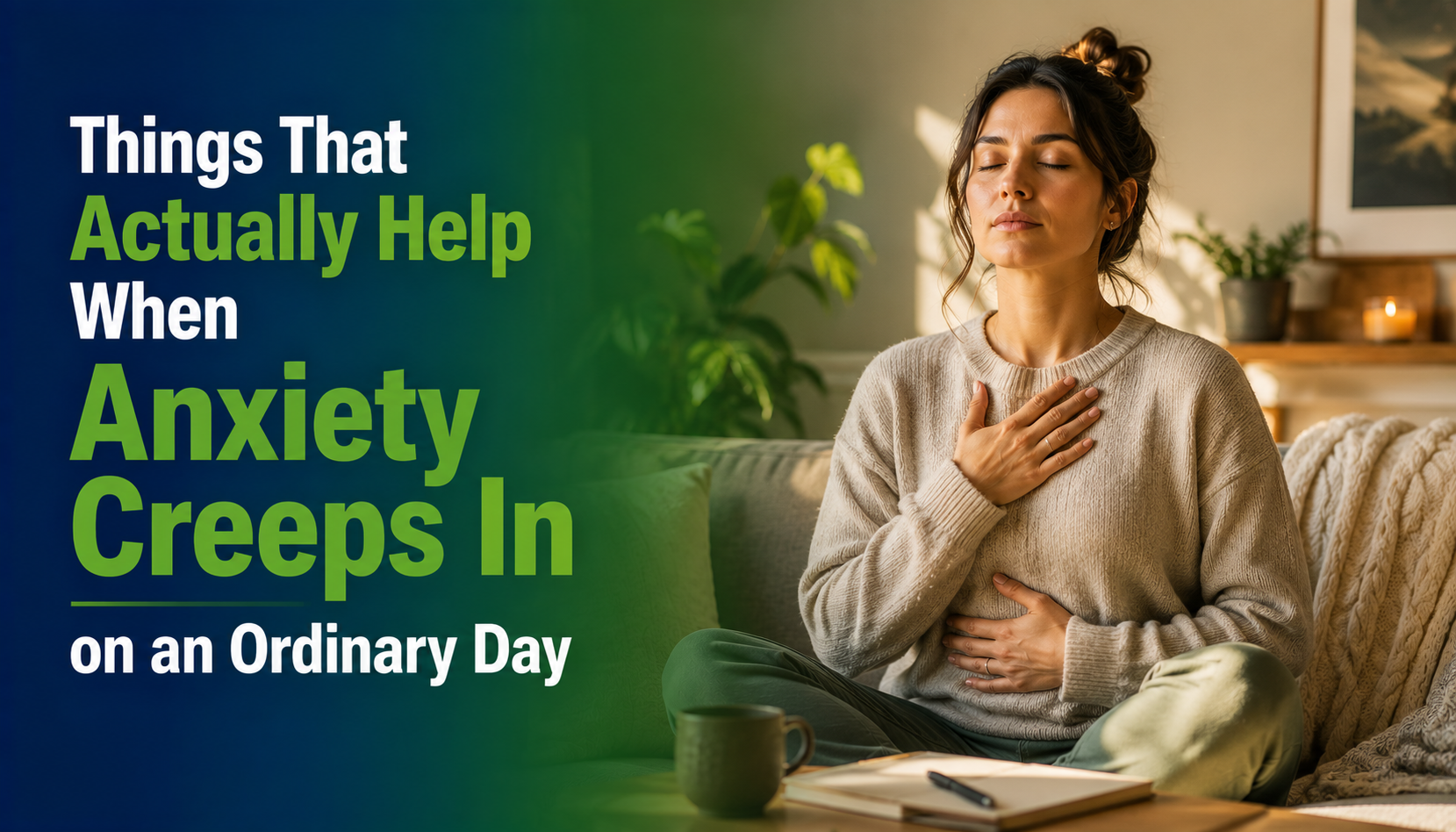
Anxiety and everyday tension can appear during an otherwise normal day, sometimes without one clear cause. Slow breathing, grounding, gentle movement, fewer immediate demands, supportive routines, and appropriate professional care can help you respond with greater steadiness rather than trying to force the feeling away.
An ordinary day can change surprisingly quickly. You may be answering emails, preparing lunch, driving to an appointment, or working through a familiar task when your shoulders tense, your thoughts speed up, or you suddenly feel unsettled. There may be an obvious stressor, but sometimes the feeling seems to arrive before you understand what caused it.
When anxiety creeps in, the first instinct is often to make it disappear immediately. That reaction is understandable, but fighting every sensation can sometimes add another layer of pressure. A gentler approach is to pause, notice what is happening, and choose one simple action that helps you reconnect with the present moment.
Everyday stress support is not about becoming calm at all times. It is about building a small collection of habits that you can return to when life feels noisier than expected. Mindful breathing, grounding exercises, movement, rest, balanced meals, and clear personal boundaries can all have a place in that routine.
Why Uneasiness Can Appear Without an Obvious Trigger
Anxiety does not always begin with one dramatic event. A demanding week, several nights of poor sleep, too much stimulation, an unresolved conversation, a crowded schedule, or even the pressure to keep functioning normally can gradually add up.
Because these demands often arrive one at a time, you may not notice the cumulative effect until your body and mind begin asking for a pause. The moment can feel sudden even when the strain has been building quietly in the background.
Physical sensations may also make the experience more confusing. Tension can show up as shallow breathing, a fluttering stomach, restlessness, muscle tightness, difficulty concentrating, or the sense that you need to escape the situation. These sensations can feel uncomfortable, but they do not tell you by themselves what is causing them.
Rather than trying to diagnose the experience in the moment, begin by observing it. You might say to yourself, “I feel tense right now,” or “My thoughts are moving quickly.” Naming the experience in plain language can create a little distance between you and the feeling without pretending it is not there.
It may also help to check a few basic needs. Consider when you last ate, how well you slept, whether you have been sitting for hours, how much caffeine you consumed, or whether you have moved from one responsibility to another without a break. These questions are not meant to oversimplify anxiety; they simply help you identify practical areas that may need attention.
What to Do When Stress Starts Building
When uneasiness begins to rise, choose one manageable response rather than attempting five techniques at once. The goal is not to perform the exercise perfectly. It is to interrupt the rush of the moment and give yourself somewhere steady to place your attention.
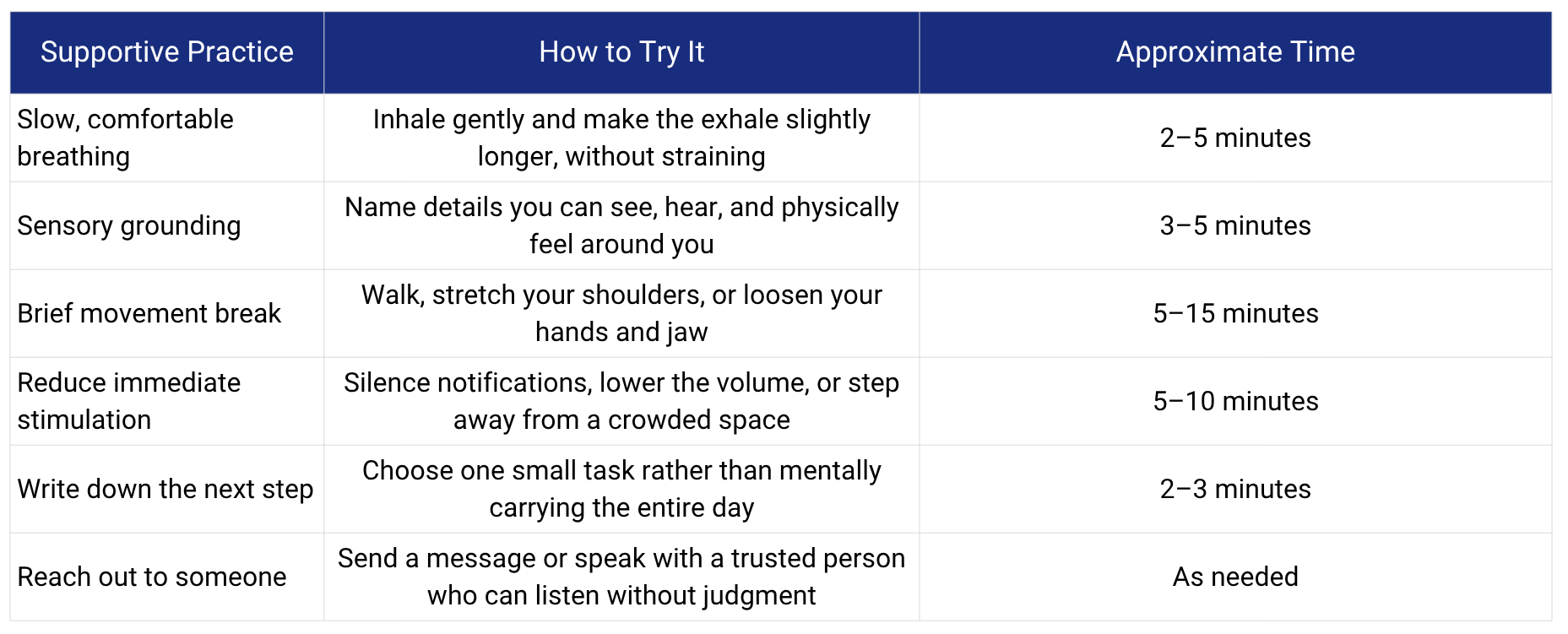
Slow breathing is one of the most accessible options because it can be practiced almost anywhere. Try inhaling gently through your nose, allowing the breath to reach your lower ribs or abdomen, and then exhaling a little more slowly than you inhaled. Continue for a few comfortable rounds without forcing an unusually deep breath.
A randomized study published in Cell Reports Medicine compared several brief breathing practices with mindfulness meditation. Participants who practiced structured breathing reported improvements in mood and reductions in respiratory rate, with the cyclic-sighing group showing particularly strong changes in positive affect during the study period. These findings do not mean that breathing exercises cure anxiety, but they suggest that a brief, intentional breathing practice may be a useful part of a broader daily wellness routine.
Grounding can be helpful when your attention feels pulled toward several worries at once. One familiar method is to notice five things you can see, four you can physically feel, three you can hear, two you can smell, and one you can taste. You do not have to complete every step for the exercise to be useful; even noticing the pressure of your feet against the floor can help redirect your attention to the present.
A short change in environment may also support a mental reset. Step away from the screen, walk to another room, stand near a window, or take a brief outdoor walk when it is safe to do so. Movement gives your attention a new task and may help release some of the physical tension that builds during long periods of sitting.
The following table offers several gentle options for moments when stress begins to feel more noticeable:
If one technique does not help, that does not mean you failed. Different moments call for different forms of support, and what feels useful during a busy afternoon may not be the same thing you need before bed.
Everyday Habits That Support a Calmer Baseline
In-the-moment tools are valuable, but daily patterns matter too. A steady routine can make it easier to notice when your stress level is changing and respond before you feel completely overwhelmed.
Sleep is a practical place to begin. A consistent bedtime, a quieter evening routine, and fewer late-night work demands can help create a clearer boundary between daytime responsibilities and rest. You do not need an elaborate nighttime ritual; repeating a few calming steps can be more useful than constantly searching for the perfect routine.
Regular meals and hydration also deserve attention. Long gaps between meals, relying heavily on caffeine, or moving through the day without drinking enough water can make an already demanding schedule feel harder to manage. Balanced meals with protein, fiber, healthy fats, and carbohydrates can provide a more stable foundation for the day.
Movement does not have to mean an intense workout. Walking, stretching, gardening, cycling, dancing, or completing a short strength routine can support overall physical and emotional well-being. The most helpful form of movement is usually the one you can practice consistently without turning it into another source of pressure.
Creating small limits around technology can also support mental space. Constant alerts, rapid news updates, and unfinished digital conversations keep asking for attention, even when you are trying to rest. Consider choosing a few periods during the day when notifications are reduced and your focus is allowed to remain in one place.
Connection matters as well. Anxiety often feels more isolating when you believe you must hide it or manage every difficult moment alone. Talking with a trusted friend, family member, counselor, or healthcare professional can help you organize what you are feeling and decide whether additional care would be useful.
Persistent anxiety, repeated panic-like episodes, ongoing sleep disruption, or distress that interferes with work, relationships, or everyday responsibilities should be discussed with a qualified professional. Seek urgent medical attention for severe chest pain, fainting, significant breathing difficulty, thoughts of self-harm, or symptoms that may represent an immediate medical emergency.
When Additional Daily Support May Fit Your Routine
After establishing basic habits such as sleep, movement, balanced nutrition, breathing exercises, and appropriate professional care, some adults consider adding a dietary supplement to their wellness routine. A supplement should not be treated as a cure for anxiety, a replacement for prescribed treatment, or an answer to every source of stress.
1 Body Cortisol Balance is formulated as a daily wellness supplement featuring Shoden® Ashwagandha, rhodiola, and phosphatidylserine. According to the product label, the blend is designed to support relaxation, encourage rest, and promote focus as part of a balanced routine.
The formula comes in 30 vegan capsules and is labeled non-GMO and gluten-free. It is also identified as made in the USA with domestic and imported ingredients, which may appeal to shoppers looking for a straightforward capsule format with clearly named ingredients.
Individual experiences with supplements vary, and the suitability of any ingredient depends on personal circumstances. Speak with a qualified healthcare professional before use when you are pregnant or breastfeeding, take medication, have a diagnosed medical condition, are preparing for surgery, or receive treatment for anxiety, sleep concerns, mood changes, or hormone-related conditions.
Frequently Asked Questions
-
Stress can build gradually through poor sleep, competing responsibilities, physical tension, overstimulation, or unresolved concerns. A calm moment of observation may help you identify patterns, but persistent symptoms deserve professional guidance.
Build a Routine You Can Return To
When anxiety appears on an ordinary day, you do not need to solve your entire life in that moment. You may only need to slow your breathing, place both feet on the floor, step away from the noise, eat something nourishing, move your body gently, or tell someone you are having a difficult afternoon.
These actions may seem small, but their value comes from being practical and repeatable. A supportive routine is not measured by whether you remain perfectly calm; it is measured by whether you have healthy ways to respond when calm feels less accessible.
Over time, noticing your patterns can help you make more thoughtful decisions about sleep, workload, movement, personal boundaries, professional care, and nutritional support. The aim is not to remove every stressful moment but to create a steadier foundation for meeting those moments with patience and perspective.
1 Body Cortisol Balance
1 Body Cortisol Balance brings Shoden® Ashwagandha, rhodiola, and phosphatidylserine together in a convenient daily capsule. The formula is intended to complement healthy stress-management habits by offering nutritional support for relaxation, rest, and focus without positioning the supplement as a treatment or cure.
Product features and wellness-supporting qualities include:
-
Formulated with Shoden® Ashwagandha
-
Includes rhodiola and phosphatidylserine
-
Designed to support relaxation
-
Formulated to encourage rest
-
Intended to promote everyday focus
-
Convenient 30-capsule supply
-
Vegan capsules
-
Non-GMO formula
-
Gluten-free formula
-
Made in the USA with domestic and imported ingredients
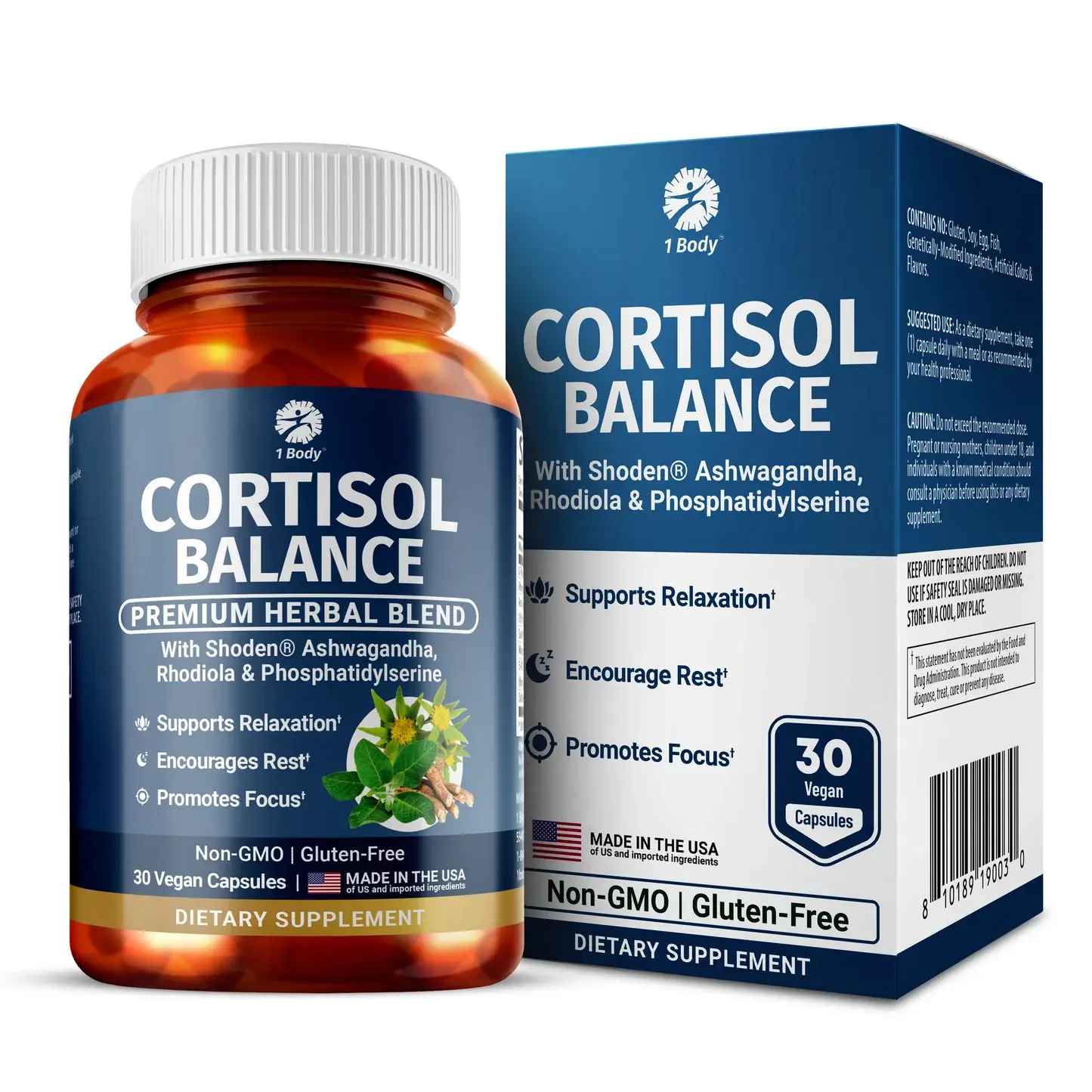
1 Body Cortisol Balance may be a thoughtful choice for adults who want a simple supplement to accompany breathing exercises, balanced nutrition, movement, sleep, and other healthy daily practices. Its combination of recognizable ingredients and convenient capsules makes it easy to include in an established wellness routine, with professional guidance when appropriate.
Reference
Balban, M. Y., Neri, E., Kogon, M. M., Weed, L., Nouriani, B., Jo, B., Holl, G., Zeitzer, J. M., Spiegel, D., & Huberman, A. D. (2023). Brief structured respiration practices enhance mood and reduce physiological arousal. Cell Reports Medicine, 4(1), 100895. https://doi.org/10.1016/j.xcrm.2022.100895
For all general inquiries, please contact us at help@1body.com
© Copyright. All rights reserved.