The Best Investment you'll ever Make is in Yourself


As autumn progresses, lower sun angles and shorter days can reduce the amount of UVB radiation available for vitamin D production in the skin, depending on where you live. At the same time, less daylight can shift sleep timing, activity levels, mood, and daily routines, so fall wellness is best supported with a combination of outdoor light, nutrient-dense foods, regular movement, consistent sleep, and appropriate nutritional support.
October can feel like a turning point. The weather cools, the days noticeably shorten, and the rhythm of daily life starts to change. Morning walks may happen in dimmer light, evenings arrive earlier, and time outside often becomes less automatic than it was during summer.
One of the less obvious changes is what happens to vitamin D production. Your body can make vitamin D when skin is exposed to ultraviolet B, or UVB, radiation from sunlight. But as the sun sits lower in the sky during fall and winter, less UVB may reach the ground in many regions, which means natural vitamin D synthesis can become less reliable.
That seasonal change does not affect everyone the same way. Latitude, skin pigmentation, age, clothing, sunscreen use, time spent outdoors, cloud cover, and individual health all influence vitamin D status. Still, October is a useful reminder to pay closer attention to the habits that support your overall seasonal wellness.
The important thing is not to blame every afternoon slump or restless night on vitamin D. Energy, sleep, mood, and focus are influenced by many factors, including daylight, activity, nutrition, stress, and sleep timing. A better approach is to look at the whole routine.
Why October Can Change More Than Your Schedule
By October, the shift from summer is no longer subtle. The sun rises later and sets earlier, temperatures drop, and outdoor time often decreases. That can change how much natural light you get, how active you are, and even when you feel ready to sleep.
For many people, the schedule changes before they consciously notice it. A lunchtime walk gets replaced with eating at the desk. An after-dinner stroll disappears because it is already dark. Outdoor workouts move indoors or stop altogether. At the same time, work and school schedules may become busier, and holiday planning starts to enter the calendar.
All of these changes can affect how your day feels. Energy may seem less steady, mornings can feel slower, and evenings may become more sedentary.
This is where the idea of an “October drop” becomes useful, but it should be understood as a seasonal pattern rather than a diagnosis. The body is adjusting to changes in light exposure and routine, not necessarily experiencing one single nutrient problem.
That distinction matters because feeling tired in autumn does not automatically mean your vitamin D is low. The only way to know whether you have a deficiency is through appropriate testing and professional evaluation.
What Actually Happens to Vitamin D Production in Fall
Vitamin D is unique because the body can produce it in the skin when there is sufficient UVB exposure. In summer, that process is generally easier in many locations because the sun is higher in the sky and more UVB reaches the surface.
As autumn progresses, the angle of the sun changes. At higher latitudes, UVB levels can become too low during parts of fall and winter to support meaningful skin synthesis.
A classic study by Webb, Kline, and Holick examined the influence of season and latitude on vitamin D production in the skin. The researchers found that in places farther from the equator, there were periods of the year when sunlight exposure did not produce meaningful vitamin D synthesis. The study does not mean that everyone becomes deficient in October, but it supports the broader point that geography and season can significantly affect how much vitamin D your skin can make.
That is a useful reason to pay attention to dietary sources during the colder months. Foods such as fatty fish, egg yolks, fortified dairy or plant-based beverages, and certain fortified cereals can contribute vitamin D.
For some people, a clinician may also recommend a vitamin D supplement based on diet, blood levels, or individual risk factors. It is best not to assume that more is better, because excessive vitamin D intake can also be harmful.
The most sensible approach is to think of October as a good time to review your overall nutrient intake and, if appropriate, discuss testing with a healthcare professional.
Shorter Days Can Affect Your Daily Rhythm Too
Vitamin D is only one part of the fall wellness story. Daylight also helps regulate circadian rhythm, the internal timing system that influences sleep, wakefulness, and patterns of alertness throughout the day.
As mornings become darker, it may feel harder to get going. As evenings get dark earlier, you may feel sleepier sooner or find yourself spending more time indoors under artificial light.
Melatonin, a hormone involved in sleep timing, is influenced by light exposure. Darkness generally signals the body that nighttime is approaching, while morning light helps reinforce wakefulness and daytime timing.
This is why outdoor light can be helpful even when you are not getting much UVB for vitamin D production. Morning daylight still provides an important circadian cue.
Try to get outside early in the day when practical, even if it is cloudy. A short walk, a few minutes on a porch, or simply spending time near a bright window can help make the transition from night to day feel more defined.
Evening habits matter too. Bright screens, work emails, and overhead lights can keep the environment feeling active long after the sun has set. A calmer evening routine can make the shift into nighttime feel more natural.
The goal is not to force your body into a perfect rhythm. It is to give it clearer cues.
Food, Movement, and Morning Light Still Matter
When energy drops in October, it can be tempting to search for one supplement or one nutrient to “fix” the problem. In reality, the strongest foundation is usually a combination of simple habits.
Start with meals. Balanced nutrition can help support more consistent energy throughout the day. Include a source of protein, fiber-rich carbohydrates, healthy fats, and colorful plant foods when possible.
B vitamins are often associated with energy, but they do not act like stimulants. They participate in normal energy metabolism and other essential cellular processes. Foods such as eggs, legumes, whole grains, meat, fish, dairy, leafy greens, and fortified foods can all contribute different B vitamins.
Movement can also help keep your daily rhythm more stable. A lunchtime walk, light strength training, stretching, or indoor movement can be useful when colder weather makes outdoor exercise less appealing.
Hydration is another habit that often slips in fall. Cooler temperatures can make thirst feel less obvious, so keeping water or unsweetened tea nearby may help you stay more consistent.
Here is a simple way to think about common October changes:
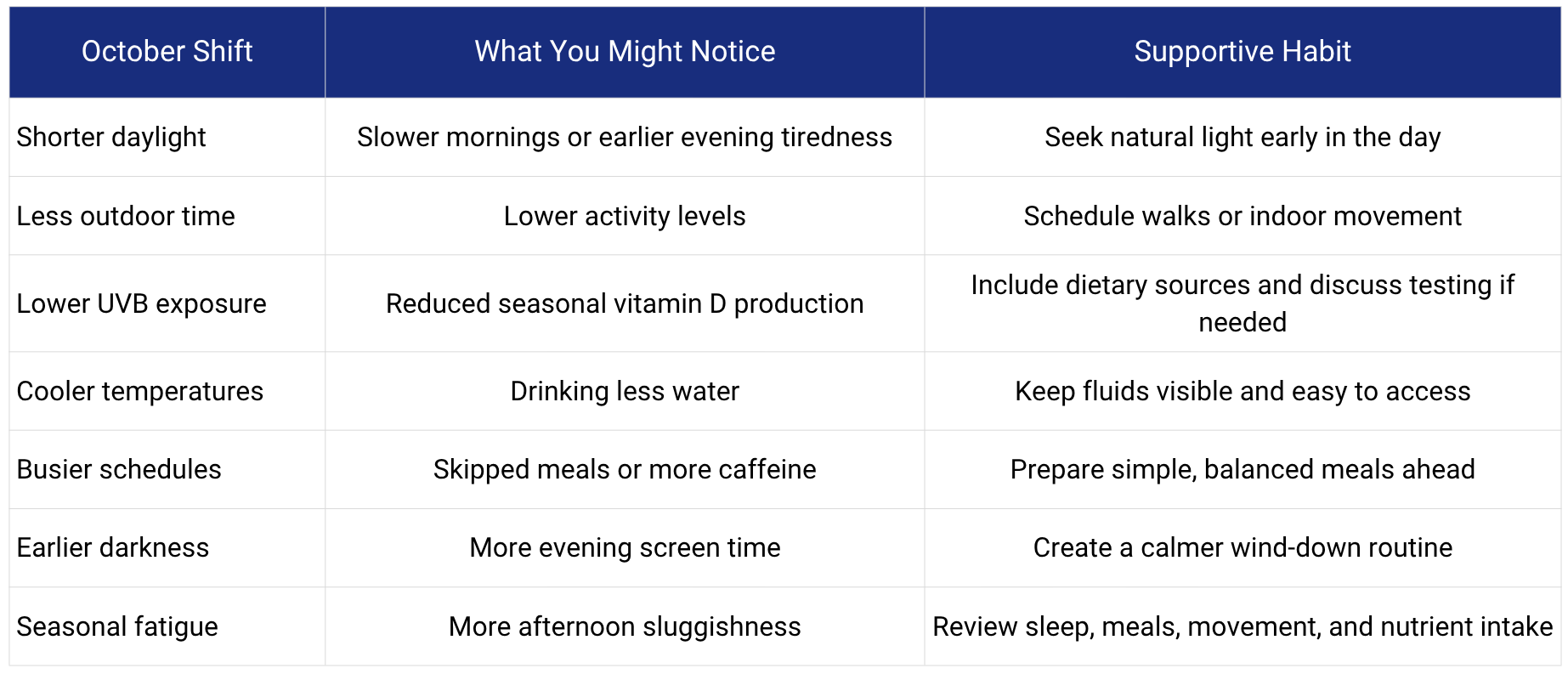
None of these changes guarantees a specific result, but together they create a more supportive seasonal routine.
Build a Seasonal Routine That Supports Energy and Rest
A useful fall routine should work with the season rather than against it. You do not need to maintain the exact same schedule you had in July.
In the morning, prioritize light exposure and a real meal. Even something simple like eggs with toast, yogurt with oats and fruit, or oatmeal with nuts can help create a more grounded start to the day.
During the afternoon, pay attention to how much you are sitting. A brief walk or stretch can be useful, especially if your instinct is to reach for another cup of coffee every time energy dips.
In the evening, create a boundary between work and rest. That may mean dimming the lights, putting your phone away, taking a warm shower, reading, or preparing for the next day so your mind does not need to keep everything active.
Consistency is more useful than perfection. A routine does not need to happen at exactly the same minute every day, but a reasonably steady sleep and wake schedule can help keep your internal rhythm more predictable.
If fatigue lasts for weeks, gets worse, or interferes with work or daily life, it is worth checking in with a healthcare professional. Low energy can be related to many causes, including anemia, thyroid concerns, sleep disorders, medication effects, vitamin D deficiency, or other health conditions.
Where Targeted Nutritional Support May Fit
Once the basics are in place, some adults choose dietary supplements to complement their seasonal wellness routine.
1 Body Methylated Vitamin B Complex provides a range of essential B vitamins, including 5-MTHF methylated folate, vitamin B12, vitamin B6, thiamin, riboflavin, niacin, and biotin. These nutrients participate in normal energy metabolism and nervous system function, making the formula a natural fit for adults looking to support everyday nutritional needs during a busy fall routine.†
For the evening, 1 Body Magnesium Glycinate Complex provides magnesium in a formula that includes magnesium bisglycinate chelate and magnesium oxide, along with MCT oil powder and trace minerals. Magnesium supports normal muscle function and can complement an evening routine centered on relaxation and recovery.†
Neither product should be positioned as a treatment for fatigue, insomnia, seasonal mood changes, or vitamin D deficiency. They are better understood as nutritional tools that fit alongside food, sleep, movement, and appropriate healthcare.
Anyone taking medication, managing kidney disease or another medical condition, or who is pregnant or breastfeeding should speak with a qualified healthcare professional before adding new supplements.
Frequently Asked Questions
-
Shorter days, changes in sleep timing, reduced activity, busier schedules, and shifting nutrition habits can all contribute to lower energy. Persistent or worsening fatigue should be evaluated rather than automatically blamed on the season.
Let October Be a Seasonal Reset, Not a Slump
October does not have to feel like the month when your energy disappears. It can instead serve as a reminder that your environment has changed and your routine may need to change with it.
Pay attention to light, food, movement, hydration, and sleep before assuming that one nutrient is responsible for how you feel. These simple foundations are often the most useful starting point.
It is also worth remembering that vitamin D production naturally varies by season and location. That does not mean everyone needs a supplement, but it does make autumn a good time to review dietary sources and discuss testing if you have risk factors or ongoing symptoms.
For everyday energy and recovery, think in terms of support rather than correction. B vitamins can contribute to normal energy metabolism, magnesium can support normal muscle function and relaxation, and a consistent routine can help keep your days feeling more predictable.
Seasonal wellness is less about chasing the perfect level of energy and more about giving your body what it needs to adapt.
Support Your Fall Routine With 1 Body Methylated Vitamin B Complex and Magnesium Glycinate Complex
1 Body Methylated Vitamin B Complex and 1 Body Magnesium Glycinate Complex offer two complementary ways to support a balanced fall routine. The B-complex provides essential B vitamins for normal energy metabolism and nervous system function, while Magnesium Glycinate Complex supports normal muscle function, relaxation, and bone health as part of an established wellness routine.†
Formula and wellness-supporting features include:
-
1 Body Methylated Vitamin B Complex features 5-MTHF methylated folate
-
Includes vitamin B12 and vitamin B6
-
Provides thiamin, riboflavin, niacin, and biotin
-
Supports normal energy metabolism†
-
Supports normal nervous system function†
-
Complements balanced nutrition and an established morning routine
-
1 Body Magnesium Glycinate Complex features magnesium bisglycinate chelate
-
Includes magnesium oxide
-
Includes MCT oil powder and trace minerals
-
Supports normal muscle function†
-
Supports relaxation as part of an evening wellness routine†
-
Supports bone health†
-
Both formulas are intended to complement healthy habits rather than replace them

For adults who want a simple seasonal wellness routine, these products can fit naturally into different parts of the day: B-vitamin support alongside morning nutrition and magnesium alongside an evening wind-down routine. Their straightforward positioning reflects 1 Body’s commitment to transparent wellness education and thoughtful formulas inspired by its “Nature’s Gifts, Refined by Science” philosophy.
†These statements have not been evaluated by the Food and Drug Administration. These products are not intended to diagnose, treat, cure, or prevent any disease.
Reference
Webb, A. R., Kline, L., & Holick, M. F. (1988). Influence of season and latitude on the cutaneous synthesis of vitamin D3: Exposure to winter sunlight in Boston and Edmonton will not promote vitamin D3 synthesis in human skin. The Journal of Clinical Endocrinology & Metabolism, 67(2), 373–378. https://doi.org/10.1210/jcem-67-2-373
For all general inquiries, please contact us at help@1body.com
© Copyright. All rights reserved.