The Best Investment you'll ever Make is in Yourself

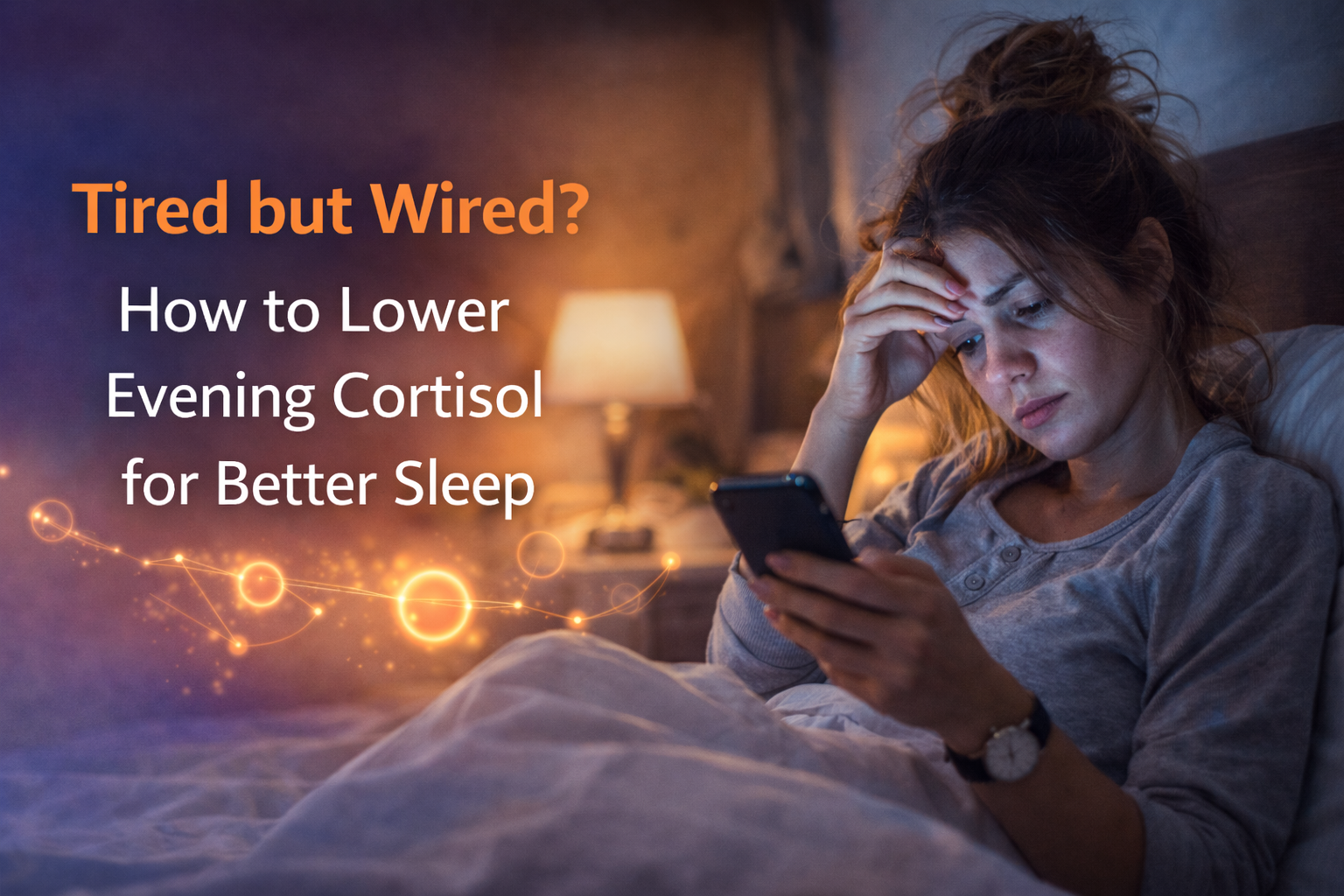
Modern life keeps our internal “lights” on long after sunset. Instead of naturally tapering off in the evening, cortisol often stays elevated due to blue light exposure, late-night productivity, and constant stimulation. This disruption creates the familiar “tired but wired” state—physically exhausted but mentally alert. Adaptogens like Shoden® Ashwagandha and Rhodiola, along with targeted nutrients like Phosphatidylserine, help recalibrate the stress response so your body can transition smoothly from focus to rest.
Why You Feel Exhausted but Can’t Sleep
There’s a specific kind of fatigue that feels uniquely frustrating. Your body is drained. Your eyes are heavy. Yet the moment your head hits the pillow, your mind turns on like a spotlight. Thoughts race. To-do lists replay. Small concerns feel amplified. Sleep feels close—but just out of reach.
This isn’t random. It’s biochemical.
Your body operates on a circadian rhythm—a 24-hour hormonal cycle that regulates alertness and rest. Cortisol, often labeled the “stress hormone,” plays a central role in this rhythm. In a healthy pattern, cortisol rises in the morning to promote wakefulness and gradually declines throughout the day, reaching its lowest point at night so melatonin can rise and initiate sleep.
But modern life interferes with that natural curve.
Late-night screen exposure suppresses melatonin. Evening emails reactivate work-related stress. Caffeine consumed earlier in the day lingers longer than expected. Even constant low-level stress keeps the hypothalamic-pituitary-adrenal (HPA) axis activated. The result is elevated evening cortisol, which blocks the nervous system from a relaxed state.
You feel tired—but your internal dimmer switch is stuck on high.
The Science of Dimming the Internal Lights
When cortisol remains elevated at night, several things happen simultaneously. Your heart rate may stay slightly higher. Your mind remains alert. Blood sugar regulation shifts. The brain perceives subtle “threat signals,” even if there is no real danger present. From an evolutionary standpoint, elevated cortisol signals that now is not the time to sleep—it’s time to stay vigilant.
The problem is that the modern stressors triggering this response aren’t predators. They’re deadlines, notifications, and constant stimulation.
Over time, a persistently dysregulated stress response can lead to:
-
Difficulty falling asleep
-
Waking up between 2–4 AM
-
Morning grogginess despite adequate time in bed
-
Reduced daytime focus
-
Heightened anxiety or irritability
Balancing cortisol is not about eliminating stress. It’s about restoring rhythm.
Adaptogens: Recalibrating the Stress Response
Adaptogens are plant compounds that help the body adapt to stress. Rather than sedating you, they support the HPA axis in responding proportionally to stressors. The goal is not suppression—it’s regulation.
1 Body Cortisol Balance was formulated around this principle. Its ingredients work synergistically to support calm focus during the day and deeper rest at night.
Key Ingredients for Evening Balance
To lower the internal lights, you need compounds that signal safety to your nervous system. When the brain perceives safety, cortisol production naturally tapers.
Here’s how the core ingredients function:
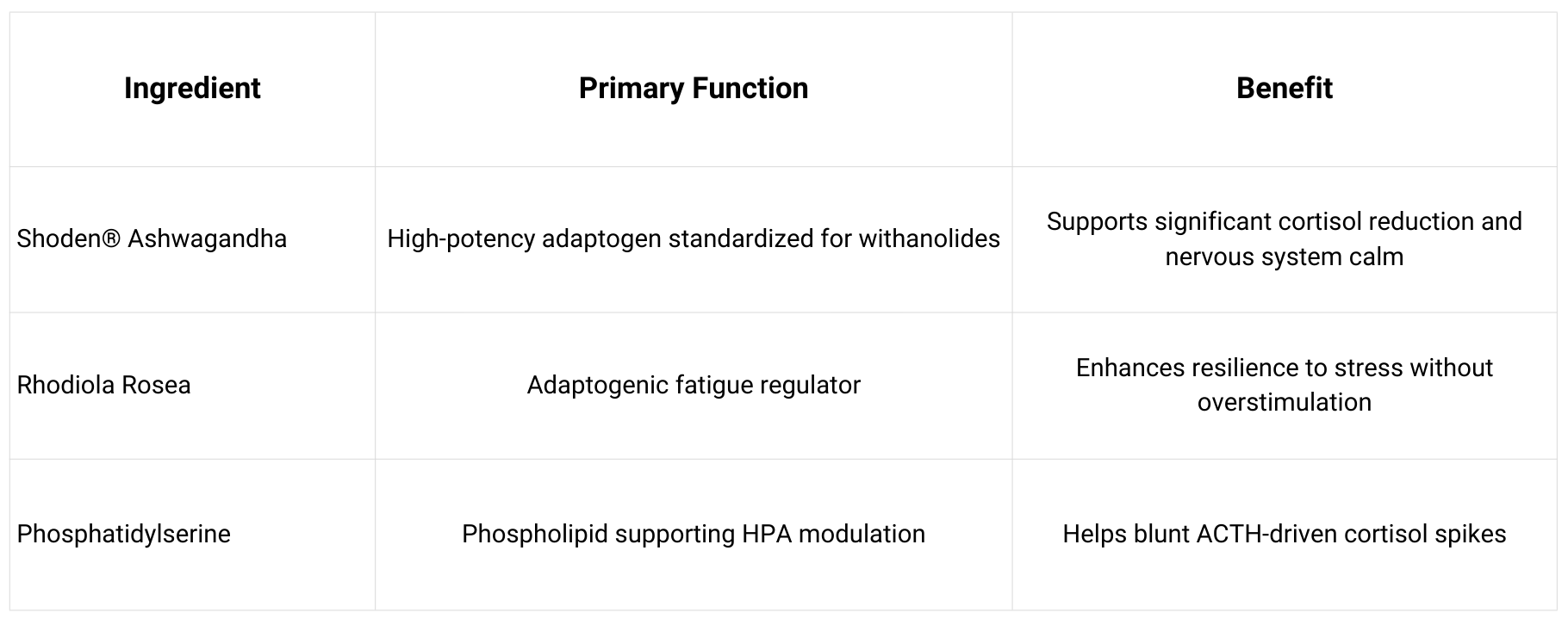
Shoden® Ashwagandha
Shoden® is a clinically studied, high-potency extract of Ashwagandha. Unlike generic forms, it is standardized for withanolide glycosides, the active compounds responsible for adaptogenic effects. Research suggests Ashwagandha can help lower elevated cortisol levels and support subjective feelings of calm. It works by modulating stress pathways rather than inducing sedation, making it effective for individuals who feel mentally overstimulated in the evening.
Rhodiola Rosea
Rhodiola is often associated with energy, but its true benefit lies in resilience. It helps the body manage stress without crashing afterward. When cortisol patterns are erratic, Rhodiola supports smoother adaptation. It does not artificially stimulate the nervous system. Instead, it promotes balanced energy earlier in the day so that your evening decline feels natural rather than abrupt.
Phosphatidylserine
Phosphatidylserine is a phospholipid integral to cell membrane health, particularly in the brain. It has been studied for its role in modulating the ACTH response—a hormone that signals the adrenal glands to produce cortisol. By helping blunt excessive ACTH signaling, Phosphatidylserine supports a healthier cortisol curve, especially after periods of physical or mental stress.
Why Balance Matters More Than Sedation
Many nighttime products rely on sedatives. While these can induce drowsiness, they don’t correct the underlying hormonal imbalance. You may fall asleep, but still wake feeling unrested.
Cortisol Balance focuses on recalibration. By supporting the natural decline of cortisol in the evening, it allows melatonin to rise on schedule. This creates sleep that feels restorative rather than forced.
During the day, balanced cortisol also enhances mental clarity. When cortisol is too high, you feel anxious. When it’s too low, you feel fatigued. The goal is optimal range—not extremes.
Signs Your Internal Dimmer Switch Is Stuck
Difficulty Shutting Off at Night
When your internal dimmer switch is functioning properly, your body gradually transitions from alertness to relaxation as evening approaches. If you find it hard to “turn off” your thoughts at night, this may signal that your cortisol rhythm hasn’t tapered as it should. You lie down, physically tired, but your brain starts reviewing conversations, planning tomorrow, or revisiting minor stressors. This persistent mental activity often reflects elevated evening cortisol keeping your nervous system in problem-solving mode instead of recovery mode.
Racing Thoughts Despite Physical Exhaustion
Another common sign is the disconnect between body and mind. You may feel drained from the day, yet mentally alert or even restless. Yawning doesn’t translate into sleepiness. Instead, your thoughts feel accelerated. This “tired but wired” sensation suggests that stress hormones are still signaling vigilance when your body is ready for rest. Cortisol’s role is to keep you alert in the face of challenge, but when it lingers at night, it interferes with the transition into restorative sleep.
Light, Easily Disrupted Sleep
Even if you fall asleep, you might wake frequently or find your sleep unusually light. Minor disturbances such as small noises or slight temperature changes wake you more easily than before. Elevated nighttime cortisol can reduce the depth of restorative sleep stages, leaving you feeling unrested even after a full night in bed. If you wake up feeling as though you never truly “powered down,” your stress rhythm may be misaligned.
Afternoon Crash, Evening Second Wind
A classic pattern of cortisol imbalance is the afternoon energy crash followed by an unexpected surge of alertness at night. Around mid-afternoon, focus fades and fatigue sets in. Then, after dinner, you suddenly feel mentally sharp and capable of tackling tasks. While this second wind may feel productive, it often delays sleep and perpetuates the cycle. This inversion of energy timing suggests that your cortisol curve is shifted later than it should be.
Caffeine Dependence During the Day, Restlessness at Night
If you rely on caffeine to function during the day but struggle to relax in the evening, it may indicate that your natural cortisol rhythm is not providing steady energy. Caffeine can temporarily stimulate alertness, but it does not correct underlying hormonal timing. Over time, this reliance can further blur the distinction between daytime activation and nighttime relaxation, making it harder for your body to recognize when to wind down.
Subtle Signs of Ongoing Stress Activation
Additional indicators may include waking up already feeling tense, experiencing jaw clenching at night, or feeling persistently “on edge” without a clear cause. These subtle cues suggest that your nervous system remains partially activated even during periods meant for recovery. When stress signaling continues longer than necessary, the body struggles to enter a fully restorative state.
When several of these patterns appear together—difficulty shutting off, restless sleep, afternoon fatigue, evening alertness, and caffeine reliance—it often points to a circadian rhythm that needs recalibration. The goal is not to eliminate cortisol but to restore its natural rise-and-fall cycle so your body knows when to focus and when to fully power down.
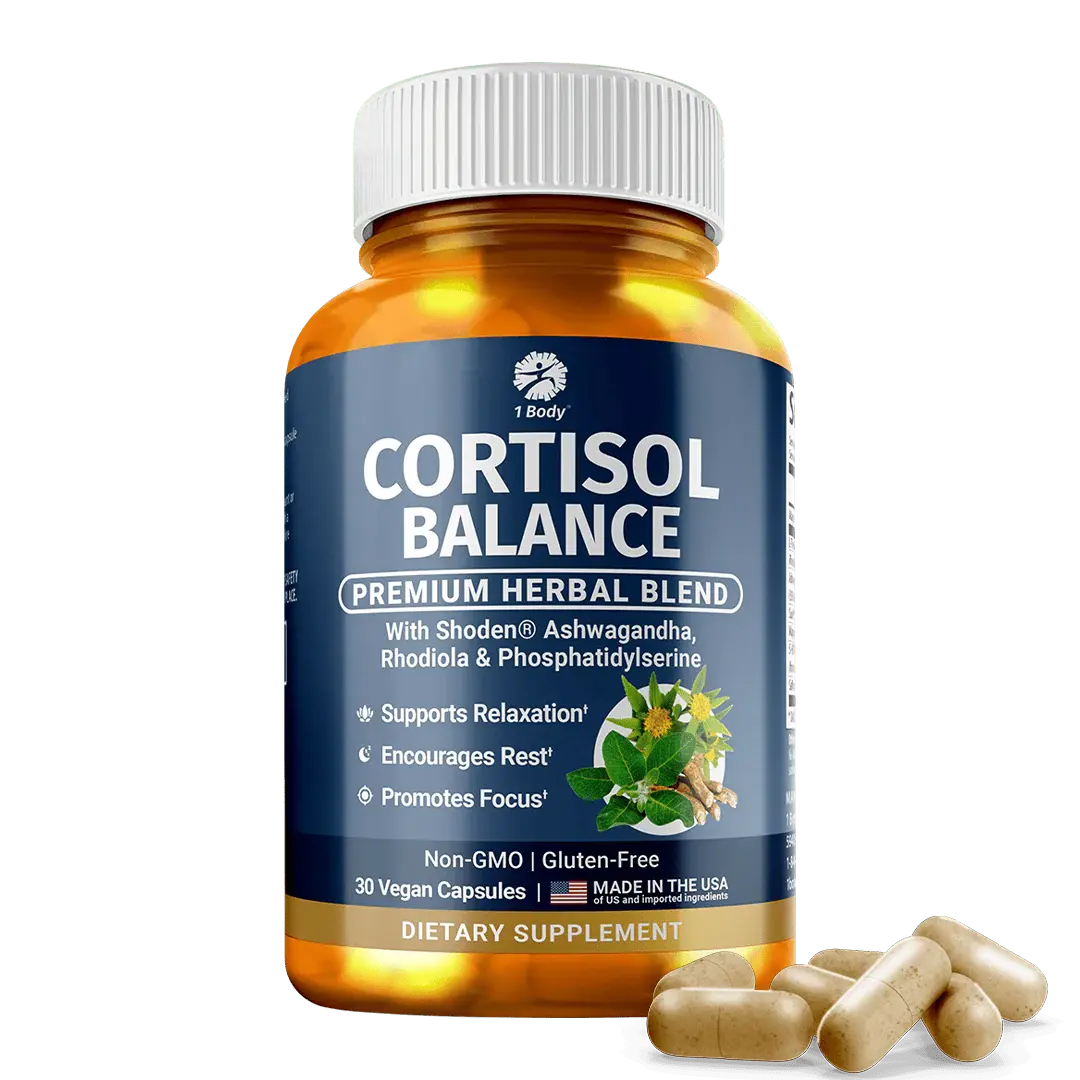
How to Use Cortisol Balance Effectively
For best results, consistency matters. Adaptogens work cumulatively. While some users report noticeable relaxation within the first week, full rhythm recalibration may take several weeks of daily support.
Pair supplementation with simple evening rituals:
-
Reducing blue light exposure after sunset
-
Dimming household lighting
-
Avoiding late caffeine
-
Establishing consistent sleep timing
Think of Cortisol Balance as nutritional support for the behavioral foundation you’re building.
Frequently Asked Questions
-
Many users report improved relaxation within the first week. More consistent sleep improvements often develop over 2–4 weeks as cortisol rhythms normalize.
The Bottom Line
That “tired but wired” feeling isn’t random, and it’s not something you just have to live with. It’s often a sign that your cortisol rhythm is out of sync. Your body is built to follow a natural rise-and-fall pattern—alert and focused in the morning, gradually winding down as evening approaches. But constant stimulation, late-night screen time, and chronic stress can keep cortisol elevated long after it should taper off, leaving you mentally alert when you’re supposed to be resting.
1 Body Cortisol Balance was designed to help restore that rhythm. With clinically studied Shoden® Ashwagandha, Rhodiola Rosea, and Phosphatidylserine, it supports a healthier stress response so your nervous system can transition smoothly between performance and recovery. Instead of forcing sedation, it works with your biology—helping lower elevated cortisol when needed while maintaining steady focus during the day.
When your internal dimmer switch functions properly, evenings feel calmer, sleep comes more naturally, and mornings start with clarity instead of grogginess. Cortisol Balance doesn’t just quiet the noise—it helps retrain your stress response so your body knows when to power up and when to power down.
For all general inquiries, please contact us at help@1body.com
© Copyright. All rights reserved.