The Best Investment you'll ever Make is in Yourself


The thyroid plays a major role in how your brain produces energy and maintains focus. Balanced thyroid hormones support neurotransmitters, nerve communication, and mental clarity. When thyroid activity slows, symptoms like brain fog and fatigue can appear. Supporting thyroid health with proper nutrition, including formulas like 1 Body Thyroid Support Advanced, helps promote steady energy and sharper thinking.
The Overlooked Brain–Thyroid Connection
Many people think of the thyroid primarily in relation to metabolism and weight management. However, the thyroid’s impact on neurological function is equally significant. The hormones produced by this small butterfly-shaped gland influence nearly every system in the body, including the brain.
Why Thyroid Hormones Matter for the Brain
The thyroid produces two primary hormones: thyroxine (T4) and triiodothyronine (T3). T4 acts as a precursor hormone, while T3 is the active form used by cells throughout the body. Once converted into T3, these hormones influence how cells generate and use energy.
Brain cells are particularly sensitive to thyroid hormone levels because they rely heavily on energy production. Neurons require a constant supply of metabolic fuel in order to transmit signals efficiently.
When thyroid hormones are balanced, the brain can maintain:
-
Stable energy production
-
Efficient communication between neurons
-
Healthy neurotransmitter signaling
-
Proper nerve cell maintenance
Even small disruptions in thyroid hormone levels can influence these processes, which may affect mental clarity and focus.
How Hormones Influence Cognitive Performance
Thyroid hormones interact with several neurotransmitter systems in the brain. These chemical messengers regulate mood, alertness, and memory formation.
Balanced thyroid function helps support:
Serotonin regulation
Serotonin influences emotional balance and stress resilience.
Dopamine activity
Dopamine supports motivation, reward processing, and concentration.
Norepinephrine signaling
This neurotransmitter plays a role in attention and mental alertness.
When thyroid hormone levels decline, these signaling pathways may become less efficient. This can lead to symptoms such as brain fog, fatigue, and reduced cognitive sharpness.
How a Healthy Thyroid Improves Mental Clarity
When the thyroid is functioning optimally, it acts as a powerful regulator of brain energy and neurological efficiency.
Several biological mechanisms explain this connection.
Neurotransmitter Balance
Thyroid hormones help regulate neurotransmitters responsible for emotional stability and mental alertness. Balanced signaling between neurons helps maintain clear thinking and stable mood patterns.
Myelin Maintenance
Myelin is the protective sheath surrounding nerve fibers. It allows electrical signals to travel quickly between brain cells. Thyroid hormones support the maintenance of this protective coating, ensuring efficient communication within the nervous system.
Oxygen and Blood Flow
Thyroid hormones influence circulation and oxygen delivery throughout the body. Adequate oxygen supply allows the brain to maintain its high metabolic demands.
When these systems work together efficiently, the brain operates with greater clarity, faster recall, and improved concentration.
What Causes Thyroid-Related Brain Fog
Brain fog can occur when the brain’s metabolic systems struggle to produce sufficient energy or maintain balanced neurotransmitter signaling. Because thyroid hormones influence both cellular energy production and nerve communication, even subtle disruptions can affect mental clarity. When the brain receives less metabolic support than it needs, cognitive processes such as focus, recall, and concentration may begin to feel slower or less efficient.
Several factors may contribute to thyroid-related cognitive fatigue.
Nutrient Deficiencies
The thyroid depends on a specific set of minerals and nutrients to produce and activate its hormones. Iodine acts as the fundamental building block of thyroid hormones, while selenium plays a crucial role in converting inactive T4 into the active hormone T3 that the brain can actually use. Zinc also supports hormone signaling and receptor activity throughout the body. When these nutrients are insufficient, thyroid hormone production or activation may become less efficient, reducing the amount of metabolic energy available to brain cells. Over time, this can lead to symptoms such as mental sluggishness, difficulty concentrating, and reduced cognitive stamina.
Chronic Stress
Stress does not only affect mood—it can also influence the endocrine system. When the body experiences prolonged stress, it releases higher levels of cortisol, often referred to as the stress hormone. Elevated cortisol can interfere with the conversion of T4 into active T3, the form of thyroid hormone that fuels cellular activity. This means that even if thyroid hormone levels appear normal, the body may not be using them efficiently. As a result, the brain may receive less metabolic support, which can contribute to the feeling of mental fatigue often associated with brain fog.
Poor Sleep Quality
Sleep is essential for maintaining hormonal balance and restoring brain energy. During deep sleep cycles, the body regulates several endocrine processes, including thyroid hormone signaling and neurotransmitter replenishment. When sleep is consistently disrupted or insufficient, these regulatory systems may become less effective. The brain may not fully recover from daily cognitive demands, leading to symptoms such as reduced focus, slower thinking, and increased mental exhaustion. Over time, chronic sleep disturbances can compound thyroid-related fatigue and further impair mental clarity.
Inflammation
Systemic inflammation can also influence thyroid activity and neurological function. Inflammatory signals in the body may disrupt hormone signaling pathways and interfere with the efficiency of cellular metabolism. Because the brain requires a constant and reliable supply of metabolic energy, even small disruptions in hormone signaling can affect cognitive performance. Inflammation may also contribute to oxidative stress within brain cells, further affecting communication between neurons and contributing to the experience of mental fog.
When these factors combine, the brain may experience reduced metabolic efficiency, resulting in symptoms commonly described as brain fog. Supporting thyroid health through proper nutrition, stress management, and consistent lifestyle habits can help restore balance and improve overall cognitive function.
Optimization for Cognitive Health
Supporting thyroid-driven brain function requires a multi-factor approach involving nutrition, stress management, and lifestyle habits.
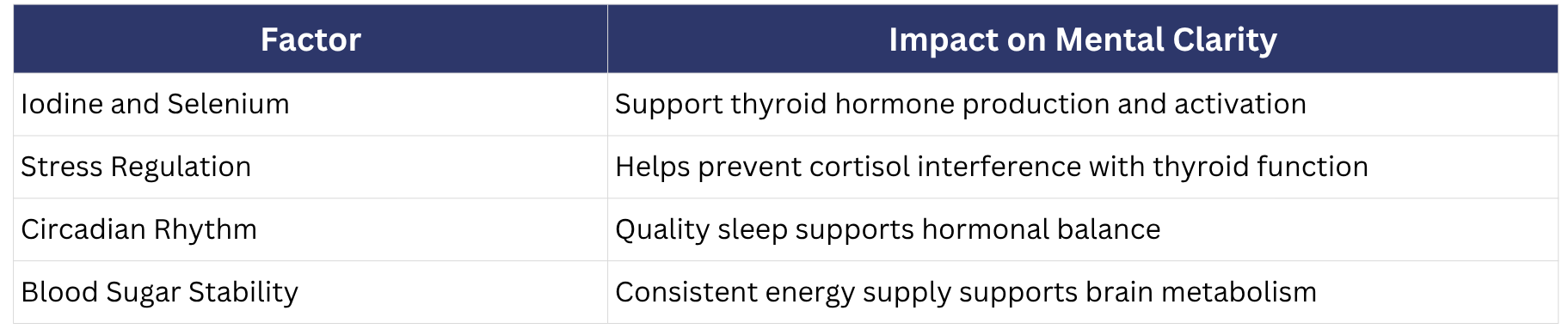
When these elements remain balanced, the brain is better equipped to maintain sustained mental performance.
Key Nutrients That Support Thyroid-Driven Brain Function
Certain nutrients play especially important roles in supporting thyroid activity and cognitive performance.
Iodine
Iodine is the primary building block of thyroid hormones. Without sufficient iodine, the thyroid cannot produce adequate levels of T3 and T4.
Selenium
Selenium helps convert inactive T4 into active T3, allowing cells to utilize thyroid hormones efficiently.
Zinc
Zinc supports hormone signaling pathways and helps maintain balanced thyroid function.
Vitamin B12
Vitamin B12 supports nerve health, energy metabolism, and cognitive performance.
Obtaining these nutrients consistently through diet alone can sometimes be challenging. Supplementation may help ensure reliable intake levels.
Lifestyle Habits That Support Brain and Thyroid Health
Supporting thyroid function involves more than simply taking supplements. Daily habits play an important role in maintaining hormonal balance, metabolic efficiency, and cognitive clarity. Because the thyroid interacts with multiple systems in the body—including the nervous system, endocrine system, and metabolism—small lifestyle choices can have a meaningful impact on how effectively these systems work together. Building consistent habits that support hormonal health can help the brain maintain steady energy, sharper focus, and improved mental resilience throughout the day.
Prioritize Restorative Sleep
Sleep plays a vital role in hormonal regulation and brain recovery. During deep sleep cycles, the body performs many essential maintenance processes, including hormone regulation, cellular repair, and neurotransmitter replenishment. The thyroid gland relies on stable circadian rhythms to maintain consistent hormone signaling. When sleep patterns become irregular or insufficient, these rhythms can become disrupted, which may influence thyroid hormone activity and overall metabolic balance. Maintaining a consistent sleep schedule, limiting late-night screen exposure, and creating a calm sleep environment can help reinforce the natural hormonal cycles that support both brain performance and thyroid health.
Manage Chronic Stress
Chronic stress can place significant strain on the body’s endocrine system. When stress persists for extended periods, the body releases elevated levels of cortisol, the primary stress hormone. High cortisol levels can interfere with thyroid hormone conversion, particularly the process that converts inactive T4 into the active T3 hormone needed for cellular energy. Over time, this imbalance can contribute to fatigue, reduced concentration, and cognitive sluggishness. Stress management practices such as mindfulness meditation, breathing exercises, regular physical activity, or spending time in relaxing environments can help regulate cortisol levels and support a more balanced hormonal response.
Maintain Balanced Nutrition
Nutrition provides the foundation for both thyroid function and neurological health. The thyroid requires specific minerals—such as iodine, selenium, and zinc—to produce and activate hormones efficiently. At the same time, the brain relies on nutrients like healthy fats, antioxidants, and B vitamins to maintain optimal function. Whole foods such as leafy greens, lean proteins, seafood, nuts, seeds, and colorful vegetables supply many of these essential nutrients. A balanced diet that supports both metabolic and neurological processes helps ensure that the brain receives the energy and resources it needs for sustained focus and cognitive performance.
Stay Physically Active
Regular physical activity supports multiple systems that influence thyroid health and brain function. Exercise helps improve circulation, allowing oxygen and nutrients to reach the brain more efficiently. It also supports metabolic activity, which plays a role in maintaining balanced hormone signaling. Additionally, movement helps regulate stress hormones and encourages the release of endorphins that promote mental well-being. Even moderate daily activity—such as walking, stretching, or light strength training—can help stimulate circulation and support the metabolic systems that contribute to sustained mental clarity.
When these habits are combined with targeted nutritional support, they help reinforce the biological systems responsible for clear thinking, balanced hormones, and steady energy levels throughout the day. Consistency in these lifestyle practices creates an environment where both the brain and the thyroid can function at their best.
Frequently Asked Questions
-
Symptoms may include brain fog, difficulty concentrating, forgetfulness, and mental fatigue despite adequate sleep.
Conclusion: Supporting Your Brain by Supporting Your Thyroid
Mental clarity is deeply connected to the body’s metabolic systems. The thyroid gland plays a central role in regulating cellular energy, neurotransmitter balance, and neurological signaling. When thyroid function becomes compromised, the brain may struggle to maintain the energy and efficiency required for clear thinking.
By supporting thyroid health through proper nutrition, stress management, and consistent lifestyle habits, it becomes possible to maintain the hormonal balance required for optimal cognitive performance.
Why Choose 1 Body Thyroid Support Advanced
Supporting thyroid health consistently can help reinforce the metabolic systems responsible for both physical energy and mental clarity. 1 Body Thyroid Support Advanced is formulated to provide nutrients that help support thyroid hormone production and metabolic balance.
Key features of the formula include:
-
Iodine to support healthy thyroid hormone production
-
Vitamin B12 to support energy and mental clarity
-
Nutrients that help maintain metabolic function
-
Designed to support daily vitality and cognitive focus
Convenient vegan capsules for easy daily use

By supporting the nutrients required for thyroid function, 1 Body Thyroid Support Advanced helps promote balanced metabolism, steady energy, and sharper mental clarity as part of a comprehensive wellness routine.
For all general inquiries, please contact us at help@1body.com
© Copyright. All rights reserved.