The Best Investment you'll ever Make is in Yourself

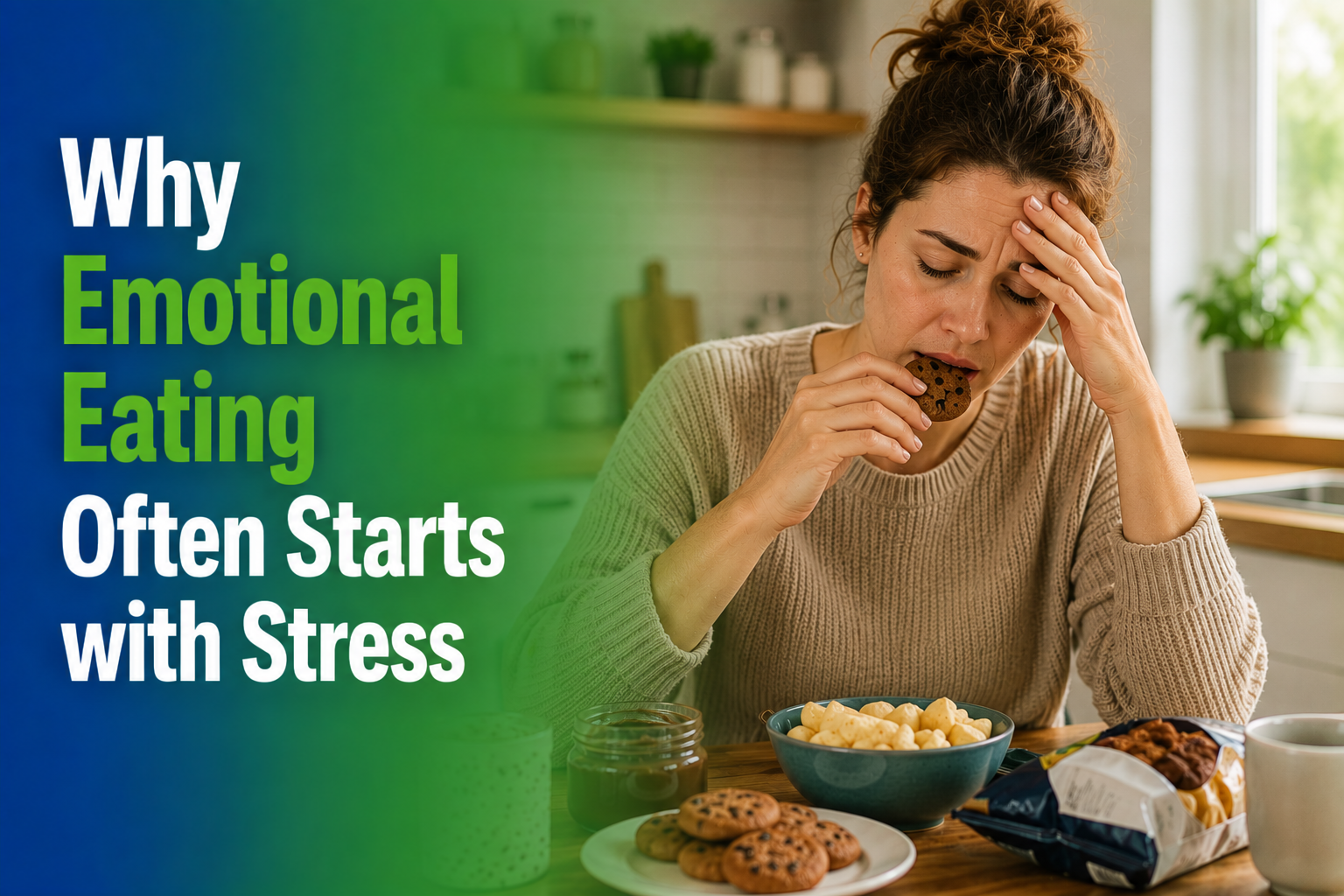
Stress does not just affect your mood—it can also influence your eating habits, energy levels, and daily decision-making. During stressful periods, many people notice stronger cravings, increased snacking, and difficulty staying consistent with wellness goals. Understanding the connection between stress, mood, and eating habits can help you build healthier routines and support long-term balance.
Why Stress Can Influence Your Eating Habits
Most people think of stress as something that happens in the mind. A packed schedule, work deadlines, family responsibilities, financial concerns, or unexpected challenges can all contribute to feeling overwhelmed. However, stress is not just emotional. It also triggers physical responses throughout the body.
When stress levels rise, the body activates systems designed to help us respond to challenges. In short-term situations, this response can be useful. It helps increase alertness and directs resources toward immediate needs. The challenge comes when stress becomes a regular part of everyday life.
Many people notice that during particularly stressful periods, their eating habits begin to change. Some lose interest in food entirely, while others find themselves reaching for snacks more often than usual. Cravings for sweet, salty, or highly processed foods may become stronger, even when there is no physical hunger present.
This pattern is often referred to as emotional eating. Emotional eating occurs when food becomes a response to feelings rather than hunger. Instead of eating because the body needs nourishment, people may eat because they feel stressed, bored, frustrated, anxious, or emotionally drained.
This experience is incredibly common. In fact, many people who feel frustrated about stalled wellness goals may not realize that stress itself could be influencing their daily habits.
Rather than viewing emotional eating as a lack of willpower, it may be more helpful to understand it as part of a broader connection between mood, stress, and behavior. Once that connection becomes clear, it is easier to identify practical ways to support healthier routines.
The Connection Between Mood, Cravings, and Daily Choices
Have you ever noticed that cravings tend to appear at the end of a difficult day?
You may have started the morning with healthy intentions, planned balanced meals, and stayed productive. Then a stressful meeting happens, your schedule falls apart, or your energy starts to drop. Suddenly, the idea of comfort food becomes much more appealing.
This is where mood and eating habits often overlap.
When people feel emotionally depleted, they frequently seek quick forms of comfort. Food is convenient, accessible, and often associated with positive experiences. Certain foods can provide temporary satisfaction, making them especially appealing during periods of tension.
A study published in Nutrition Research examined saffron supplementation and its potential relationship with snacking behavior and mood in healthy women. Researchers observed areas of interest regarding appetite-related behaviors and emotional well-being, highlighting the growing interest in the relationship between mood and eating habits. While more research continues to emerge, the study helps illustrate how emotional factors may influence food choices. Importantly, it does not suggest saffron is a treatment or solution for weight management.
What makes emotional eating particularly challenging is that it often happens automatically. People may not even realize they are responding to stress until after the fact.
Over time, these repeated choices can create habits that feel difficult to break. The good news is that awareness is often the first step toward change. Understanding why cravings occur can make it easier to develop strategies that support more mindful decision-making.
How Stress Can Impact Long-Term Wellness Goals
Most wellness journeys focus on food and exercise. While both are important, consistency is often influenced by factors that extend beyond nutrition and movement.
Stress can affect sleep quality, motivation, recovery, focus, mood, and energy levels. When these areas become disrupted, maintaining healthy habits may feel more difficult.
For example, someone who feels emotionally exhausted may skip workouts they would normally enjoy. They may order takeout instead of preparing meals or stay up later than usual, reducing sleep quality. Individually, these choices may seem small, but over time they can influence overall wellness.
This is one reason why many health professionals encourage a holistic approach to wellness. Supporting emotional well-being can be just as important as supporting physical habits.
How Stress Can Influence Daily Wellness
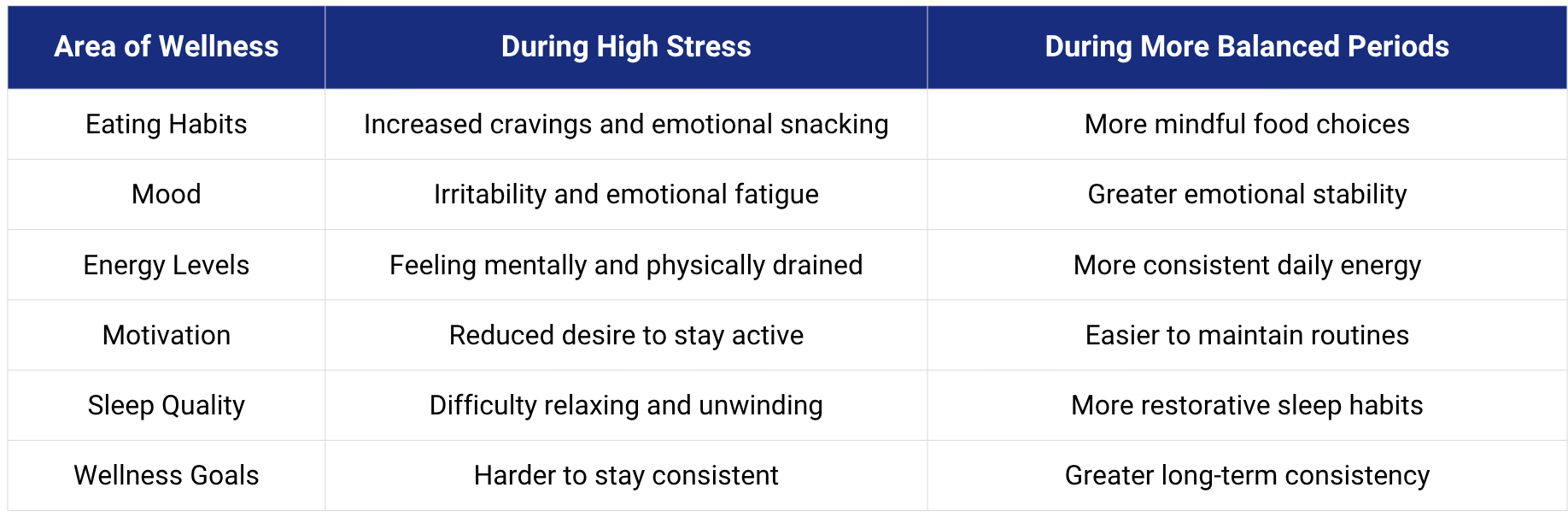
Recognizing these patterns can help shift the focus away from perfection and toward sustainable habits that support overall well-being.
Healthy Habits That May Help Break the Cycle
The goal is not to eliminate stress completely. Life will always include challenges. Instead, the goal is to build habits that help you navigate stressful periods without abandoning your wellness routine.
One of the most effective strategies is creating awareness around triggers. Notice when cravings tend to appear. Are they connected to certain situations, times of day, emotions, or environments? Identifying patterns can help you make more intentional choices.
Prioritizing sleep is another valuable habit. Lack of sleep can affect mood, decision-making, and appetite regulation. Even small improvements in sleep consistency may support overall wellness.
Movement also plays an important role. Physical activity does not have to be intense to be beneficial. Walking, stretching, yoga, or spending time outdoors may help support emotional well-being and provide a healthy outlet during stressful periods.
Nutrition matters as well. Balanced meals that include protein, fiber, healthy fats, and nutrient-dense foods may help support steady energy throughout the day.
Finally, many individuals choose to incorporate targeted nutritional support as part of their broader wellness routine. While supplements are not substitutes for healthy habits, they can complement a balanced lifestyle when used consistently.
Support Your Wellness Routine with 1 Body Saffron
As you work toward healthier habits, it is important to remember that wellness is about more than numbers on a scale. How you feel emotionally often influences the choices you make physically.
This is where supportive routines can make a meaningful difference. Small daily habits, including balanced nutrition, stress management practices, movement, and targeted nutritional support, can help create a stronger foundation for long-term consistency.
For individuals looking to support healthy eating habits and emotional wellness as part of their daily routine, 1 Body Saffron may be one option to consider. Featuring 88.5 mg of saffron extract per serving, this formula is designed to support healthy mood, healthy eating habits, and overall wellness.
Rather than focusing solely on physical goals, many people find success by addressing the emotional side of wellness as well. Building a balanced foundation often starts with supporting both mind and body.
Frequently Asked Questions
-
Yes. Many people experience emotional eating at some point. Stress, boredom, frustration, and other emotions can sometimes influence food choices even when physical hunger is not present.
Small Daily Choices Add Up
Wellness is rarely determined by one meal, one workout, or one stressful day. More often, it is shaped by the small decisions we make consistently over time.
Understanding the connection between stress, mood, and eating habits can help you approach your goals with greater awareness and compassion. Instead of focusing solely on restriction or willpower, consider building routines that support emotional well-being alongside physical wellness.
By prioritizing balanced nutrition, movement, rest, stress management, and supportive daily habits, you can create a foundation that helps you stay consistent even during life's busiest seasons.
1 Body Saffron
Support Healthy Mood and Healthy Eating Habits
When stress levels rise, maintaining healthy routines can feel more challenging. 1 Body Saffron was formulated to provide simple, convenient support for individuals focused on emotional wellness and healthy eating habits as part of a balanced lifestyle.
Featuring 88.5 mg of saffron extract per serving, this vegan-friendly formula is designed to fit seamlessly into your daily routine.
Key Features
-
Contains 88.5 mg of saffron extract per serving
-
Supports healthy eating habits
-
Supports healthy mood
-
Supports overall wellness
-
Vegan capsules
-
Easy-to-use daily formula
-
Designed for consistent daily use
-
Complements balanced nutrition and healthy lifestyle habits

Whether your goal is building more mindful eating habits or supporting emotional balance during stressful seasons, 1 Body Saffron offers a simple addition to your wellness routine. Combined with healthy habits and a long-term mindset, it can help support a more balanced approach to overall well-being.
Citation
Gout, B., Bourges, C., Paineau-Dubreuil, S., & Paineau, J. (2010). Satiereal, a Crocus sativus L. extract, reduces snacking and increases satiety in a randomized, placebo-controlled study of mildly overweight healthy women. Nutrition Research, 30(5), 305–313. https://doi.org/10.1016/j.nutres.2010.04.008
For all general inquiries, please contact us at help@1body.com
© Copyright. All rights reserved.