The Best Investment you'll ever Make is in Yourself


Stress does not stay confined to the mind. It quickly becomes a full-body experience, influencing hormones, metabolism, and energy production. One of the systems most affected by chronic stress is the thyroid. Elevated cortisol levels can interfere with thyroid hormone conversion, slow metabolism, and reduce cellular energy. Supporting both thyroid function and the body’s stress response helps maintain metabolic balance, stable energy, and clearer mental focus. Supplements like 1 Body Thyroid Support and 1 Body Cortisol Balance provide targeted nutrients and adaptogenic herbs designed to help support this delicate hormonal relationship.
The Impact of Stress on Your Thyroid
Most people associate stress with mental fatigue or emotional tension, but the physiological effects of chronic stress are much broader. When your body perceives a stressful situation, it activates the hypothalamic–pituitary–adrenal (HPA) axis, which triggers the release of cortisol from the adrenal glands.
Cortisol is not inherently harmful. In fact, it plays a vital role in helping the body respond to short bursts of stress. It increases alertness, mobilizes energy reserves, and prepares the body for action. Problems arise when stress becomes persistent and cortisol levels remain elevated for long periods.
Understanding the Thyroid–Adrenal Connection
Your thyroid and adrenal glands function as part of an interconnected hormonal network. The thyroid controls metabolic speed through the release of hormones known as T3 and T4, while the adrenal glands regulate the stress response through cortisol production.
When cortisol levels remain elevated, this hormonal partnership can become disrupted. The body begins prioritizing survival functions over metabolic efficiency, which can alter how thyroid hormones are produced and utilized.
The result is often a noticeable drop in energy, difficulty concentrating, and a metabolism that seems to operate more slowly than usual.
Why Cortisol Disrupts Thyroid Hormones
Chronic stress can influence thyroid health in several ways. One of the most significant effects occurs during the conversion process that activates thyroid hormones.
The thyroid primarily produces T4, which must be converted into T3, the active form used by cells to regulate metabolism. High cortisol levels can interfere with this conversion, leaving the body with sufficient hormone levels on paper but insufficient active hormone at the cellular level.
Stress can also affect how thyroid hormones interact with receptors in the body. Even when hormone levels appear normal, cells may become less responsive to those signals, leading to symptoms such as fatigue, brain fog, or sluggish metabolism.
Another potential impact is reduced production of thyroid stimulating hormone (TSH) from the pituitary gland. When this signal weakens, the thyroid may reduce hormone production, further slowing metabolic processes.
Stress vs. Thyroid Function
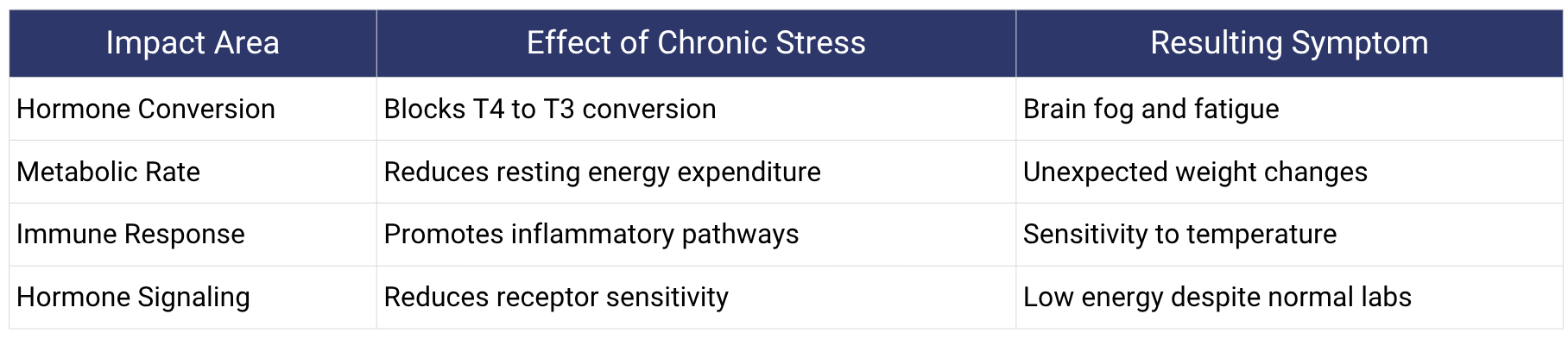
This relationship explains why many individuals experiencing long-term stress begin noticing metabolic changes even when their thyroid tests appear within normal ranges.
Thyroid Hormones vs Cortisol: How They Influence Energy
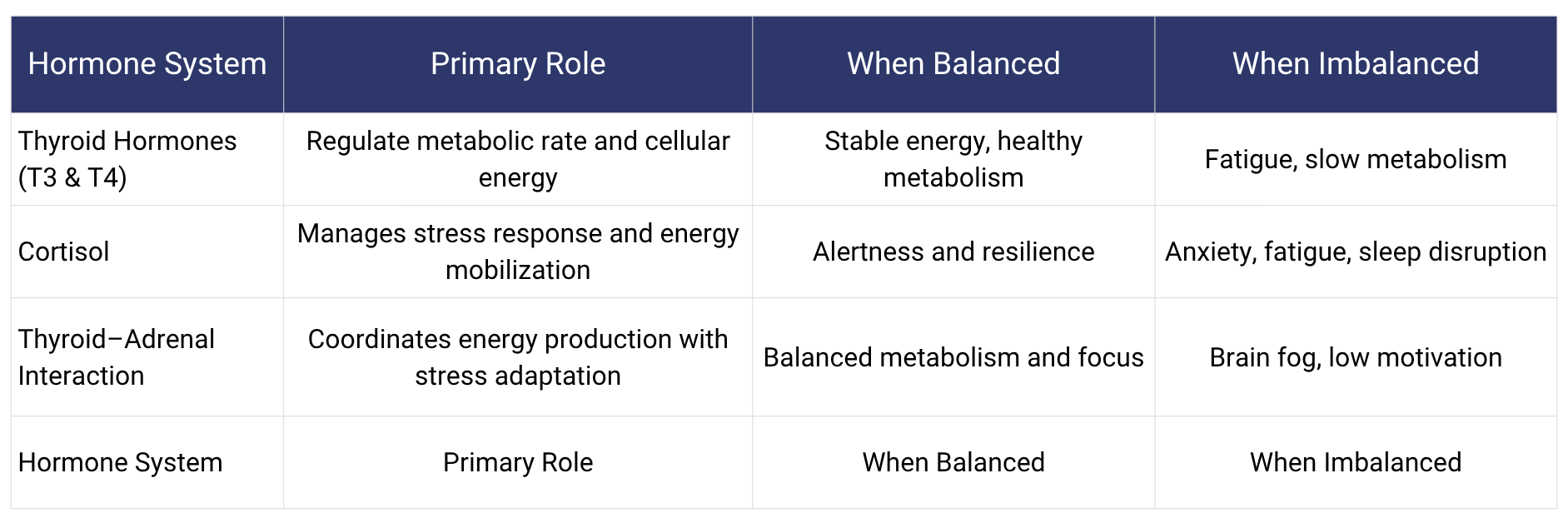
When these systems work together, the body can maintain steady energy, mental clarity, and metabolic efficiency. When they fall out of sync, symptoms like fatigue and metabolic slowdown often appear.
Supporting both systems simultaneously helps restore balance.
Why Metabolism Slows When Stress Stays High
The body is remarkably adaptive, but it is also protective. When stress remains constant, the body shifts into a conservation mode designed to preserve energy resources.
In this state, the body may slow metabolic activity to conserve fuel. This can lead to fatigue, reduced motivation, and difficulty maintaining stable energy levels throughout the day.
Chronic cortisol elevation can also influence blood sugar regulation, sleep quality, and inflammatory responses. Together, these changes create a feedback loop where stress worsens metabolic balance, and metabolic imbalance increases stress on the body.
This is why addressing both thyroid function and stress management simultaneously is often the most effective approach.
Early Signs Stress Is Slowing Your Metabolism
When stress remains elevated for long periods, the body may gradually shift into energy conservation mode. Because this shift happens slowly, many people do not immediately connect their symptoms to stress-related hormonal imbalance.
Recognizing the early signs can help you take action before the issue becomes more disruptive.
Some common indicators that stress may be affecting metabolic function include:
-
Feeling tired despite getting adequate sleep
-
Difficulty concentrating or persistent brain fog
-
Unexpected weight changes despite stable eating habits
-
Feeling “wired but tired,” especially in the evening
-
Reduced motivation or slower recovery after exercise
-
Sensitivity to cold temperatures
These symptoms often occur when cortisol and thyroid hormones fall out of balance. Addressing stress levels while supporting thyroid health can help restore metabolic rhythm and improve overall energy.
Supplements such as 1 Body Thyroid Support and 1 Body Cortisol Balance are designed to help support both metabolic and stress-response systems simultaneously.
Supporting Your Internal Balance
Restoring balance between the thyroid and adrenal systems requires a two-pronged strategy. The body benefits from both lifestyle adjustments and nutritional support that reinforce healthy hormone function.
Nutrients That Help the Thyroid Work Efficiently
The thyroid relies on several key micronutrients to produce and activate hormones efficiently. These include:
-
Iodine, which is a structural component of thyroid hormones
-
Selenium, which supports the conversion of T4 into active T3
-
Zinc, which contributes to hormone synthesis and immune balance
-
Vitamin B12, which supports cellular energy and mental clarity
A consistent intake of these nutrients can help maintain healthy thyroid activity and support metabolic balance.
This is where 1 Body Thyroid Support provides meaningful assistance. The formula contains nutrients specifically selected to support healthy thyroid hormone production and help maintain energy, focus, and metabolic efficiency.
Adaptogens and the Stress Response
Supporting thyroid health alone may not fully address metabolic slowdown if stress remains high. Adaptogenic herbs help the body respond more effectively to physical and emotional stressors by supporting adrenal function and balancing cortisol levels.
Adaptogens work by gently regulating the stress response rather than suppressing it. This helps the body maintain resilience during periods of physical or emotional pressure.
1 Body Cortisol Balance includes adaptogenic ingredients such as:
-
Shoden® Ashwagandha, known for supporting relaxation and balanced cortisol levels
-
Rhodiola, traditionally used to promote endurance and resilience to stress
-
Phosphatidylserine, which helps support cognitive performance and stress recovery
Together, these ingredients help calm the stress response while supporting focus and overall well-being.
Daily Habits That Support Thyroid and Stress Balance
Supplements can play an important role in supporting hormonal health, but daily habits also influence how effectively the body maintains balance.
A few simple practices can significantly improve the relationship between stress and metabolic health.
Prioritize restorative sleep. Sleep is essential for regulating both cortisol rhythms and thyroid hormone activity.
Practice mindful stress management. Techniques such as deep breathing, meditation, or light movement help reduce cortisol levels.
Maintain stable blood sugar levels. Balanced meals that include protein, healthy fats, and fiber help stabilize metabolic energy.
Support hormone production with nutrients. Supplements such as 1 Body Thyroid Support and 1 Body Cortisol Balance help ensure the body receives key nutrients needed for hormonal resilience.
When these habits work together, the body becomes better equipped to handle stress without disrupting metabolic function.

A Simple Morning Routine for Hormone Balance
Your morning habits can influence both cortisol rhythms and thyroid hormone activity. Creating a supportive routine helps the body maintain stable energy throughout the day.
Consider incorporating these simple practices into your mornings:
Start with natural light exposure Sunlight helps regulate cortisol rhythms and supports healthy circadian timing.
Eat a balanced breakfast Meals that include protein, fiber, and healthy fats help stabilize blood sugar and metabolic energy.
Move your body gently Light activity such as stretching, walking, or yoga helps stimulate circulation and metabolic function.
Support your hormones nutritionally Taking supplements like 1 Body Thyroid Support and 1 Body Cortisol Balance in the morning helps provide nutrients and adaptogens that support metabolism and stress resilience.
These small daily habits create a strong foundation for maintaining hormonal balance, energy stability, and mental clarity throughout the day.
Frequently Asked Questions
-
Stress alone is rarely the sole cause of thyroid disorders, but it can significantly influence hormone balance and worsen existing thyroid conditions.
Conclusion: Bringing Stress and Metabolism Back Into Balance
The connection between stress and thyroid health is one of the most important relationships in the body’s hormonal system. When cortisol levels remain elevated for extended periods, metabolic efficiency can decline, leaving you feeling fatigued, unfocused, and mentally drained.
Supporting both thyroid function and the stress response helps restore balance to this delicate system. By combining targeted nutrients for thyroid health with adaptogenic herbs that help regulate cortisol levels, it becomes easier to maintain steady energy and metabolic stability.
1 Body Thyroid Support provides the nutrients needed to support healthy thyroid hormone production, while 1 Body Cortisol Balance helps calm the stress response and promote relaxation. Together, they create a complementary approach that supports energy, metabolism, and overall hormonal harmony.
Taking proactive steps today can help your body remain resilient, balanced, and energized even during the busiest and most demanding seasons of life.
For all general inquiries, please contact us at help@1body.com
© Copyright. All rights reserved.