The Best Investment you'll ever Make is in Yourself


Seasonal changes can influence sleep, energy, appetite, movement, and mood as daylight and temperatures shift. Small adjustments—such as getting morning light, eating regular nourishing meals, staying active, protecting sleep, and simplifying your schedule—can help you move into the new season with greater steadiness.
Seasonal transitions often arrive gradually, but the way they affect daily life can feel surprisingly noticeable. The mornings become darker, the air gets cooler, outdoor routines change, and familiar habits from summer may no longer fit as easily. You may find yourself feeling slower in the morning, less motivated to exercise, more interested in warm comfort foods, or ready for bed earlier than usual.
These changes do not automatically mean that something is wrong. The body responds to shifts in daylight, temperature, schedule, and activity, and it may take time to settle into a new rhythm. Rather than pushing through with the exact same routine all year, seasonal wellness can begin with listening more closely and making a few practical adjustments.
The goal is not to create a perfect fall or winter routine. It is to make daily life feel more supportive as the environment changes. A consistent wake time, a nourishing breakfast, a short walk, a calmer evening, or a thoughtful supplement routine may each seem small, but repeated choices can create a steadier foundation for energy, focus, and overall well-being.
Why Seasonal Transitions Can Feel More Draining
When daylight decreases, many people notice changes in when they feel awake, hungry, focused, or ready to sleep. Light is one of the strongest signals the body uses to help regulate its internal clock, so darker mornings and earlier sunsets may affect the timing of sleepiness and alertness.
A study published in Current Biology found that exposure to natural light-dark cycles influenced circadian timing across seasons. The findings do not mean that morning light alone solves seasonal fatigue, but they support the idea that regular light exposure can be an important part of helping the body stay aligned with changing daylight patterns.
Temperature changes can also affect routines. Colder weather may reduce time outdoors, make movement feel less appealing, and encourage longer periods of sitting. At the same time, busy work schedules, school calendars, holidays, travel, and family responsibilities may add stress just as the body is asking for more rest.
Food habits often shift too. Warm meals, baked foods, soups, and heavier comfort dishes may feel more appealing, while cold salads and iced drinks may lose some of their appeal. This is not a problem in itself, but irregular eating, low nutrient variety, or relying mainly on convenience foods can make energy feel less stable.
The following table offers a practical way to update familiar routines without making drastic changes:
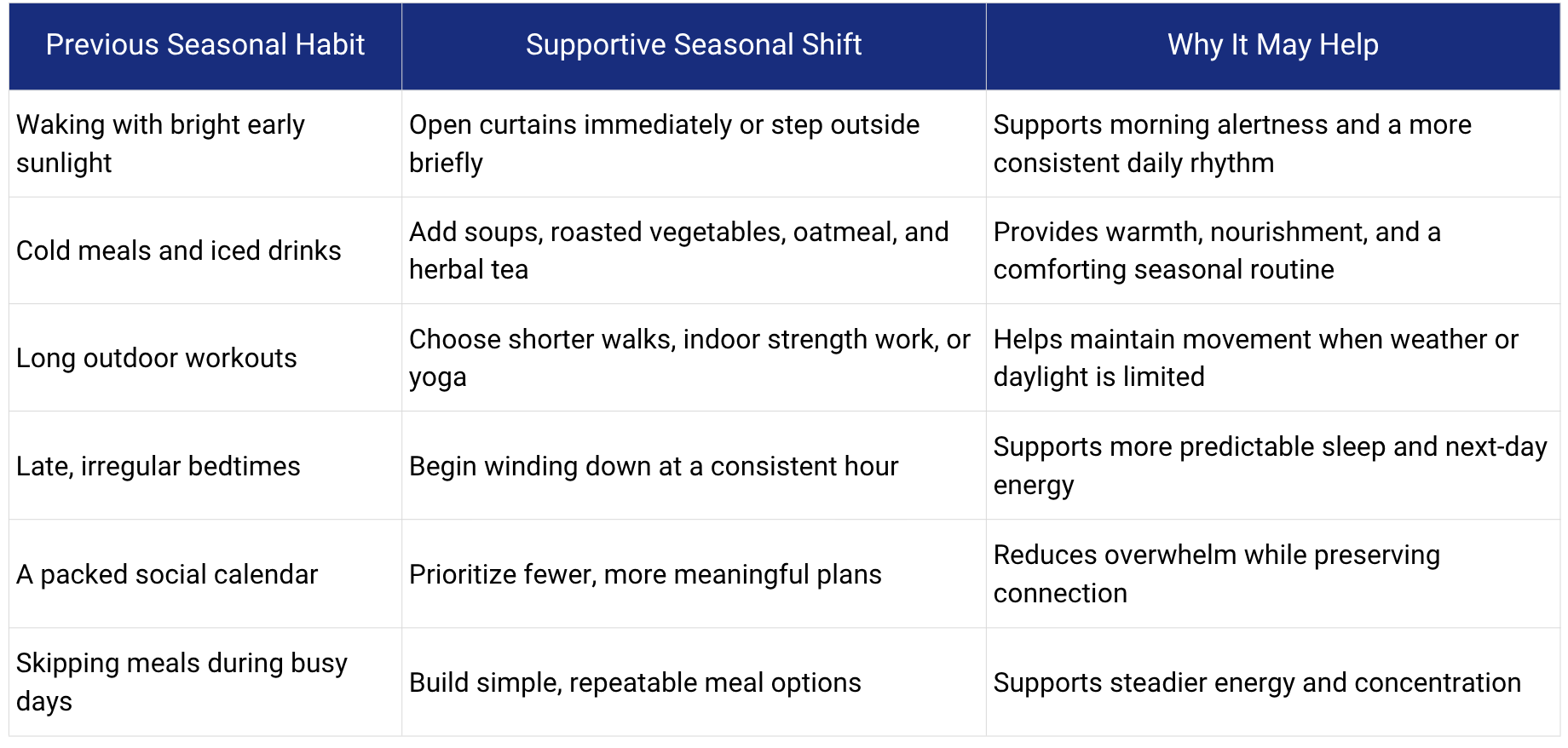
These shifts are not rules. They are starting points that can be adjusted around your health, schedule, climate, and personal preferences.
Reset Your Morning With Light and Hydration
The way you begin the day can influence how organized and energized the rest of the morning feels. During darker seasons, it may be tempting to remain indoors under dim lighting, scroll through your phone, and delay movement until much later. That routine may feel comfortable at first, but it can make the morning feel slower and less defined.
Try opening your blinds as soon as you wake up, even when the sky is cloudy. Natural outdoor light is generally brighter than indoor lighting, so a short step outside, a walk to the mailbox, or a few minutes near a bright window may help signal that the day has begun.
Pairing light exposure with hydration can create an easy morning anchor. Keep water nearby and drink a comfortable amount after waking, especially if you tend to begin the day with coffee. There is no need to force a large volume at once; the goal is simply to begin replacing fluids after sleep.
A simple breakfast can provide another steadying cue. Options such as eggs with whole-grain toast, oatmeal with nuts and berries, yogurt with fruit, or leftovers from a balanced dinner may help you avoid the energy dip that comes from going too long without eating.
Try not to judge the morning by how motivated you feel. A good routine should still work on the days when energy is lower. Opening the curtains, drinking water, eating something nourishing, and getting dressed may be enough to create useful momentum.
Choose Warming Foods That Support Steady Energy
Seasonal nutrition does not have to mean a strict list of “good” and “bad” foods. It can simply mean choosing meals that are comforting, varied, and practical for cooler weather.
Soups and stews are especially useful because they make it easy to combine vegetables, beans, grains, herbs, and protein in one meal. Roasted root vegetables, squash, lentils, oats, eggs, fish, poultry, tofu, and whole grains can also provide satisfying options that fit naturally into fall and winter routines.
B vitamins are commonly associated with normal energy metabolism because they participate in processes the body uses to obtain energy from food. This does not mean that taking extra B vitamins creates instant energy or replaces sleep, food, or medical care. It does mean that adequate nutrient intake is an important part of overall wellness.
Vitamin B12, vitamin B6, folate, and biotin each play different roles in the body. Some people may have increased nutritional needs or difficulty obtaining certain nutrients through diet alone, while others already receive enough from food. Supplementation should therefore be based on individual needs rather than the idea that more is always better.
A balanced meal pattern is usually more helpful than chasing one “superfood.” Try to include a source of protein, a fiber-rich carbohydrate, healthy fat, and colorful plant foods across the day. This combination can help meals feel more satisfying and may support steadier energy during busy seasonal schedules.
Keep Moving Without Overloading Your Schedule
As temperatures drop, movement often becomes one of the first habits to fade. Outdoor routines become less convenient, evenings get darker, and staying indoors may feel much more appealing.
The answer does not have to be a demanding new workout program. Short, repeatable movement can be more realistic and more sustainable. A brisk walk during daylight, ten minutes of stretching after work, light resistance training at home, or an indoor class can all help keep the body active.
Movement may also support mood, sleep, circulation, mobility, and stress management. The goal is not to exhaust yourself; it is to prevent the season from quietly turning into weeks of very little activity.
Consider creating a “minimum movement” plan for difficult days. This might be a ten-minute walk, one round of basic strength exercises, or gentle stretching while dinner cooks. On higher-energy days, you can do more, but the smaller version keeps the habit alive.
It may also help to connect movement with something enjoyable. Listen to a podcast while walking, invite a friend, choose a warm indoor pool, or follow a short video routine. A habit is easier to maintain when it feels like support rather than punishment.
Protect Your Sleep as the Days Grow Shorter
Cooler evenings can make rest feel inviting, but seasonal schedules sometimes work against good sleep. More time indoors, extra screen use, holiday events, and irregular bedtimes can leave the nervous system overstimulated even when the body feels tired.
A consistent wind-down routine can create a clearer boundary between daytime responsibilities and rest. You might dim the lights, prepare clothes for the next day, make herbal tea, read a few pages of a book, or take a warm shower. The exact activity matters less than repeating it consistently.
Try to keep your wake time relatively steady, even when bedtime shifts occasionally. A predictable morning can help organize the rest of the day and may make it easier to feel sleepy at a suitable time the following evening.
Persistent sleep concerns deserve attention. Ongoing insomnia, heavy snoring, repeated nighttime waking, or significant daytime sleepiness should be discussed with a healthcare professional, especially when they begin affecting mood, memory, driving, work, or daily functioning.
Make More Room for Meaningful Connection
Seasonal changes often affect social routines as well. Summer may be filled with outdoor events, travel, and spontaneous plans, while cooler months can become quieter and more home-centered.
A quieter season is not necessarily a lonely one. It can be an opportunity to choose more intentional connection. Instead of trying to maintain a packed calendar, consider one shared meal, a weekly phone call, a walk with a neighbor, or a recurring community activity.
Connection supports more than mood. It can provide accountability, encouragement, perspective, and a stronger sense of belonging. Even brief conversations may help break up long stretches of isolation or screen time.
At the same time, it is reasonable to simplify. Seasonal wellness may involve saying no to obligations that create stress without meaningfully supporting you. Protecting your energy can make it easier to show up fully for the people and activities that matter most.
Building a Simple Seasonal Wellness Routine
The best seasonal routine is one you can repeat without feeling overwhelmed. Choose a few anchors rather than attempting to redesign your entire life.
A practical daily rhythm might include morning light, a regular first meal, some form of movement, a short break outdoors, a consistent evening routine, and one intentional moment of connection. These habits support one another: better sleep may make movement easier, movement may support appetite and mood, and a steadier routine may make social plans feel more manageable.
You can also track how you feel for one or two weeks. Note sleep, energy, meals, movement, mood, and outdoor time without judging the results. Patterns may become clearer when they are written down, and that information can be useful if you decide to speak with a healthcare professional.
Seasonal changes should not be used to explain away every symptom. Persistent fatigue, low mood, weakness, dizziness, major appetite changes, unexplained weight changes, or difficulty completing everyday tasks may have many possible causes and deserve professional evaluation.
Adding Nutritional Support to Your New Routine
Once sleep, food, movement, light exposure, and daily structure are in place, some adults consider a dietary supplement to complement their seasonal wellness routine. Supplements are most useful when they support healthy habits rather than attempt to replace them.
1 Body Methylated Vitamin B Complex is formulated with a range of B vitamins, including methylated folate, vitamin B12, vitamin B6, and biotin. The formula is designed to support normal energy metabolism, brain and nerve health, and overall nutritional wellness as part of a balanced lifestyle.
A methylated folate source may appeal to adults seeking an active form of folate in a daily B-complex supplement. Individual needs vary, however, and no supplement can guarantee improved energy, mood, or focus.
Anyone taking medication, managing a medical condition, receiving treatment for anemia, or who is pregnant or breastfeeding should speak with a qualified healthcare professional before beginning a new supplement. It is also wise to review the complete Supplement Facts panel rather than relying only on front-label claims.
1 Body’s broader brand approach combines nature-inspired wellness with clear, science-conscious formulation and transparent communication.
Frequently Asked Questions
-
Changes in daylight, sleep timing, temperature, movement, and daily schedules may all influence how alert or fatigued you feel. Persistent or worsening tiredness should be discussed with a healthcare professional rather than assumed to be seasonal.
Let Your Routine Change With the Season
Seasonal wellness begins with flexibility. The habits that felt natural during long, bright summer days may need to change when mornings become darker, evenings arrive earlier, and cooler weather alters your appetite, activity, and social plans.
Instead of resisting those changes, use them as an invitation to build a calmer rhythm. Seek morning light, eat regular nourishing meals, keep moving in realistic ways, protect your sleep, and make time for meaningful connection.
The most helpful routine is not the most complicated one. It is the one that helps you feel supported and can still be followed on busy, low-energy, or unpredictable days.
Nutritional support may have a place within that routine, but it should remain part of a broader approach that includes food, rest, movement, light exposure, connection, and appropriate healthcare. Small habit shifts may not transform the season overnight, but they can make the transition feel more grounded and manageable.
1 Body Methylated Vitamin B Complex
1 Body Methylated Vitamin B Complex offers a convenient way to include a broad range of B vitamins in your daily seasonal wellness routine. Formulated with methylated folate, vitamin B12, vitamin B6, biotin, and other essential B vitamins, it is designed to complement balanced nutrition and support normal energy metabolism, brain health, and nervous system function.†
Product features and wellness-supporting qualities include:
-
Features methylated folate
-
Includes vitamin B12
-
Includes vitamin B6
-
Provides biotin
-
Offers a complete B-complex formula
-
Supports normal energy metabolism†
-
Supports brain and nerve health†
-
Complements balanced nutrition
-
Convenient for everyday use
-
Designed to fit into a consistent seasonal wellness routine

1 Body Methylated Vitamin B Complex may be a thoughtful choice for adults who want straightforward nutritional support as their routines change with the season. Its broad B-vitamin profile and convenient format make it easy to pair with morning light, balanced meals, regular movement, and restorative sleep.
†These statements have not been evaluated by the Food and Drug Administration. This product is not intended to diagnose, treat, cure, or prevent any disease.
Reference
Stothart, G., McHill, A. W., Depner, C. M., Birks, B. R., Moehlman, T. M., Ritchie, H. K., Guzzetti, J. R., Chinoy, E. D., LeBourgeois, M. K., Axelsson, J., & Wright, K. P., Jr. (2017). Circadian entrainment to the natural light-dark cycle across seasons and the weekend. Current Biology, 27(4), 508–513. https://doi.org/10.1016/j.cub.2016.12.041
For all general inquiries, please contact us at help@1body.com
© Copyright. All rights reserved.