The Best Investment you'll ever Make is in Yourself

Mood changes are often associated with stress, busy schedules, or lack of sleep, but hormones can also play an important role. Fluctuations involving thyroid hormones, cortisol, and reproductive hormones may influence energy, focus, stress resilience, and emotional wellness. Understanding these signs can help you better support your overall health and well-being.
Why Hormones Play a Bigger Role in Mood Than Many People Realize
Most of us have experienced days when our mood feels completely out of character. Maybe you feel unusually irritable, emotionally sensitive, mentally foggy, or simply not like yourself. It's easy to assume these feelings are caused by a stressful week, a poor night's sleep, or a packed schedule. While those factors certainly matter, they may not tell the whole story.
Behind the scenes, your body relies on a complex network of hormones that influence everything from metabolism and energy production to stress response, sleep patterns, and emotional well-being. These chemical messengers help coordinate countless processes throughout the body, often without us even realizing it.
When hormone levels naturally fluctuate or become less balanced, the effects can show up in ways that feel surprisingly emotional. Rather than causing obvious physical symptoms first, many people notice changes in mood, focus, motivation, or resilience to stress.
One area that often receives attention in these discussions is thyroid health. The thyroid gland plays an important role in regulating metabolism and supporting energy production throughout the body. Because energy, mood, and cognitive function are closely connected, thyroid wellness is frequently discussed in relation to emotional well-being.
A study published in Frontiers in Endocrinology explored the relationship between thyroid function and mood disorders, highlighting the complex interaction between endocrine health and emotional wellness. While hormones are only one piece of the puzzle, research continues to explore how hormonal balance may influence how we feel on a daily basis.
Understanding these connections does not mean every mood shift is caused by hormones. However, recognizing common patterns may help you better understand what your body is communicating.
5 Common Signs Your Mood May Be Connected to Hormonal Changes
1. Unexplained Mood Changes
Everyone experiences emotional ups and downs from time to time. However, if you notice sudden shifts in your mood without an obvious external cause, hormones may be one factor worth considering.
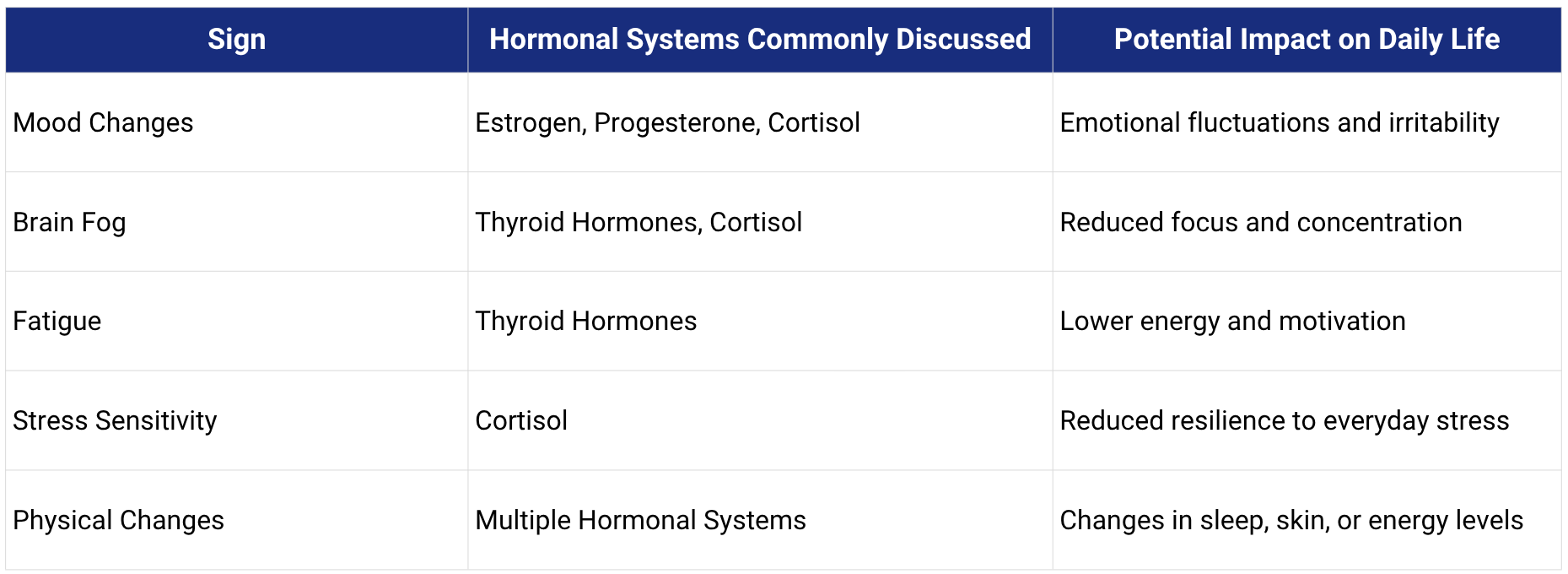
Many women and men experience periods where they feel more emotionally reactive than usual. Small frustrations may seem larger, patience may feel shorter, or emotions may feel more difficult to regulate. Hormones such as estrogen, progesterone, cortisol, and thyroid hormones all play roles in systems that influence mood and emotional processing.
These changes are not necessarily signs that something is wrong. They may simply indicate that your body is responding to normal fluctuations occurring behind the scenes.
2. Persistent Brain Fog
Have you ever walked into a room and forgotten why you were there? Or found yourself reading the same paragraph multiple times because your mind keeps drifting?
Brain fog is one of the most common complaints among individuals experiencing periods of hormonal fluctuation. While brain fog is not a medical diagnosis itself, it is often used to describe difficulty concentrating, forgetfulness, reduced mental clarity, or feelings of cognitive sluggishness.
Mental sharpness relies on multiple systems working together, including adequate sleep, stress management, nutrition, and hormonal balance. When one of those systems is under increased demand, focus and concentration may feel more challenging than usual.
3. Ongoing Fatigue Despite Getting Enough Sleep
Feeling tired after a busy week is normal. Feeling consistently drained despite getting adequate sleep may signal that your body needs additional support.
The thyroid gland is often discussed in relation to energy production because thyroid hormones help regulate how the body utilizes energy. When these processes are not functioning optimally, some individuals report feeling less energetic, less motivated, or more fatigued throughout the day.
It's important to remember that fatigue can have many potential causes, including stress, nutrition, sleep quality, lifestyle habits, and underlying health concerns. However, persistent low energy is one reason many people begin paying closer attention to their overall hormonal wellness.
4. Feeling More Sensitive to Everyday Stress
Stress is part of life. However, have you ever noticed periods where even minor inconveniences feel unusually overwhelming?
The body's stress response is closely linked to hormones, particularly cortisol. Cortisol helps the body respond to challenges and adapt to changing circumstances. When stress levels remain elevated for extended periods, many people notice changes in mood, patience, emotional resilience, and overall well-being.
This does not mean stress itself is bad. Rather, it highlights the importance of supporting the body's ability to adapt and recover from daily demands.
5. Mood Changes Accompanied by Physical Symptoms
Hormones rarely affect just one area of the body. Because they influence multiple systems simultaneously, mood changes are often accompanied by other physical signs.
Some people notice changes in skin appearance, temperature sensitivity, sleep patterns, energy levels, or weight fluctuations during periods of hormonal change. While these experiences vary significantly from person to person, they can sometimes provide additional context when evaluating overall wellness.
When emotional changes appear alongside physical changes, it may be helpful to look at the bigger picture rather than focusing on one symptom alone.
The Thyroid-Mood Connection Explained
The thyroid is often described as one of the body's metabolic control centers. Located at the front of the neck, this small gland produces hormones that help regulate energy production, metabolism, and numerous physiological functions.
Because energy and mood are closely connected, thyroid health frequently enters conversations about emotional wellness. When energy levels feel steady, people often find it easier to maintain focus, motivation, and resilience. Conversely, periods of fatigue may influence how people perceive stress and manage daily responsibilities.
While hormones are not the sole determinant of mood, they contribute to an intricate network that affects overall well-being.
Common Signs Often Associated with Hormonal Changes
Nutritional Support for Hormonal Wellness
Supporting hormonal wellness often starts with foundational habits. Quality sleep, balanced nutrition, regular movement, stress management, and hydration all contribute to overall well-being.
Nutrition plays a particularly important role because hormones rely on various nutrients to support normal physiological processes. Several nutrients frequently discussed in relation to thyroid wellness include iodine, selenium, and zinc.
Iodine
Iodine is an essential nutrient involved in the production of thyroid hormones. Because the body cannot produce iodine on its own, it must be obtained through diet or supplementation.
Selenium
Selenium is a trace mineral that plays a role in various biological functions and is often included in thyroid-focused nutritional formulas.
Zinc
Zinc supports numerous processes throughout the body and is commonly discussed in relation to immune function, cellular health, and overall wellness.
Ashwagandha
Ashwagandha is an adaptogenic herb that has become increasingly popular among individuals looking to support stress management and overall well-being. Adaptogens are often used as part of broader wellness routines designed to help the body adapt to everyday stressors.
Rather than viewing any single nutrient as a solution, many people focus on creating a balanced routine that includes healthy habits and targeted nutritional support.
Support Your Wellness Routine with 1 Body Thyroid Support
As you begin paying closer attention to the connection between hormones, energy, and emotional wellness, it becomes clear that supporting your body often involves multiple factors working together.
Healthy sleep habits, balanced nutrition, regular movement, stress management, and consistent self-care all contribute to overall wellness. Many individuals also choose to include targeted nutritional support as part of their daily routine.
1 Body Thyroid Support was formulated to complement thyroid wellness with a combination of nutrients and botanicals commonly associated with endocrine health. Featuring Iodine, Selenium, Zinc, and Ashwagandha, the formula is designed to fit easily into a comprehensive wellness routine focused on energy, balance, and overall well-being.
While no supplement replaces healthy lifestyle habits, incorporating supportive nutrients may help you stay consistent with your long-term wellness goals.
Frequently Asked Questions
-
Hormones influence many systems throughout the body, including those involved in energy, stress response, and emotional regulation. While mood changes can have many causes, hormones are often considered one factor that may contribute to how people feel on a daily basis.
Listening to What Your Body Is Telling You
Mood changes are often viewed as purely emotional experiences, but they can sometimes provide valuable insight into what is happening beneath the surface. Hormones, energy production, stress response, and overall wellness are deeply interconnected, which means emotional shifts may occasionally be one of the body's earliest signals that something deserves attention.
By paying attention to patterns rather than isolated moments, you can gain a better understanding of your body's needs. Supporting sleep, nutrition, stress management, movement, and hormonal wellness may help create a stronger foundation for overall well-being.
Rather than fighting against your body's signals, consider viewing them as information. The more you understand those signals, the better equipped you are to support long-term health and balance.
1 Body Thyroid Support
Nourish the Systems That Help You Feel Your Best
When energy, focus, stress resilience, and emotional wellness are all connected, supporting your thyroid health can become an important part of your overall routine. 1 Body Thyroid Support was formulated with carefully selected nutrients and botanicals commonly associated with thyroid wellness and endocrine support.
Whether you're looking to build healthier habits or create a more consistent wellness routine, this formula offers targeted nutritional support designed to complement your lifestyle.
Key Features
-
Contains Iodine to support thyroid hormone production
-
Includes Selenium, a trace mineral commonly associated with thyroid wellness
-
Features Zinc to support overall health and cellular function
-
Contains Ashwagandha, an adaptogenic herb traditionally used in wellness routines
-
Designed to complement energy, focus, and wellness goals
-
Easy-to-use daily formula
-
Supports consistency as part of a balanced lifestyle

Supporting your thyroid health doesn't have to be complicated. By combining healthy habits with targeted nutritional support, you can create a wellness routine that works with your body rather than against it. 1 Body Thyroid Support makes it easy to prioritize that routine every day.
Citation
Bauer, M., Goetz, T., Glenn, T., & Whybrow, P. C. (2008). The thyroid-brain interaction in thyroid disorders and mood disorders. Frontiers in Endocrinology, 3(2012), 1–21. https://doi.org/10.3389/fendo.2012.00061
For all general inquiries, please contact us at help@1body.com
© Copyright. All rights reserved.