The Best Investment you'll ever Make is in Yourself


Caring for a family requires emotional attention, physical energy, patience, and steady decision-making, but those resources can become depleted when rest and personal care are repeatedly postponed. Balanced meals, realistic boundaries, restorative sleep, movement, shared responsibility, and appropriate nutritional support can help caregivers build a more sustainable daily routine.
The day often begins before you have had time to check in with yourself. There are meals to prepare, appointments to remember, school or work schedules to manage, messages to answer, and people who depend on you to remain calm when the household becomes hectic. By the afternoon, your physical energy may be fading, yet the need for patience, attention, and problem-solving continues.
Running on empty is sometimes treated like proof that you care deeply. In reality, chronic exhaustion can make it harder to listen carefully, respond gently, enjoy time with your family, or recognize your own needs before they become urgent. Showing up for the people you love should not require disappearing from your own life.
Caregiver fatigue, parental burnout, stress management, steady daily energy, and restorative sleep are connected to everyday habits, but they are also shaped by workload, health, finances, relationships, and access to support. The goal is not to create a flawless routine. It is to reduce the number of days when you are surviving entirely on caffeine, urgency, and whatever energy happens to be left.
Why Caregiving Fatigue Feels Different From an Ordinary Tired Day
Ordinary tiredness usually follows a clear cause. You stayed up late, completed a difficult workout, traveled, or had an unusually demanding day. With food, rest, and a little recovery time, you begin to feel like yourself again.
Caregiving fatigue can feel more complicated because the demands rarely end at a predictable time. Even when the house becomes quiet, your mind may continue reviewing tomorrow’s schedule, worrying about a loved one, or remembering unfinished responsibilities. You may be physically still while remaining mentally alert.
The body’s stress response helps you meet short-term demands by increasing readiness and attention. Cortisol is one part of that response, but everyday exhaustion should not be reduced to a single hormone or described as the adrenal glands simply “running out.” Persistent fatigue can involve sleep quality, nutrition, emotional strain, medication effects, thyroid function, anemia, depression, anxiety, chronic pain, caregiving burden, and many other factors.
A frequently cited study published in JAMA followed older adults who were caring for a spouse. The researchers found that participants experiencing caregiving strain had a higher mortality risk during the study period than non-caregiving controls. That study does not mean caregiving inevitably damages health, nor does it apply equally to every family, but it reinforces an important message: sustained caregiver strain deserves serious attention and practical support.
The signs of overload may be easy to dismiss at first. You may become more impatient, forget simple tasks, crave quick comfort foods, lose interest in activities you usually enjoy, or feel tired before the day has properly begun. These experiences do not reflect a lack of love or commitment. They are signals that your current routine may be demanding more than it restores.
Stop Treating Rest Like a Reward
Many parents and caregivers postpone rest until every task is finished. The problem is that family life rarely reaches a clean stopping point. There is always another load of laundry, an email to send, a form to sign, or something to prepare for tomorrow.
Rest works better when it is treated as maintenance rather than a reward. A ten-minute pause before exhaustion sets in may be more useful than waiting until you are too depleted to think clearly. This can mean sitting down while lunch warms, stepping outside between responsibilities, or closing your eyes for a few quiet minutes instead of automatically opening another app.
Sleep also deserves protection. Seven or eight hours in bed does not always equal restorative sleep if you are waking frequently, caring for someone overnight, scrolling late into the evening, or remaining mentally activated after the lights go out. A consistent wind-down routine can help create a clearer transition from responsibility to recovery.
Try lowering the lights, placing your phone out of immediate reach, preparing the next morning’s essentials earlier in the evening, and choosing one calming activity before bed. The routine does not need to look impressive. It only needs to be repeatable enough that your body begins to recognize when the day is ending.
If sleep remains unrefreshing despite reasonable effort, do not assume that stress is the only explanation. Heavy snoring, gasping during sleep, restless legs, frequent waking, pain, hormonal changes, and certain medications can all affect sleep quality and may deserve professional evaluation.
Build Meals Around Steady, Practical Nourishment
Busy families often eat according to urgency rather than hunger. A caregiver may prepare food for everyone else, then realize hours later that they have eaten only a few bites, a snack in the car, or several cups of coffee.
Steady energy begins with regular nourishment. A practical meal does not need to be elaborate, but it should ideally include protein, fiber-rich carbohydrates, healthy fats, and foods that provide vitamins and minerals. Eggs and whole-grain toast, yogurt with fruit and nuts, soup with beans, or a simple rice bowl with vegetables and protein can all provide a more dependable foundation than skipping meals.
Caffeine may help temporarily, but it cannot replace food or sleep. Large amounts, especially later in the day, may also interfere with rest and contribute to a cycle in which poor sleep leads to more caffeine, which then makes the next night more difficult.
Hydration matters as well. Keeping water where you can see it, drinking during meals, or pairing a glass of water with a routine task can make consistent intake easier. There is no need to turn hydration into another complicated obligation.
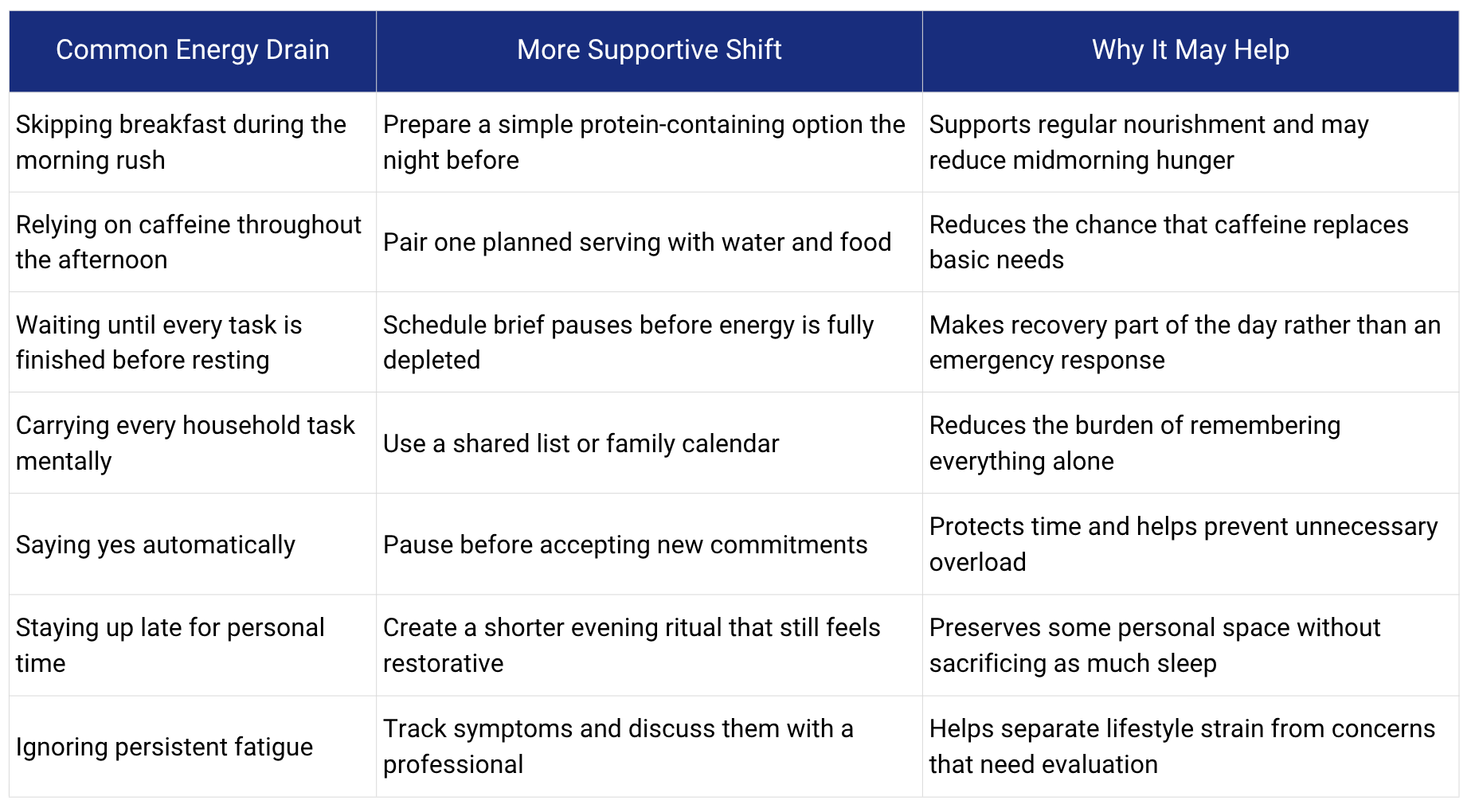
The following table shows how common caregiver habits can be adjusted without redesigning the entire day:
Protect Your Energy With Boundaries and Shared Responsibility
Boundaries are sometimes mistaken for rejection, but healthy boundaries make caregiving more sustainable. They help distinguish between what truly needs your attention and what can wait, be simplified, or be shared.
Begin by identifying the responsibilities that only you can handle. Then look at everything else. Could another family member manage a recurring chore, prepare one meal each week, make a phone call, or take responsibility for part of the morning routine? Sharing responsibility may require patience at first, especially when someone completes the task differently than you would, but perfection is not the goal.
Clear communication can prevent resentment from building quietly. Instead of waiting until you are overwhelmed, try saying, “I need help with dinner twice this week,” or “I can attend one event this weekend, but not both.” Specific requests are easier for others to understand and act on.
It may also help to reduce invisible work. Shared calendars, grocery lists, medication schedules, and household reminders can move responsibilities out of your head and into a system everyone can see. Mental organization takes energy, even when no one else notices it happening.
Connection should remain part of the plan. Caregivers often become isolated because social time feels optional compared with family responsibilities. A short phone call, a walk with a friend, or a regular community activity can provide perspective and remind you that your identity includes more than the care you provide.
Pay Attention to Persistent Fatigue
Fatigue is common, but it should not always be normalized. When exhaustion continues for weeks, worsens, or begins interfering with work, driving, relationships, or basic daily tasks, professional guidance is appropriate.
Thyroid function is one possible factor among many. The thyroid helps regulate metabolism and energy use, but fatigue alone cannot establish that a thyroid condition is present. Weight changes, unusual temperature sensitivity, bowel changes, changes in heart rate, skin or hair changes, and menstrual changes may provide additional context, but laboratory testing and clinical evaluation are needed.
The same caution applies to “adrenal fatigue,” a popular phrase that is not generally recognized as a formal medical diagnosis. Stress can absolutely affect sleep, mood, concentration, appetite, and energy, but persistent symptoms should not be assumed to mean that the adrenal glands have become depleted.
A healthcare professional may consider sleep disorders, anemia, nutrient deficiencies, depression, anxiety, thyroid conditions, blood sugar concerns, medication side effects, infection, or other causes. Keeping a brief record of sleep, meals, symptoms, stress, and energy patterns can make the conversation more productive.
Seek prompt medical care for chest pain, fainting, severe shortness of breath, sudden confusion, new weakness, or other urgent symptoms. Thoughts of self-harm or the feeling that you cannot safely continue also require immediate support.
Create a Daily Routine That Restores More Than It Drains
A sustainable routine should include small sources of restoration throughout the day rather than relying on one distant break. Think of energy as something you protect and replenish, not something you are expected to produce endlessly.
Morning light, a real breakfast, a few minutes of movement, a shared household system, and a calmer evening can work together. None of these habits is dramatic, but together they reduce the number of decisions you have to make while tired.
Movement can be especially helpful when it is realistic. A short walk, stretching, gardening, or light strength work may support mood, mobility, and sleep without becoming another exhausting task. On difficult days, the minimum version still counts.
It is also helpful to notice what drains you unnecessarily. Constant notifications, overcommitting, trying to make every meal or event perfect, and refusing help can consume energy that your family may need more than perfection.
Your family does not need unlimited output from you. They benefit more from a caregiver who has enough support to remain emotionally present, ask for help, and recover from demanding days.
Thoughtful Nutritional Support for Demanding Seasons
Once sleep, meals, boundaries, movement, and appropriate healthcare are being addressed, some adults consider supplements as part of a broader wellness routine. Supplements should be treated as optional nutritional support, not as replacements for rest, food, medical care, or shared responsibility.
1 Body Adrenal Support is designed for adults looking to complement everyday stress-management habits with selected nutrients and botanical ingredients. It can be positioned around daily resilience and stress-response wellness without suggesting that it treats adrenal disorders, repairs “burned-out” glands, or corrects abnormal cortisol levels.
1 Body Thyroid Support is formulated with nutrients commonly included in thyroid and metabolic wellness products. It may fit the routine of an adult seeking targeted nutritional support, but anyone taking thyroid medication, managing an autoimmune condition, or experiencing persistent fatigue should review the formula with a qualified healthcare professional.
Together, the products can support different parts of a thoughtful routine: Adrenal Support may complement relaxation and everyday stress-management habits, while Thyroid Support may complement nutritional and metabolic wellness. Neither product should be presented as a cure for caregiver fatigue or a substitute for evaluation when symptoms continue.
Frequently Asked Questions
-
Time in bed does not always reflect sleep quality, especially when sleep is interrupted by caregiving, stress, pain, snoring, or frequent waking. Persistent unrefreshing sleep is worth discussing with a healthcare professional.
Being Present Starts With Caring for Yourself
Showing up for your family does not require ignoring your own limits. Sustainable caregiving is built on the understanding that your sleep, meals, health, boundaries, and emotional support matter too.
Begin with the parts of the day that create the greatest strain. Prepare one dependable meal, ask someone to take over one recurring responsibility, protect a brief evening wind-down period, or schedule a health appointment you have been postponing. Small changes can reduce the pressure more effectively than waiting for a complete break that may never appear.
Pay attention to fatigue that does not improve. Stress may be part of the picture, but it should not be used to explain away persistent symptoms without proper evaluation.
Your family benefits when you are able to participate in daily life with steadier energy and greater patience. Caring for yourself is not time taken away from them; it is part of creating a healthier household for everyone.
1 Body Adrenal Support and 1 Body Thyroid Support
1 Body Adrenal Support and 1 Body Thyroid Support offer two complementary forms of nutritional support for adults moving through demanding family seasons. Adrenal Support is designed to complement stress-management and daily resilience routines, while Thyroid Support provides nutrients commonly included in metabolic and thyroid wellness formulas.†
Product features and wellness-supporting qualities include:
-
Adrenal Support features selected nutrients and botanical ingredients
-
Designed to complement healthy stress-response habits†
-
Supports a balanced daily wellness routine†
-
Thyroid Support includes targeted minerals and nutritional ingredients
-
Designed to complement normal metabolic wellness†
-
Supports an informed approach to thyroid nutrition†
-
Convenient for inclusion in an established routine
-
Intended to complement balanced meals, movement, sleep, and self-care
-
Best used with professional guidance when medications or health conditions are involved
-
Clearly positioned as nutritional support rather than treatment for fatigue or endocrine disease

These formulas may be a thoughtful choice for adults who want targeted nutritional support while building healthier boundaries, more consistent meals, restorative sleep, and a manageable daily rhythm. Review both Supplement Facts panels carefully and speak with a healthcare professional to determine whether either formula is appropriate for your individual health needs.
†These statements have not been evaluated by the Food and Drug Administration. These products are not intended to diagnose, treat, cure, or prevent any disease.
Reference
Schulz, R., & Beach, S. R. (1999). Caregiving as a risk factor for mortality: The Caregiver Health Effects Study. JAMA, 282(23), 2215–2219. https://doi.org/10.1001/jama.282.23.2215
For all general inquiries, please contact us at help@1body.com
© Copyright. All rights reserved.