The Best Investment you'll ever Make is in Yourself


Men often postpone conversations about urinary changes, prostate wellness, sleep disruption, energy, and routine medical care. Paying attention to gradual changes, building consistent lifestyle habits, and speaking with a qualified healthcare professional can make men’s health feel more manageable and less intimidating.
Many men take excellent care of the things they depend on every day. They maintain their vehicles, repair problems around the house, keep up with work responsibilities, and make sure their families have what they need. Yet routine personal care can easily move to the bottom of the list, especially when the issue feels private, inconvenient, or easy to dismiss.
Prostate health and urinary comfort are common examples. A man may notice that he is waking more often during the night, looking for a restroom more frequently, or feeling that his usual routine has changed. Because these concerns can develop gradually, they may become part of daily life before he seriously considers discussing them.
A proactive men’s wellness routine does not need to begin with fear or an overwhelming lifestyle transformation. It can start with noticing patterns, keeping routine appointments, supporting healthy sleep, eating a balanced diet, staying active, and learning more about nutrients commonly associated with men’s health and healthy aging.
Why Men Delay Important Health Conversations
There is no single reason men postpone health concerns. Some are busy and assume they will address the issue when life slows down. Others feel uncomfortable discussing urinary habits, sexual wellness, prostate concerns, or changes in energy. Many simply hope that a minor inconvenience will disappear on its own.
The problem is not that every small change indicates something serious. Rather, repeatedly ignoring changes can make it harder to recognize what is normal for you. Knowing your usual sleep, bathroom habits, energy level, and physical comfort gives you a helpful reference point when something begins to feel different.
Men may also associate proactive care with losing independence. In reality, asking questions and gathering reliable information are practical forms of self-maintenance. Just as a regular service appointment helps keep a vehicle running smoothly, routine medical visits give you an opportunity to discuss changes before they become more disruptive.
Prostate wellness deserves particular attention because the prostate naturally changes as men age. Urinary symptoms may have several possible causes, so symptoms alone cannot determine what is happening. A healthcare professional can consider your age, medical history, medications, lifestyle, and other factors before recommending appropriate next steps.
The Everyday Signs Men Often Ignore
Some men’s health concerns arrive suddenly, but many begin quietly. A single restless night or an occasional extra bathroom trip may not seem important. When the same pattern continues, however, it can affect sleep quality, morning energy, travel plans, exercise, work, and confidence in social settings.
Common changes worth discussing with a healthcare professional may include:
-
Needing to urinate more frequently than usual
-
Waking repeatedly during the night to use the bathroom
-
Experiencing difficulty beginning urination
-
Noticing a weak or interrupted urinary stream
-
Feeling that the bladder has not completely emptied
-
Experiencing persistent pressure, discomfort, or a sudden change in urinary habits
These experiences should not be self-diagnosed. Similar symptoms can be connected to different health conditions, hydration habits, medications, caffeine or alcohol intake, sleep problems, and other factors. New, persistent, painful, or worsening symptoms deserve professional evaluation.
Urgent medical care may be appropriate for an inability to urinate, blood in the urine, fever, severe pain, or symptoms that appear suddenly. Routine wellness content and dietary supplements are not substitutes for medical assessment, diagnosis, or treatment.
Research also reminds us to keep expectations realistic when considering herbal ingredients. In a randomized clinical trial, increasing doses of saw palmetto extract did not reduce lower urinary tract symptoms more effectively than a placebo among the men studied. This does not answer every question about every formula, but it reinforces an important point: supplements should be viewed as optional wellness support rather than cures or replacements for individualized care.
Building a Practical Men’s Wellness Routine
Proactive care is easier to maintain when it fits naturally into everyday life. Instead of trying to change everything at once, focus on a few repeatable habits that support overall health and make it easier to recognize changes.
Regular movement is a useful place to begin. Walking, resistance training, cycling, swimming, and other enjoyable activities can support cardiovascular health, mobility, stress management, and healthy weight maintenance. Consistency matters more than choosing the most complicated workout plan.
Sleep is equally important. When nighttime bathroom trips repeatedly interrupt rest, the effects can extend into the next day. Fatigue may influence mood, concentration, food choices, motivation, and physical activity. Tracking how often you wake and when you consume fluids may provide useful information to share with your healthcare professional.
Food choices also play a role in a balanced wellness routine. Vegetables, fruits, whole grains, legumes, healthy fats, and appropriate sources of protein provide nutrients that support the body as a whole. Some men also explore ingredients such as saw palmetto, beta-sitosterol, and pumpkin seed oil as part of their nutritional routine, although individual responses vary and these ingredients should not be presented as treatments for medical conditions.
The following table offers a practical overview of several wellness areas and the simple habits that may support them:
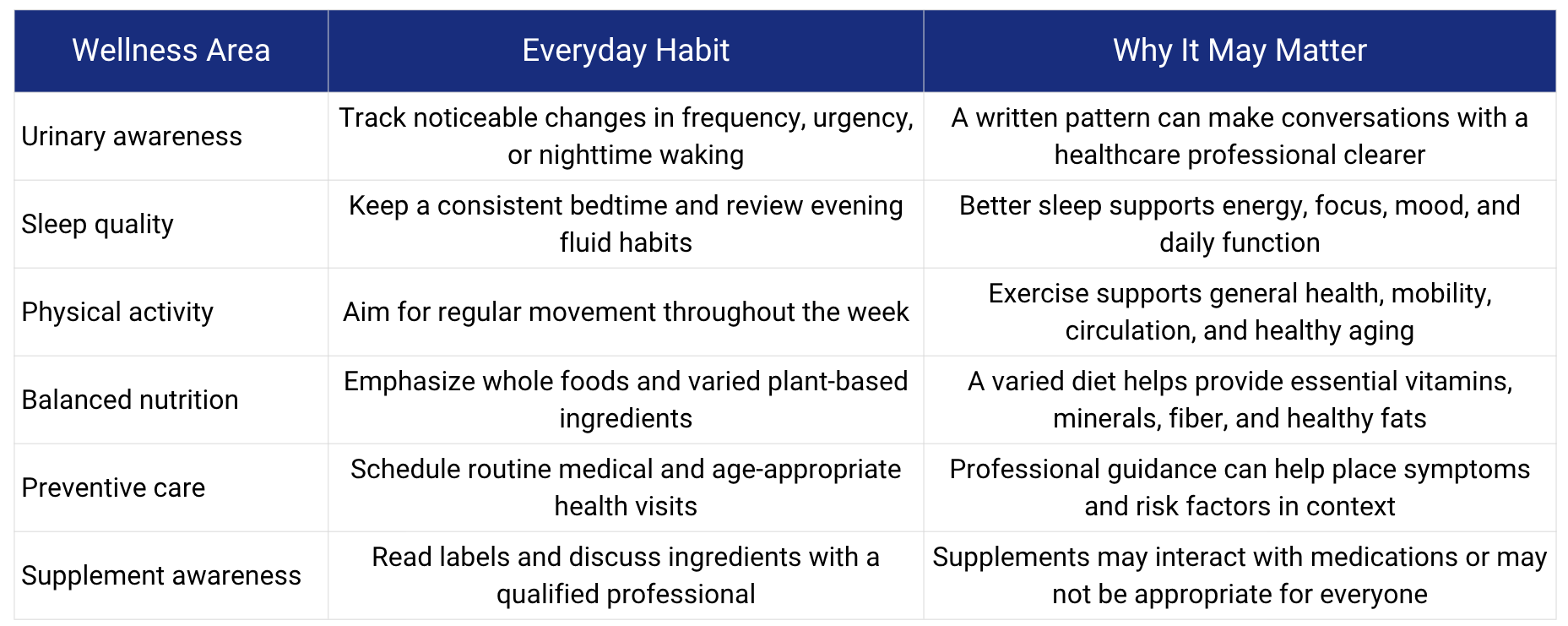
Hydration also deserves balance. Drinking too little can create its own concerns, while consuming large amounts of fluid close to bedtime may contribute to nighttime waking. Rather than making extreme changes, observe how timing, caffeine, alcohol, and personal habits affect your routine.
Most importantly, avoid treating embarrassment as a reason to remain silent. Healthcare professionals regularly discuss urinary symptoms and prostate concerns. A clear description of what you have noticed—including when it started, how often it happens, and how it affects your daily life—can help make the conversation more productive.
A Thoughtful Way to Add Nutritional Support
Once the foundations of men’s wellness are in place, some individuals choose to add a dietary supplement to their daily routine. The most responsible approach is to look for transparent labeling, clearly listed ingredients, practical serving instructions, and a formula that does not promise to diagnose, treat, cure, or prevent disease.
1 Body PROSTATE+ is designed as a daily men’s health supplement featuring USPlus® saw palmetto, beta-sitosterol, and pumpkin seed oil. Its role is nutritional support within a broader routine that may also include balanced eating, regular movement, healthy sleep habits, preventive care, and conversations with a qualified healthcare professional.
The formula is non-GMO and gluten-free, comes in vegan capsules, and is made in the USA with domestic and imported ingredients, according to the product label. These features may appeal to men and families looking for a straightforward supplement that fits easily into an established wellness routine.
As with any supplement, results cannot be guaranteed, and personal experiences may differ. Anyone taking prescription medications, managing a health condition, preparing for surgery, or experiencing ongoing urinary symptoms should speak with a healthcare professional before beginning a new supplement.
Frequently Asked Questions
-
Prostate awareness can become part of a man’s general wellness routine in adulthood, although individual screening and medical recommendations depend on age, family history, symptoms, and personal risk factors. A healthcare professional can help determine which conversations or evaluations are appropriate for you.
Small Steps Can Support Long-Term Wellness
The health topics men put off are often the ones that gradually affect daily comfort the most. Interrupted sleep, changing urinary habits, low energy, and skipped medical visits can become familiar enough to ignore, but familiarity does not make them unimportant.
Proactive care does not require panic, perfection, or a complicated routine. It means noticing changes, asking questions, making sustainable lifestyle choices, and seeking professional guidance when something continues or worsens. Those small steps can help men feel more informed and confident about their long-term wellness.
A dietary supplement may complement that routine, but it should remain one part of a broader plan. The most valuable approach combines practical habits, realistic expectations, transparent product choices, and appropriate medical care.
1 Body PROSTATE+
1 Body PROSTATE+ offers a convenient way to include selected men’s wellness ingredients in a daily nutritional routine. The formula combines USPlus® saw palmetto, beta-sitosterol, and pumpkin seed oil in vegan capsules, with a label focused on daily support rather than promises of treatment or cure.
Product features and potential wellness-supporting benefits include:
-
USPlus® saw palmetto as a recognizable botanical ingredient commonly included in men’s health formulas
-
Beta-sitosterol, a plant sterol used in many prostate wellness supplements
-
Pumpkin seed oil, a source of naturally occurring fatty acids and plant compounds
-
A convenient capsule format for daily use
-
Vegan capsules
-
Non-GMO and gluten-free formulation
-
Made in the USA with domestic and imported ingredients
-
A formula intended to complement, not replace, balanced nutrition and professional healthcare

Choosing 1 Body PROSTATE+ can be a practical step for men who want a simple, clearly labeled supplement to accompany their healthy aging routine. Its combination of nature-inspired ingredients and straightforward daily use reflects 1 Body’s commitment to bringing natural wellness and thoughtful formulation together.
Explore 1 Body PROSTATE+ as part of a balanced, proactive approach to men’s wellness.
Reference
Barry, M. J., Meleth, S., Lee, J. Y., Kreder, K. J., Avins, A. L., Nickel, J. C., Roehrborn, C. G., Crawford, E. D., Foster, H. E., Jr., Kaplan, S. A., McCullough, A., Andriole, G. L., Naslund, M. J., & Williams, O. D. (2011). Effect of increasing doses of saw palmetto extract on lower urinary tract symptoms: A randomized trial. JAMA, 306(12), 1344–1351. https://doi.org/10.1001/jama.2011.1364
For all general inquiries, please contact us at help@1body.com
© Copyright. All rights reserved.