The Best Investment you'll ever Make is in Yourself

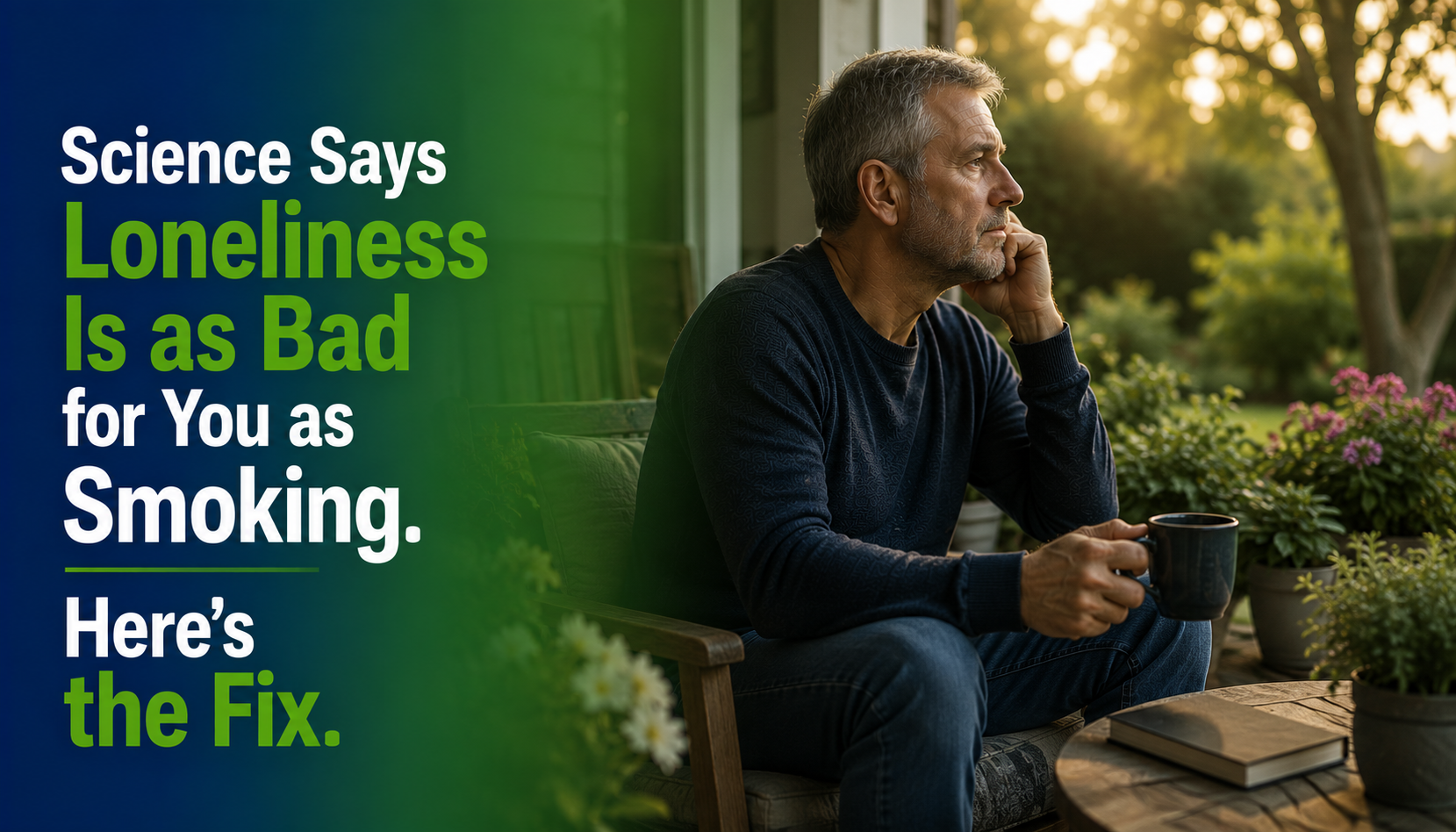
Persistent loneliness and social isolation may affect stress, sleep, mood, and overall health, but the answer is not simply to “be more social.” Small, repeated moments of connection, supportive routines, professional guidance when needed, and thoughtful nutritional support can help create a steadier path back toward emotional well-being.
Loneliness is easy to misunderstand because it does not always look like being physically alone. A person can have a busy calendar, live with family, speak with coworkers all day, and still feel disconnected. In the same way, someone who enjoys a great deal of time alone may not feel lonely at all.
The difference often comes down to the quality of connection. Loneliness is the feeling that the relationships around you do not provide the closeness, understanding, or sense of belonging you need. Social isolation, on the other hand, refers more directly to having limited contact with other people. The two can overlap, but they are not identical.
Public health discussions sometimes compare the health burden of chronic loneliness with familiar risks such as smoking. That comparison can sound dramatic, and it should not be interpreted as a precise one-to-one equation for every person. What the research does suggest is that strong social relationships are meaningfully associated with health and survival, while persistent isolation deserves to be taken seriously rather than dismissed as a passing emotional inconvenience.
The encouraging part is that connection can be rebuilt. The process usually does not begin with a packed social calendar or a sudden personality change. It begins with smaller, more realistic steps: one honest message, one shared meal, one weekly class, one conversation where you feel heard, or one decision to ask for help instead of carrying everything alone.
Why Loneliness Affects More Than Your Mood
Human beings are wired for connection. Throughout life, relationships help us share responsibilities, regulate emotions, solve problems, celebrate good news, and feel safer during difficult periods. When those connections feel absent or unreliable, the body may respond as though an important source of security is missing.
That response can show up in several ways. Some people notice increased tension, more frequent worry, disrupted sleep, low motivation, emotional eating, or difficulty concentrating. Others feel physically tired even when they have not done anything especially demanding. Loneliness may also make ordinary setbacks feel heavier because there is no trusted person available to help put the experience in perspective.
A large meta-analysis published in PLOS Medicine reviewed 148 studies involving more than 300,000 participants. The researchers found that people with stronger social relationships had a greater likelihood of survival over the study periods than those with weaker social relationships. The study does not prove that loneliness directly causes a specific disease, and it does not mean that every isolated person faces the same level of risk, but it supports the broader idea that social connection is an important part of health.
Loneliness can also influence daily choices. When someone feels emotionally disconnected, it may become harder to cook a balanced meal, go for a walk, maintain a bedtime routine, or attend a medical appointment. Those habits can gradually become less consistent, which may affect energy and emotional resilience.
The reverse can happen too. Poor sleep, ongoing stress, illness, relocation, caregiving responsibilities, retirement, grief, or reduced mobility can make it harder to stay connected. This creates a cycle in which isolation makes healthy routines more difficult, and disrupted routines make connection feel even less accessible.
The Stress-and-Connection Cycle
When a person repeatedly feels unsupported or socially unsafe, the nervous system may remain more alert than usual. The body’s stress response is designed to help with short-term challenges, but staying in that state too often can leave someone feeling restless, emotionally drained, or mentally scattered.
Cortisol is one hormone involved in the stress response, but it is important not to reduce loneliness to a single hormone. Sleep, mood, appetite, physical activity, medical conditions, medications, and personal history can all influence how stress is experienced. A supplement or one relaxation practice cannot correct the full experience of loneliness because loneliness is relational as well as physical.
Still, calming habits can make it easier to take the next social step. A person who feels slightly more rested and grounded may find it easier to reply to a message, join a group, or tell someone they have been struggling. Emotional wellness support can therefore help create better conditions for connection, even though it cannot replace connection itself.
The goal is not to eliminate every uncomfortable feeling before reaching out. Waiting until you feel completely confident may keep you waiting indefinitely. It is often more useful to take a small social action while also supporting the body with sleep, movement, nourishing meals, time outdoors, and moments of relaxation.
Small Ways to Rebuild Meaningful Connection
The phrase “get out and meet people” sounds simple, but it can feel unrealistic when loneliness has already affected confidence or motivation. A better approach is to lower the pressure and focus on regular contact rather than instant closeness.
Micro-connections are a practical place to begin. These are brief but genuine moments of human contact, such as greeting a neighbor, thanking a cashier, sending a voice message, or asking a coworker how their week is going. These interactions may not become deep friendships, but they help restore the experience of being part of a shared world.
Repeated environments are especially helpful because familiarity makes conversation easier. A weekly class, volunteer shift, walking group, faith community, library event, hobby club, or neighborhood gathering gives you a reason to see the same people again. Relationships often grow through repetition rather than one memorable encounter.
It can also help to choose connection that has structure. Volunteering, taking a class, or joining a group built around an activity removes some of the pressure to make conversation from nothing. The shared task gives everyone a natural starting point.
The following table offers a realistic way to match common challenges with small actions:
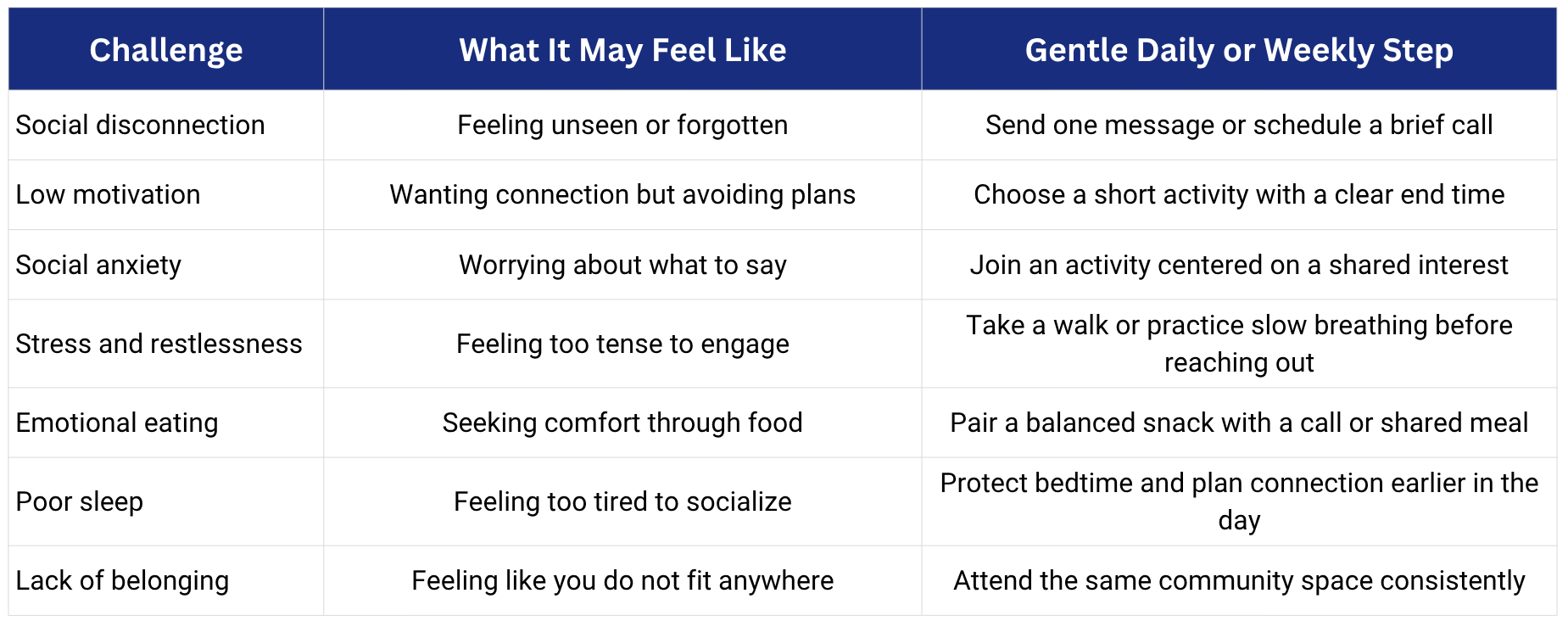
Quality matters more than quantity. One dependable relationship can be more emotionally supportive than dozens of surface-level contacts. It is also reasonable to outgrow relationships that are consistently dismissive, unsafe, or one-sided.
Professional support can be part of rebuilding connection too. A counselor, therapist, support group, social worker, or community health professional can help when loneliness is tied to grief, depression, anxiety, trauma, chronic illness, caregiving, or major life change. Asking for help is not evidence that you have failed socially; it is a way of creating support where support is needed.
Supporting Sleep, Mood, and Everyday Resilience
Connection is the heart of the solution, but everyday routines can make connection easier to pursue. Sleep, movement, nutrition, and time outdoors all influence how much emotional energy you have available.
A consistent sleep schedule can help reduce the exhaustion that makes social interaction feel like another obligation. Try creating a calmer final hour before bed, lowering screen stimulation, and keeping wake times relatively steady. Persistent insomnia, heavy snoring, or severe daytime sleepiness should be discussed with a healthcare professional.
Movement can support mood and provide opportunities for contact at the same time. Walking with a friend, attending a gentle exercise class, gardening in a community space, or visiting a local park can combine physical activity with a sense of participation.
Food routines also matter. Loneliness and stress may make some people skip meals, rely on highly processed foods, or eat primarily for comfort. Rather than judging those choices, focus on adding structure: regular meals, protein, fiber, healthy fats, water, and foods you genuinely enjoy.
Sunlight and time outdoors can also provide useful anchors for the day. A short morning walk, coffee on the porch, or lunch near a window may help establish rhythm and create natural chances for brief interaction.
Most importantly, measure progress by participation rather than immediate emotional transformation. You may attend a group and still feel lonely afterward. That does not mean the effort was wasted; trust and belonging often develop gradually.
Nutritional Support While You Reconnect
Once healthy routines and connection-building steps are underway, some adults consider supplements as part of a broader emotional wellness plan. Supplements should remain supportive tools, not substitutes for relationships, therapy, prescribed care, sleep, balanced meals, or time in community.
1 Body Saffron provides 88.5 mg of saffron extract in vegan capsules. According to the product label, it is formulated to support healthy mood, healthy eating habits, and eye health, making it a natural fit for adults who want botanical nutritional support while working on emotional well-being.
1 Body Cortisol Balance combines Shoden® Ashwagandha, rhodiola, and phosphatidylserine. The label positions the formula to support relaxation, encourage rest, and promote focus, which may complement the practical stress-management habits that make social connection feel more manageable.
These two products serve different but related roles. Saffron may fit a mood-support routine, while Cortisol Balance may fit a relaxation, rest, and focus routine. Neither product should be presented as a treatment for loneliness, depression, anxiety, or social isolation, and individual experiences may vary.
Anyone taking medication, managing a mental health or medical condition, preparing for surgery, or who is pregnant or breastfeeding should speak with a qualified healthcare professional before starting a new supplement.
Frequently Asked Questions
-
Research has linked weak social relationships with increased health and mortality risk, which is why loneliness is sometimes compared with smoking in public health messaging. The comparison is not a precise prediction for an individual, but it does show that persistent isolation should be taken seriously.
Connection Is a Daily Health Habit
Loneliness is not a personal weakness, and it is not always solved by trying harder to be outgoing. It can grow after loss, relocation, caregiving, illness, retirement, remote work, family conflict, or years of placing everyone else’s needs first.
The most useful response is usually a combination of connection and care. Reach out in small ways, return to the same communities, create structure around sleep and meals, move your body, spend time outdoors, and ask for professional support when the burden feels too heavy to carry alone.
Progress may be quiet at first. One call may not erase loneliness, and one community event may not create instant belonging, but repeated contact builds familiarity, and familiarity can grow into trust.
Supporting mood and stress can help make those steps easier, but human connection remains the center of the story. The goal is not simply to reduce a feeling; it is to rebuild a life in which support, companionship, and belonging have room to grow.
1 Body Saffron and 1 Body Cortisol Balance
1 Body Saffron and 1 Body Cortisol Balance offer two complementary forms of nutritional support for adults rebuilding steadier emotional wellness routines. Saffron is positioned around healthy mood and eating habits, while Cortisol Balance supports relaxation, rest, and focus through Shoden® Ashwagandha, rhodiola, and phosphatidylserine.
Product features and wellness-supporting qualities include:
-
1 Body Saffron provides 88.5 mg of saffron extract
-
Saffron is formulated to support healthy mood
-
Saffron is positioned to support healthy eating habits
-
Saffron comes in 60 vegan capsules
-
Cortisol Balance includes Shoden® Ashwagandha
-
Cortisol Balance also includes rhodiola and phosphatidylserine
-
Cortisol Balance is formulated to support relaxation
-
Cortisol Balance is designed to encourage rest and promote focus
-
Cortisol Balance comes in 30 vegan capsules
-
Both formulas offer a convenient capsule format
-
Both products are intended to complement healthy routines rather than replace care or connection
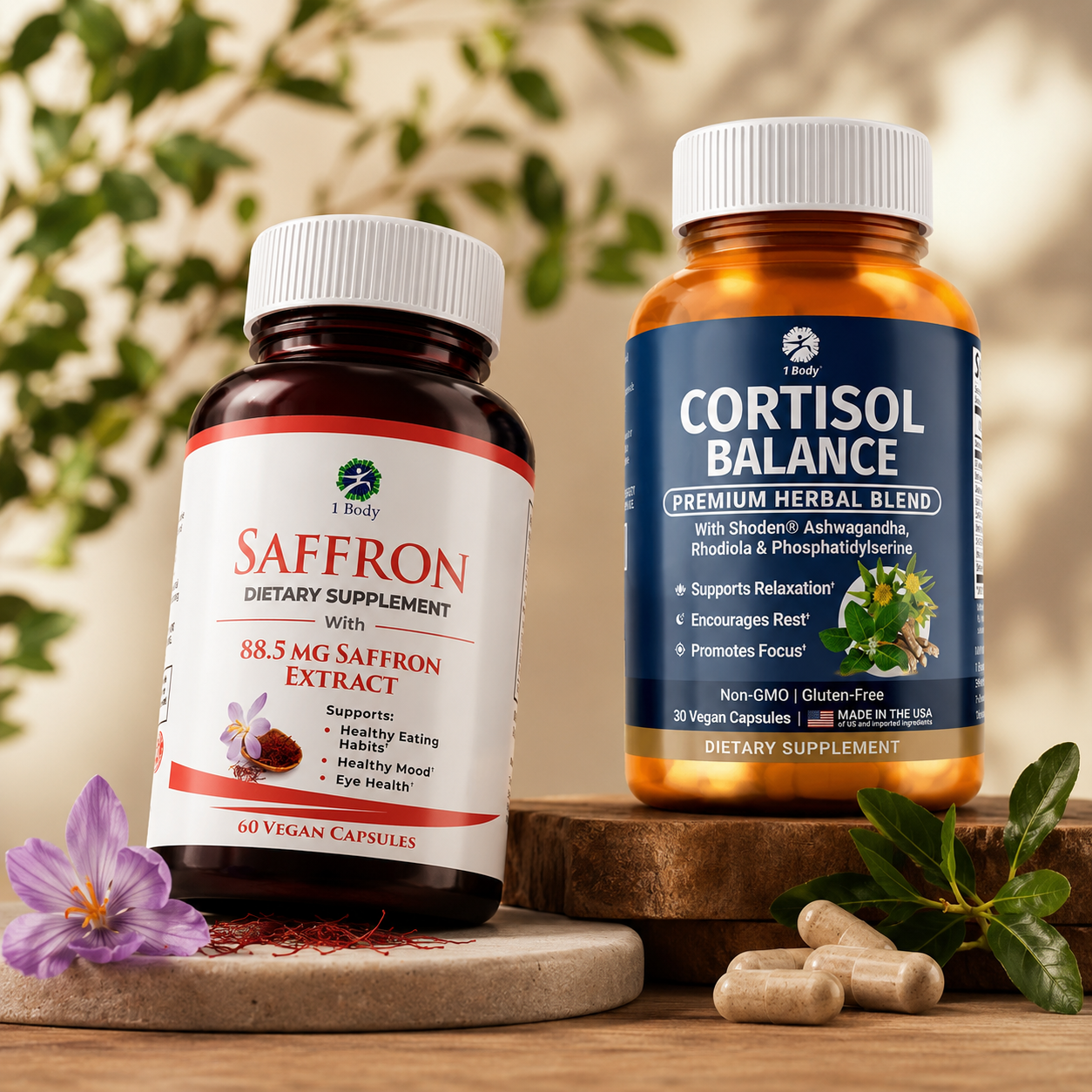
These products may be a thoughtful pairing for adults who want to support mood, relaxation, rest, and focus while taking practical steps toward stronger relationships and community involvement. Choosing them together creates a simple, complementary routine, with 1 Body Saffron supporting emotional wellness and 1 Body Cortisol Balance supporting the calmer daily foundation that may make reconnecting feel more approachable.
Reference
Holt-Lunstad, J., Smith, T. B., & Layton, J. B. (2010). Social relationships and mortality risk: A meta-analytic review. PLOS Medicine, 7(7), e1000316. https://doi.org/10.1371/journal.pmed.1000316
For all general inquiries, please contact us at help@1body.com
© Copyright. All rights reserved.