The Best Investment you'll ever Make is in Yourself


  • SHOP
  • BLOG
  • FAQ
  • CONTACT US
0

You’ve done everything right: the greens, the gym, the sleep. Yet, the scale won't budge. You go to the doctor, they run a standard TSH (Thyroid Stimulating Hormone) test, and the verdict is: "Everything looks fine."


So why do you still feel exhausted? The answer lies in the difference between Reference Ranges and Optimal Physiology.


I. The "Reference Range" Trap: Management vs. Mastery

Standard lab ranges are based on a bell curve of the general population—a population that is increasingly stressed, inflamed, and nutrient-deficient.

  • The "Normal" Range: This is designed to identify clinical disease (like Graves' or Myxedema).

  • The "Optimal" Range: This is where your cells are firing, your body temperature is stable ($37^{\circ}\text{C}$), and your brain is sharp.


When your thyroid function is even slightly off, your body enters a state of Metabolic Buffering. This isn't a "broken" metabolism; it’s a survival strategy. Your mitochondria—the power plants of your cells—shift from "performance mode" to "conservation mode" to spare resources.


II. The Conversion Bottleneck: Why T4 Isn't Enough

Your thyroid gland primarily produces T4 (Thyroxin), which is an inactive storage hormone. For you to feel the benefits—warmth, energy, and fat loss—your body must convert that T4 into T3 (Triiodothyronine), the active form.


This conversion happens largely in the liver and gut. If these systems are taxed, or if you lack specific co-factors, you end up with plenty of T4 (making your labs look "normal") but almost no active T3.


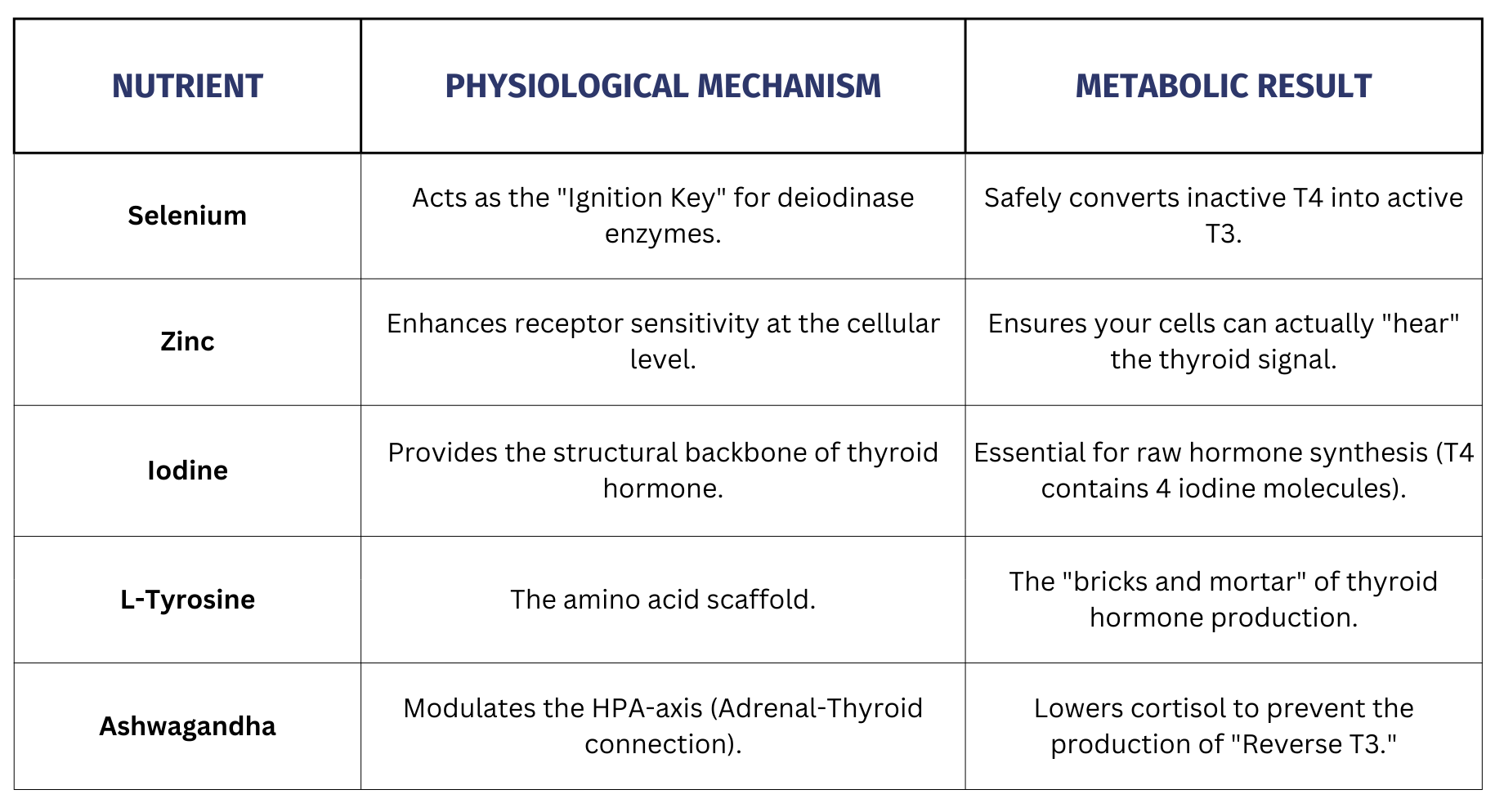
III. The Science of the "Reset" (Key Nutrients)
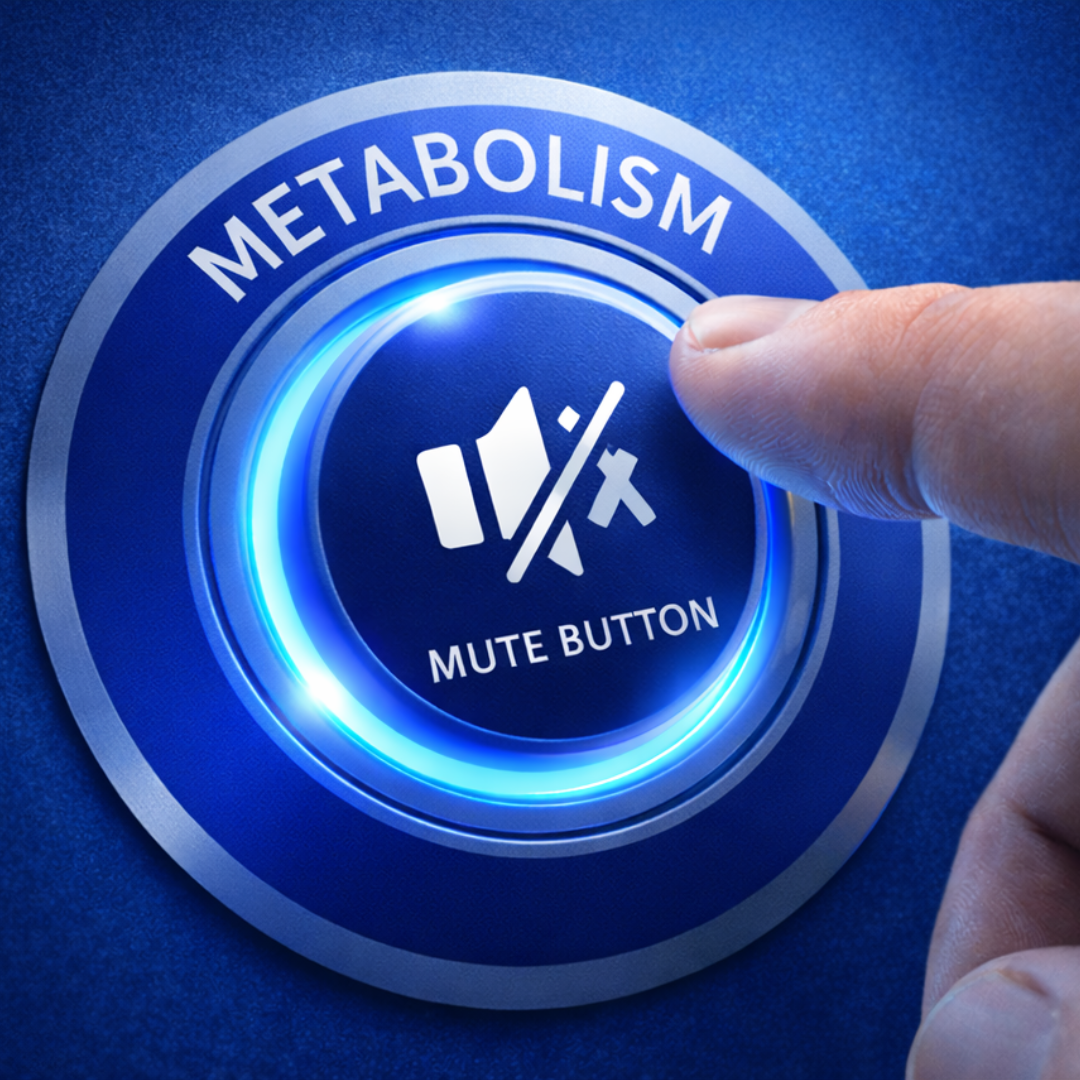
IV. Cortisol: The Metabolic "Mute" Button

When you are chronically stressed, your body produces Reverse T3 (rT3). Think of rT3 as a "decoy" key. It fits into your metabolic locks but won't turn them. It effectively blocks active T3 from working, causing a "cellular hypothyroidism" that no standard TSH test will catch.


By using adaptogens like Ashwagandha, you lower the "noise" of stress, allowing the "signal" of your metabolism to be heard once again.

womens-probiotic-50b-cfu

Frequently Asked Questions

  • Why do I still feel exhausted if my thyroid labs are normal?

    “Normal” thyroid labs only mean your results fall within a broad population average. They don’t reflect whether your cells are actually receiving and using thyroid hormone efficiently. Many people experience fatigue, weight resistance, and brain fog because hormone conversion, nutrient support, or stress signaling is impaired—even when labs appear normal.

  • What nutrients does the thyroid need to function properly?

    The thyroid relies on specific nutrients to produce and activate hormones. Iodine and L-tyrosine are required to build thyroid hormones, while selenium and zinc help convert inactive T4 into active T3 and support hormone signaling at the cellular level. Without these nutrients, thyroid performance can decline even if the gland itself is healthy.

  • What is the difference between T4 and T3 thyroid hormones?

    T4 is an inactive storage hormone produced by the thyroid, while T3 is the active form that regulates metabolism, energy, and temperature at the cellular level. Your body must convert T4 into T3 for thyroid hormones to have an effect. If this conversion is disrupted, symptoms can occur despite normal T4 levels.

  • How does stress interfere with thyroid function?

    Chronic stress raises cortisol, a hormone that signals the body to conserve energy. Elevated cortisol can reduce T4-to-T3 conversion, increase inactive reverse T3, and block thyroid receptors. This makes thyroid signals weaker and less effective, often leading to fatigue and metabolic slowdown.

  • What are adaptogens and why are they important for thyroid health?

    Adaptogens are natural compounds that help regulate the body’s stress response. Rather than forcing cortisol up or down, they help restore balance in the nervous system. By stabilizing stress signals, adaptogens support healthier communication between the brain, adrenal glands, and thyroid.

  • Can I have an iodine deficiency even if I eat well?

    Yes. Many people consume less iodine today due to soil depletion, reduced seafood intake, and avoidance of iodized salt. Since iodine is a core building block of thyroid hormones, even mild deficiency can limit hormone production and contribute to low thyroid function.

  • Why does my metabolism feel stuck instead of just slow?

    When thyroid signaling is impaired, the body often shifts into a protective conservation mode rather than gradually slowing down. This metabolic buffering prioritizes energy storage over energy use, making fat loss difficult and increasing fatigue—even with healthy eating and exercise.

  • What is reverse T3 and how does it affect thyroid symptoms?

    Reverse T3 is an inactive form of thyroid hormone that competes with active T3 at the cellular level. High stress, inflammation, or calorie restriction can raise reverse T3 levels, blocking thyroid signals and reducing metabolic output even when standard labs look normal.

  • Is my thyroid actually damaged or just under-supported?

    In many cases, the thyroid is not damaged—it’s under-supported. Missing nutrients, chronic stress, poor hormone conversion, or receptor resistance can all reduce thyroid effectiveness without permanent gland dysfunction. Addressing these gaps often improves symptoms without aggressive intervention.

  • How can I support my thyroid naturally?

    Natural thyroid support focuses on restoring balance rather than forcing function. This includes managing stress, replenishing key nutrients, supporting liver and gut health for hormone conversion, and improving communication between the nervous and endocrine systems so the body can regulate metabolism more effectively.


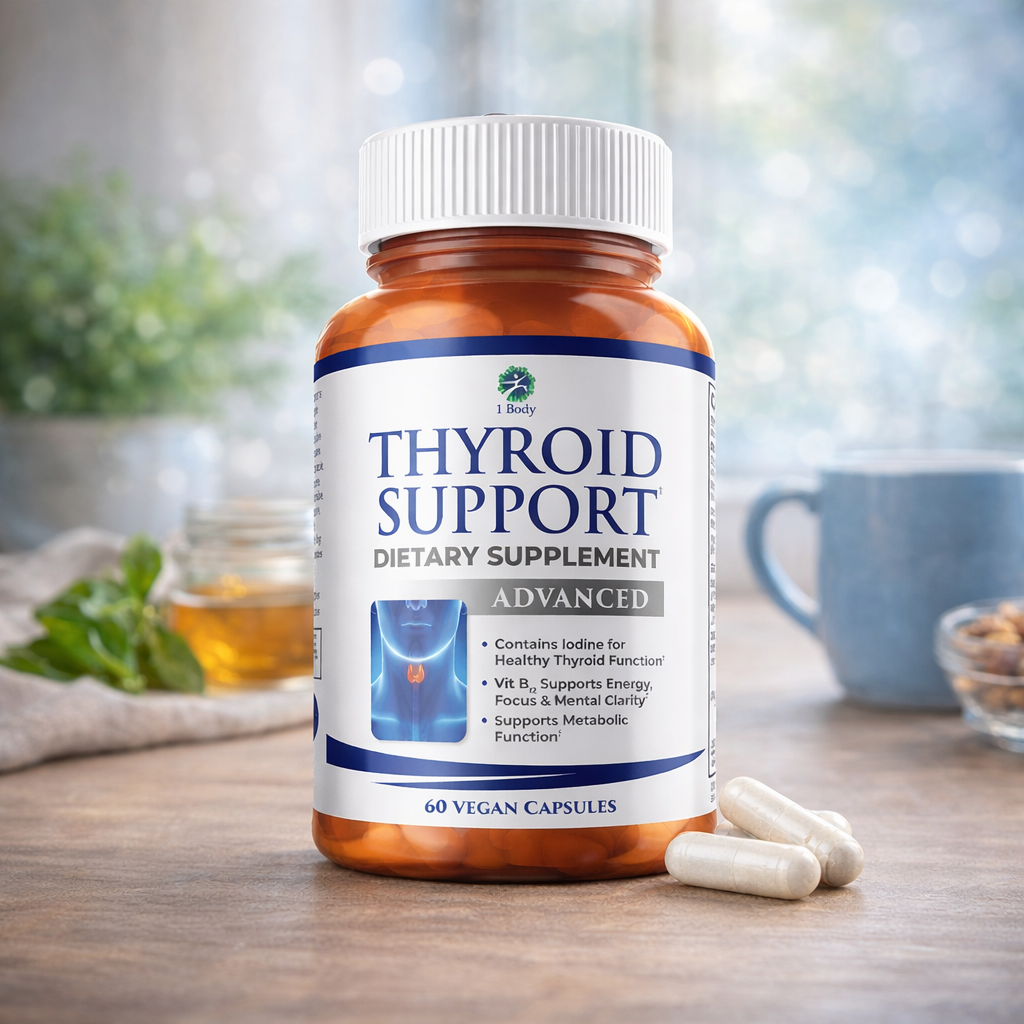
If you’re tired of being told you’re "fine" while feeling anything but, it’s time to look at Thyroid Support. By providing the raw materials—Ashwagandha for stress, B12 for energy, and the essential minerals for hormone conversion—you can finally stop the buffering and start the burn.


Ashwagandha Complex Supplement
Thyroid Support Advanced

For all general inquiries, please contact us at help@1body.com

Facebook Instagram

© Copyright. All rights reserved.

1 Body

February 15, 2026