The Best Investment you'll ever Make is in Yourself


Supporting focus, memory, and mental energy does not require rebuilding your entire lifestyle at once. Habit-stacking makes cognitive wellness more manageable by attaching simple actions—such as movement, hydration, mental challenges, sleep habits, or a daily supplement—to routines you already perform consistently.
Most of us know what we should do for our health. We should move regularly, eat balanced meals, sleep enough, take breaks from screens, stay mentally engaged, and remember the supplements or medications that belong in our routine. The difficult part is not usually knowing what to do; it is remembering to do it consistently while work, family, errands, messages, and everyday responsibilities compete for attention.
That challenge becomes especially noticeable when the goal is better focus and long-term cognitive wellness. It is easy to buy a planner, start a complicated morning routine, or promise yourself that you will exercise, meditate, journal, read, and meal prep every day. A week later, the routine may already feel like another job.
Habit-stacking offers a simpler approach. Rather than asking your brain to remember another independent task, you connect a new behavior to something that already happens reliably. Your morning coffee becomes the cue to drink water. Finishing lunch reminds you to take a short walk. Closing your laptop at the end of the workday becomes the signal to spend ten minutes reading or learning something new.
That may sound almost too simple, but simplicity is exactly what makes the method useful. Cognitive health habits become easier to maintain when they are woven into everyday life instead of treated as a separate wellness project.
Why Consistency Matters for Cognitive Wellness
Brain health is influenced by many parts of daily life. Sleep affects attention and memory, movement supports overall cardiovascular and physical health, nutrition provides essential nutrients, and mental stimulation gives the brain opportunities to practice learning and problem-solving. Social connection, stress management, and regular healthcare matter too.
None of these habits needs to be perfect to be useful. In fact, repeatedly choosing a manageable behavior may be more sustainable than occasionally following an ambitious routine.
This is where habit formation research becomes relevant. In a well-known study published in the European Journal of Social Psychology, researchers followed adults as they repeated a new health-related behavior in a consistent context. They found that automaticity generally increased with repetition, although the amount of time required varied considerably from one person to another.
The study is often associated with the figure of roughly 66 days, but that number should not be treated as a deadline. Some behaviors became automatic more quickly, while others took much longer. The useful takeaway is not that everyone needs a specific number of days; it is that repeating a manageable behavior in a stable context can gradually make that behavior easier to perform.
That is particularly helpful for cognitive wellness because consistency does not need to depend entirely on motivation. Instead of asking yourself every morning, “What should I do for my brain today?” you can build the answer into things that are already happening.
What Habit-Stacking Actually Looks Like in Everyday Life
A habit stack follows a very simple structure:
After I complete an existing habit, I will perform one small new action.
Your existing habit is the anchor. The new action should be small enough that there is little resistance to completing it.
For example, if you already prepare coffee or tea every morning, you could use that moment as the cue to fill a glass of water. If breakfast happens at approximately the same time each day, it can become a reliable anchor for a veterinarian- or healthcare-professional-approved supplement routine. If you always close your computer around 5 p.m., that action might cue a short walk.
The strongest anchors tend to be unavoidable parts of daily life: waking up, brushing your teeth, eating meals, making coffee, beginning work, taking a lunch break, arriving home, or preparing for bed.
Weak anchors sound more like “when I have time” or “when I remember.” Those cues are unpredictable, which means the new behavior continues to depend on motivation and memory.
A good habit stack should also feel almost too easy at first. If your goal is lifelong learning, begin with reading two pages rather than promising yourself an hour every evening. If your goal is movement, start with a ten-minute walk instead of designing an intense workout schedule. Once the behavior feels familiar, you can build on it.
Build Your Brain-Health Routine Around Four Simple Foundations
Cognitive wellness is easier to approach when you stop thinking of it as one task. Instead, consider four broad foundations: movement, nourishment, mental engagement, and restorative rest.
Movement does not have to mean intense exercise. A brisk walk, resistance training, gardening, cycling, or another activity you enjoy can support overall physical wellness while helping break up long periods of sitting. One useful stack might be: After lunch, I will walk for ten minutes.
Nutrition can be equally simple. Balanced meals that include vegetables or fruit, protein, healthy fats, and fiber-rich carbohydrates create a more dependable foundation than trying to power through the day on caffeine and convenience snacks. A habit stack might be: When I prepare breakfast, I will add one fruit or vegetable.
Mental engagement can fit into ordinary downtime. Reading, learning a language, practicing music, doing a puzzle, cooking an unfamiliar recipe, or taking a class can introduce novelty and challenge. The activity does not need to be complicated; it just needs to ask you to pay attention and learn.
Rest is the fourth foundation, and it is often overlooked when people talk about productivity and focus. A brain that has been working continuously throughout the day benefits from clear boundaries between active time and recovery time. Dimming lights, stepping away from work, reducing late-night notifications, and keeping a reasonably consistent bedtime can create a more supportive evening routine.
Here is one way those ideas can translate into daily habit stacks:
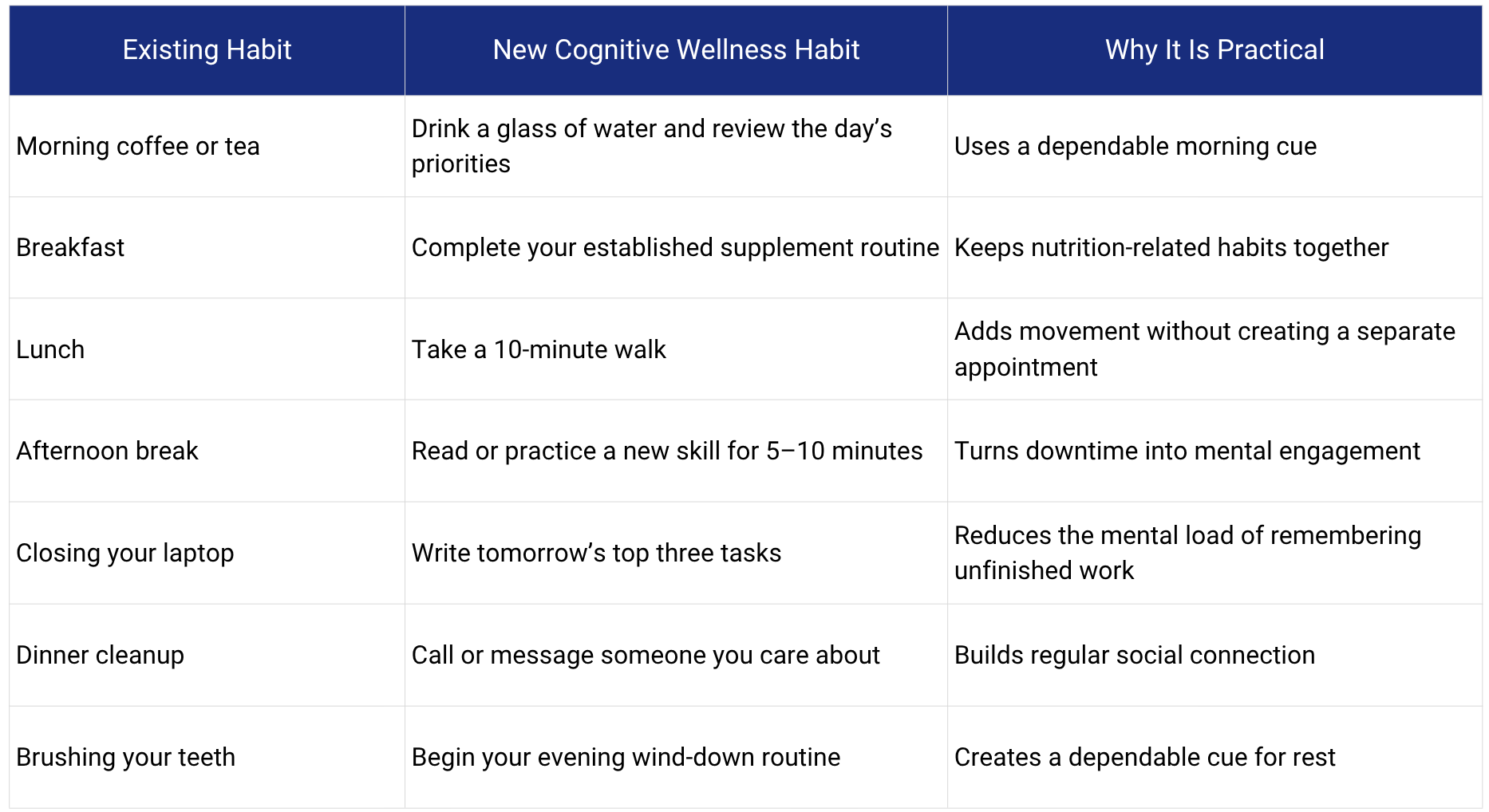
The goal is not to implement all seven tomorrow morning. Choose one or two, let them become familiar, and then decide whether another habit would genuinely improve your routine.
Use Your Environment to Make Focus Easier
Habit-stacking becomes even more effective when your environment supports the behavior.
If you want to drink more water in the morning, put the glass beside the coffee maker the night before. If you want to read after lunch, leave the book where you normally sit. If a dietary supplement is part of your routine, keep it somewhere visible and appropriate near the habit you intend to pair it with, while following storage directions and keeping it safely away from children.
These small changes reduce friction. The fewer steps between the cue and the new behavior, the easier it becomes to follow through.
Your environment can also reduce unnecessary distractions. Constant notifications can make sustained focus difficult, especially when each alert creates another decision about whether to respond. Turning off nonessential notifications during focused work periods or keeping your phone out of immediate reach may help create longer stretches of uninterrupted attention.
Breaks matter too. Mental clarity does not necessarily improve by forcing yourself to concentrate continuously for hours. Short periods away from the screen, movement between tasks, and moments of quiet can provide natural transitions throughout the day.
Think of your attention as something worth budgeting. You do not need to spend it everywhere at once.
Create a Habit Stack That You Can Actually Maintain
One of the easiest mistakes is building a stack that is too ambitious. Imagine finishing breakfast and then expecting yourself to take supplements, meditate for twenty minutes, journal, read, stretch, plan your day, and complete a workout. Technically, those habits are stacked, but the routine has become so large that it may be difficult to sustain.
A better approach is to start with one meaningful action.
For example:
Morning stack: After making coffee, drink water.
Midday stack: After lunch, walk for ten minutes.
Evening stack: After brushing your teeth, put your phone away and begin winding down.
Once these feel familiar, additional habits can be added gradually.
It is equally important not to treat one missed day as failure. Work trips happen. Children get sick. Schedules change. Some mornings simply do not go according to plan. Missing an occasion does not erase the consistency you have already built.
Return to the stack at the next opportunity rather than trying to compensate with an oversized routine. Sustainable wellness works better when there is room for real life.
Tracking can be useful during the early stages. A simple checkmark on a calendar can provide enough feedback without turning self-care into another data-heavy obligation. Over time, you may no longer need the reminder because the existing habit itself becomes the cue.
Adding Targeted Cognitive Nutrition to Your Routine
Once the fundamentals—sleep, movement, balanced nutrition, mental engagement, and stress management—have a place in your day, some adults choose a dietary supplement to complement their cognitive wellness routine.
1 Body Brain Support is formulated with recognizable ingredients including Lion’s Mane, Alpha GPC, phosphatidylserine, and L-theanine. According to the product label, the formula is designed to support memory, focus clarity, and mental energy as part of an everyday wellness routine.†
The important distinction is that a cognitive supplement should support the routine rather than become the entire routine. It cannot replace restorative sleep, physical activity, nutritious food, meaningful learning, or evaluation for persistent cognitive changes.
Habit-stacking can make daily use easier to remember. For example, if you already eat breakfast at roughly the same time each morning, taking the supplement according to its label directions can become part of that established sequence.
Anyone taking medications, managing a health condition, preparing for surgery, or who is pregnant or breastfeeding should discuss new dietary supplements with a qualified healthcare professional. New, worsening, or disruptive memory problems should also be medically evaluated rather than managed solely with a supplement.
Frequently Asked Questions
-
Habit-stacking means pairing a new behavior with an action that already happens reliably, allowing the existing routine to serve as a reminder. Repetition in a consistent context may gradually make the new behavior feel easier and more automatic.
Small Habits Can Build a Stronger Cognitive Wellness Routine
You do not need a highly optimized morning routine to begin supporting your cognitive wellness. You need a few actions that are practical enough to repeat.
Start by looking at the habits that already happen almost automatically. Your morning coffee, lunch break, commute home, dinner cleanup, or bedtime routine can each become a natural anchor for another supportive action. Over time, those small connections can create a day that includes more movement, nourishment, learning, rest, and intentional focus without requiring constant reminders.
The real strength of habit-stacking is that it removes some of the pressure to feel motivated. Your routine becomes the reminder. Instead of deciding from scratch every day whether you are going to support your wellness, you simply follow the next familiar step.
When supplements are part of that routine, keep expectations realistic. They work best as an optional layer of nutritional support within the larger habits that already help you care for your body and mind.
Make 1 Body Brain Support Part of Your Daily Stack
1 Body Brain Support combines Lion’s Mane, Alpha GPC, phosphatidylserine, and L-theanine in a convenient formula designed to complement an established cognitive wellness routine. With 90 vegan capsules, the product is positioned to support memory, focus clarity, and mental energy without replacing the everyday foundations of sleep, movement, nourishment, and continued learning.†
Formula and wellness-supporting features include:
-
Features Lion’s Mane
-
Includes Alpha GPC
-
Includes phosphatidylserine
-
Includes L-theanine
-
Formulated to support memory†
-
Designed to support focus clarity†
-
Supports everyday mental energy†
-
90 vegan capsules
-
Easy to pair with an established morning or mealtime routine
-
Complements physical activity, balanced nutrition, sleep, and mental engagement
-
Designed as nutritional support rather than treatment for memory or cognitive disorders
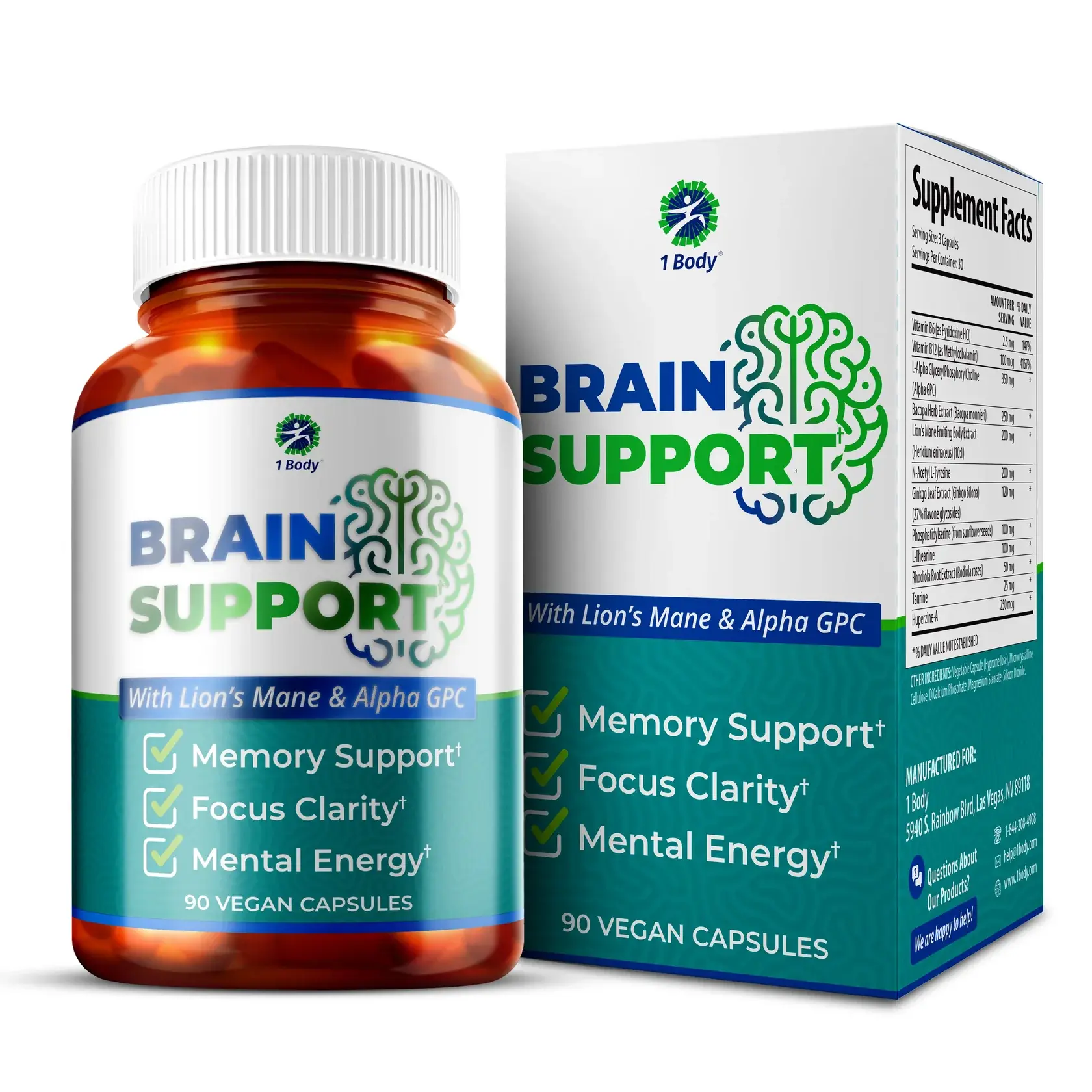
If you are looking for a simple way to add targeted cognitive nutrition to the habits you already practice, 1 Body Brain Support can fit naturally into a dependable daily stack. Its combination of recognizable ingredients and straightforward wellness positioning reflects 1 Body’s preference for clear, accessible education and transparent communication rather than exaggerated promises.
†These statements have not been evaluated by the Food and Drug Administration. This product is not intended to diagnose, treat, cure, or prevent any disease.
Reference
Lally, P., van Jaarsveld, C. H. M., Potts, H. W. W., & Wardle, J. (2010). How are habits formed: Modelling habit formation in the real world. European Journal of Social Psychology, 40(6), 998–1009. https://doi.org/10.1002/ejsp.674
For all general inquiries, please contact us at help@1body.com
© Copyright. All rights reserved.