The Best Investment you'll ever Make is in Yourself

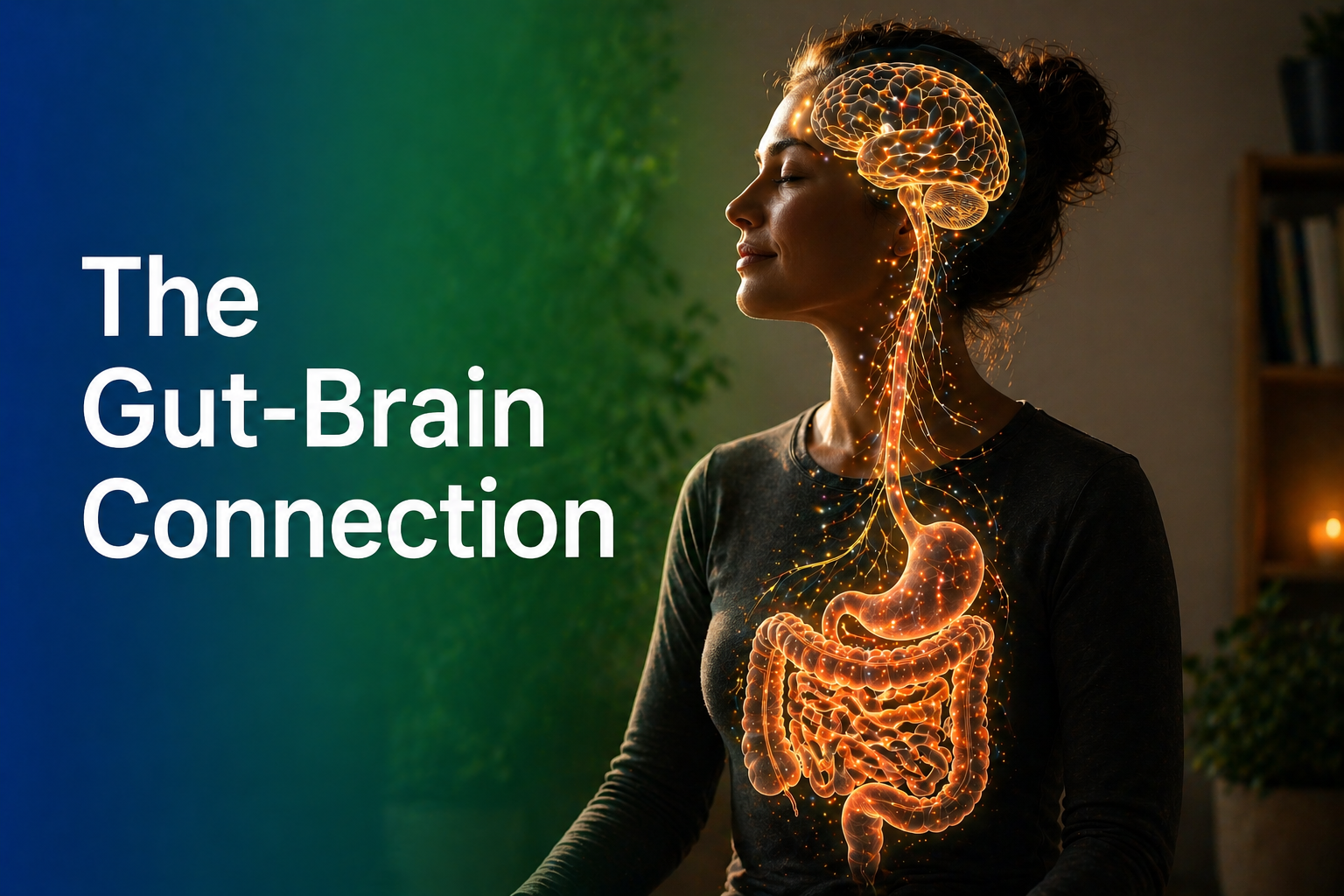
Your gut plays a central role in overall wellness, influencing not only digestion but also mood, sleep, and daily balance through its connection with the brain.
Why Your Gut Is Called the Second Brain
When people think about mood, energy, and mental clarity, the brain is usually the first place they look. However, growing discussions around gut health, the microbiome, serotonin, and overall wellness suggest that the digestive system plays a much larger role than previously understood.
The gut is often referred to as the “second brain” because it contains a complex network of neurons known as the enteric nervous system. This system communicates with the brain through what is known as the gut-brain axis, a pathway that allows signals to travel between the digestive system and the central nervous system.
One of the reasons this connection has gained so much attention is because of its relationship with serotonin. While serotonin is commonly associated with mood, a significant portion of it is produced in the gastrointestinal tract. This highlights how closely gut function and overall well-being may be connected.
Research published in Nature Reviews Gastroenterology & Hepatology discusses how the gut microbiota may interact with the gut-brain axis, influencing communication pathways that are associated with mood and behavior. While this does not imply direct outcomes, it helps illustrate why gut health has become an important area of focus.
How the Microbiome Influences Mood and Wellness
Your gut is home to trillions of microorganisms collectively known as the microbiome. These microbes play a role in digestion, nutrient absorption, and various processes that support overall balance in the body.
When the microbiome is diverse and well-supported, it may contribute to a more stable internal environment. On the other hand, when it becomes imbalanced, it can influence how the body feels and functions on a daily basis.
This is why conversations around probiotics, digestive health, and microbiome balance have become more common. Rather than focusing on a single symptom, the microbiome is often viewed as part of a broader system that supports multiple aspects of wellness.
For example, some people notice that when their digestion feels off, it can also affect their energy levels or mood. While these connections can vary from person to person, they highlight the importance of looking at health as an interconnected system rather than isolated parts.
Maintaining balance in the microbiome is not about achieving perfection. It is about supporting consistency through daily habits that align with your body’s natural processes.
The Link Between Gut Health, Sleep, and Skin
The influence of gut health often extends beyond digestion. Many people are surprised to learn how it may connect with areas like sleep patterns and skin appearance.
Serotonin plays a role not only in mood but also in the production of melatonin, a hormone involved in sleep cycles. Because of this relationship, the gut’s role in serotonin production has become part of broader discussions around sleep quality and daily rhythms.
Similarly, the microbiome has been studied in relation to inflammation and immune responses. While outcomes vary, some discussions suggest that gut balance may influence how the body responds to internal and external stressors, which can sometimes be reflected in the skin.
Below is a simple way to visualize how gut health connects to different aspects of daily wellness:
How Gut Health Connects to Daily Wellness
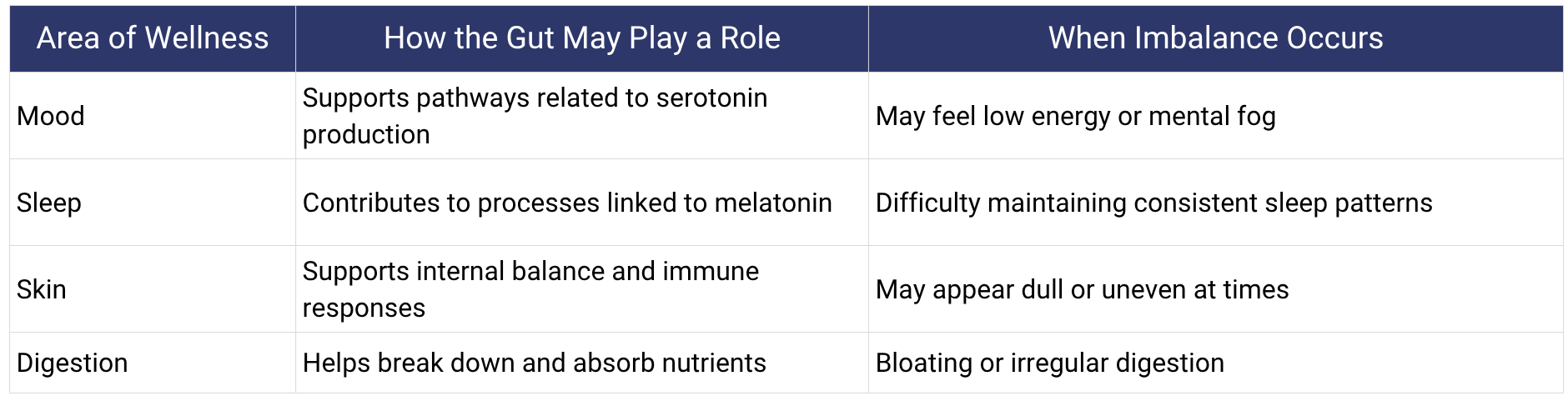
This table is not meant to define outcomes, but to illustrate how interconnected these systems can be.
Supporting Your Gut Consistently
As awareness of the gut-brain connection grows, more people are focusing on ways to support their microbiome consistently. This often begins with foundational habits such as balanced nutrition, hydration, and mindful eating.
Foods rich in fiber, fermented options, and a varied diet are commonly discussed in relation to gut health. These choices may help support microbial diversity, which is often associated with overall balance.
However, consistency remains one of the most important factors. Supporting your gut is not about a single meal or short-term change, but about daily habits that contribute to a more stable internal environment over time.
This is why many people look for ways to simplify their routine. When habits become easier to maintain, it becomes more realistic to stay consistent.
Supporting Your Gut, From the Inside Out
As you begin to build a more consistent routine around gut health, the focus often shifts from what you do occasionally to what you do every day. Small, repeatable actions can help support your microbiome over time, especially when they are easy to maintain.
In addition to diet and lifestyle habits, some individuals choose to incorporate probiotic support into their routine as part of a broader approach to wellness.
1 Body Probiotics + Prebiotics is designed to complement these habits with shelf-stable strains that are selected to support digestive balance. Rather than replacing foundational habits, it fits into a routine that is already centered around consistency.
When combined with daily practices, this type of support becomes part of a system that helps you stay aligned with your wellness goals.
Frequently Asked Questions
-
The gut-brain connection refers to the communication pathway between the digestive system and the brain. This interaction involves signals that travel through the nervous system and may influence how the body responds to different situations.
A More Connected Approach to Wellness
Understanding the gut as part of a larger system can change how you approach your daily routine. Instead of focusing on isolated symptoms, you begin to see how different aspects of wellness are connected.
The gut-brain connection highlights the importance of consistency, not just in what you eat, but in how you support your body overall. Small, daily habits can help create a foundation that supports balance over time.
Rather than looking for quick solutions, building a routine that aligns with your body’s natural processes can lead to a more sustainable and realistic approach to wellness.
Support Your Microbiome Daily
A Balanced Approach to Gut Health
1 Body Probiotic with Prebiotics is designed to complement your daily routine by supporting both sides of your microbiome:
-
Probiotics + Prebiotics Formula Combines beneficial bacteria with prebiotics that help nourish them
-
Supports Digestive Balance Designed to complement everyday gut health and digestive wellness
-
Shelf-Stable Formula Maintains quality and convenience without the need for refrigeration
-
Daily Routine Friendly Easy to incorporate into consistent wellness habits
-
Works Alongside Your Lifestyle Pairs with nutrition, hydration, and daily routines
-
Designed for Consistency Built to support long-term wellness habits over time
By combining probiotics with prebiotics, this formula supports a more complete approach to maintaining balance in your gut, especially when used consistently alongside your daily routine.
Citation
Cryan, J. F., & Dinan, T. G. (2012). Mind-altering microorganisms: The impact of the gut microbiota on brain and behavior. Nature Reviews Gastroenterology & Hepatology, 9(10), 701–712. https://doi.org/10.1038/nrgastro.2012.189
For all general inquiries, please contact us at help@1body.com
© Copyright. All rights reserved.