The Best Investment you'll ever Make is in Yourself


Modern gut science has moved beyond simply asking how many bacteria you have. The more important question is how many different kinds you have. Gut diversity—the variety of microbial species living in your digestive tract—is now considered one of the strongest indicators of digestive resilience, immune strength, metabolic efficiency, and even cognitive clarity. Research increasingly links low microbial diversity to bloating, irregular digestion, brain fog, mood fluctuations, skin issues, and systemic inflammation. The future of digestive health is not about overwhelming the gut with a single strain. It’s about cultivating a balanced ecosystem.
Understanding the “Microbial Rainforest”
Imagine your gut as a rainforest. A rainforest with only one species of tree may look full from a distance, but it is fragile. One disease, one environmental stressor, and the system collapses. In contrast, a rainforest containing thousands of plant, fungal, and microbial species is dynamic and resilient. If one species declines, others adapt. Nutrients cycle efficiently. The system stabilizes itself.
Your digestive tract works the same way.
Inside your gut live trillions of microorganisms—bacteria, fungi, and other microbes that interact with your immune system, nervous system, and metabolism. This ecosystem is referred to as the gut microbiome. For years, supplement marketing focused on colony-forming units (CFUs) alone, implying that a higher number automatically equals better results. While CFU count matters, diversity matters more.
A microbiome dominated by only one or two strains can become imbalanced, even if the bacterial count is high. True resilience comes from a wide spectrum of specialized strains performing complementary roles. Some strains help break down fiber. Others produce short-chain fatty acids. Some regulate inflammation. Others influence neurotransmitter production. Diversity ensures that these tasks are distributed rather than concentrated.
Why Diversity Matters More Than Volume
The human body evolved alongside a vast array of microbes. Our immune system is trained by exposure to microbial variety. When diversity declines—due to stress, antibiotic use, highly processed diets, or chronic inflammation—the gut environment becomes less adaptable.
Low diversity has been associated with:
-
Increased digestive sensitivity
-
Gas and bloating
-
Weakened immune response
-
Increased inflammatory markers
-
Difficulty metabolizing certain foods
-
Brain fog and reduced cognitive clarity
This does not mean that one strain is ineffective. Certain single-strain probiotics can offer targeted relief for specific issues. However, long-term resilience requires layered support.
Single-Strain vs. Multi-Strain Support
Here’s how the approaches differ:
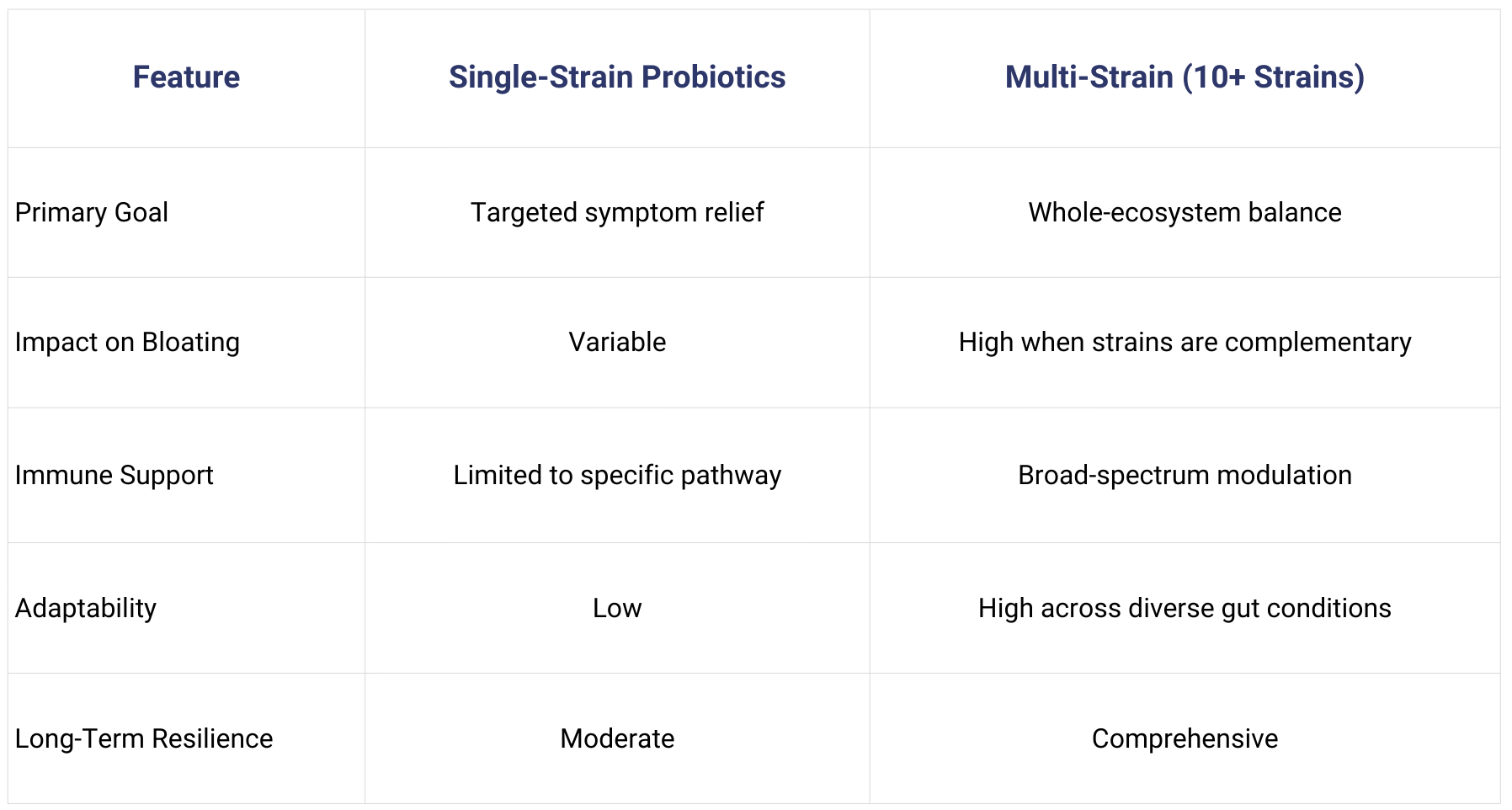
Single-strain formulas may be useful for acute concerns. Multi-strain formulas aim to rebuild ecological balance.
The Role of 30 Billion CFU
When discussing probiotic potency, numbers often dominate the conversation. But CFUs alone do not guarantee effectiveness. Stomach acid is harsh. Many bacteria do not survive the journey to the intestines. A higher CFU count helps compensate for natural losses during digestion.
In a multi-strain formula containing 30 billion CFU, the goal is not excess—it is survivability and functional colonization. When multiple strains reach the intestines intact, they can begin interacting with the existing microbiome and supporting microbial balance.
High CFU combined with high diversity creates both breadth and depth of support.

Gut Diversity and Immune Resilience
Approximately 70% of the immune system resides in the gut-associated lymphoid tissue (GALT). The microbiome communicates continuously with immune cells, teaching them how to respond appropriately. A diverse microbiome helps prevent overreactions (such as unnecessary inflammation) while strengthening defense against pathogens.
When diversity decreases, immune signaling may become exaggerated or under-responsive. This imbalance can manifest as food sensitivities, frequent minor infections, or inflammatory flare-ups.
The Gut-Brain Axis: Diversity and Mental Clarity
The gut and brain communicate via the vagus nerve and through chemical signaling pathways. Many neurotransmitters—including serotonin—are influenced by gut bacteria. Reduced microbial diversity has been linked in studies to mood fluctuations, low motivation, and cognitive fog.
While gut health alone does not define mental health, it plays a measurable supporting role. A diverse microbiome contributes to more stable signaling between the digestive tract and the brain.
Digestive Efficiency and Metabolic Flexibility
Certain strains specialize in fermenting dietary fibers into short-chain fatty acids like butyrate, which nourish colon cells and support gut lining integrity. Others assist in bile metabolism or carbohydrate breakdown. When the ecosystem lacks variety, digestion can feel incomplete. This may show up as bloating after meals, inconsistent bowel patterns, or discomfort after specific foods.
A balanced, diverse microbiome enhances digestive efficiency and reduces fermentation imbalances that cause excess gas.
Modern Threats to Gut Diversity
Several lifestyle factors reduce microbial variety:
-
Frequent antibiotic use
-
Diets low in fiber
-
Chronic stress
-
Lack of exposure to natural environments
-
High intake of processed foods
-
Poor sleep patterns
Restoring diversity requires both dietary strategy and, in some cases, targeted supplementation.
Can Food Alone Build Diversity?
Fermented foods like yogurt, kefir, kimchi, and sauerkraut contribute beneficial bacteria. Fiber-rich vegetables and legumes feed existing microbes. However, consistency matters. Most people do not consume a wide enough range of fermented foods daily to maintain robust diversity. Additionally, food sources often contain fewer strains than comprehensive probiotic formulas.
Supplementation ensures controlled strain variety and predictable dosing.
Signs You May Lack Microbial Diversity
You may benefit from diversity-focused support if you experience:
-
Frequent gas or bloating
-
Sugar cravings
-
Irregular digestion
-
Brain fog
-
Skin flare-ups
-
Digestive sensitivity to new foods
These patterns do not confirm imbalance, but they can indicate a need for ecosystem support.
Frequently Asked Questions
-
Gut diversity refers to the number of different microbial species present in your digestive tract. Higher diversity generally correlates with stronger resilience.
The Bottom Line
Gut health isn’t about chasing the highest number on a label—it’s about building a balanced, resilient ecosystem. A thriving microbiome functions like a well-developed rainforest: layered, diverse, and capable of adapting to stress. When that diversity shrinks, digestion becomes less efficient, immune defenses weaken, and issues like bloating or irregularity become more common.
That’s where 1 Body Probiotic with Prebiotic stands apart. With 30 billion CFU, 15 diverse probiotic strains, and added prebiotic support, it’s designed to nourish both the beneficial bacteria you introduce and the ones already living in your gut. The acid-resistant capsules help ensure those strains survive the journey through the stomach so they can reach the intestines where they’re needed most.
True digestive strength comes from harmony—multiple strains working together to support nutrient absorption, immune balance, and overall gut integrity. When you prioritize diversity instead of just numbers, you’re investing in long-term resilience. With 1 Body Probiotic, you’re not just adding bacteria—you’re supporting the ecosystem that powers your digestion, immunity, and everyday vitality.
For all general inquiries, please contact us at help@1body.com
© Copyright. All rights reserved.