The Best Investment you'll ever Make is in Yourself


Q4 often brings fuller calendars, year-end deadlines, travel, holidays, and more mental demands than usual. A simple gratitude practice can create a steady moment of perspective, while sleep, movement, boundaries, nourishing meals, and thoughtful nutritional support can help you move through the final months of the year with greater consistency.
The final quarter of the year can feel like someone quietly turned up the speed. Work deadlines become more visible, school schedules settle into a demanding rhythm, holiday plans begin taking shape, and personal goals that felt distant in January suddenly seem much closer. Even enjoyable events can add extra planning, spending, travel, and decision-making to days that already feel full.
That is why a gratitude practice can be especially valuable heading into Q4. Gratitude does not mean pretending everything is wonderful or ignoring stress. It is simply the intentional act of noticing something meaningful, helpful, comforting, or worthwhile in the middle of everything else competing for your attention.
A consistent gratitude routine may help create a small pause between one responsibility and the next. Instead of ending every day focused only on what remains unfinished, you give your mind a chance to notice what went well, who supported you, or what made an ordinary moment feel a little easier.
The practice works best when it is paired with the basics that help you feel physically supported too: regular sleep, balanced meals, movement, quiet time, boundaries, and realistic expectations. Mental wellness and physical wellness are not separate projects, and Q4 becomes much easier to navigate when both are given room in the routine.
Why Q4 Can Feel Mentally Heavier Than the Rest of the Year
Q4 brings a particular kind of pressure because several types of demands tend to arrive at once. Professionally, teams may be focused on year-end goals, budgets, performance reviews, or planning for the following year. At home, there may be school events, holiday gatherings, travel arrangements, gift planning, and family commitments.
At the same time, daylight hours become shorter in many regions, which can influence daily routines and how much time people spend outside. Exercise may become less consistent, evenings may feel compressed, and the temptation to stay up late finishing tasks can increase.
None of this means stress is inevitable or that everyone experiences Q4 in the same way. What it does mean is that the final months of the year often benefit from more structure, not more pressure.
A gratitude practice can serve as one part of that structure because it helps interrupt the habit of mentally scanning only for problems. When the brain is busy tracking deadlines, unfinished tasks, and future obligations, positive or stabilizing experiences may receive less attention simply because they do not feel urgent.
Research offers some support for this idea. In a well-known study, Emmons and McCullough asked participants to regularly record either things they were grateful for, daily hassles, or neutral events. The gratitude-focused groups reported several differences in subjective well-being over the study period. The study does not show that gratitude treats anxiety, depression, or chronic stress, but it suggests that intentionally noticing positive aspects of daily life may be a useful part of a broader wellness routine.
That distinction matters. Gratitude is a supportive practice, not a cure, and it should never be used to dismiss genuine hardship or replace professional mental health care when needed.
What Gratitude Practice Actually Looks Like in Real Life
Gratitude does not need to involve a beautifully designed journal, thirty minutes of reflection, or a carefully curated morning routine. In fact, the simpler the practice, the more likely it is to survive a busy season.
A useful gratitude entry can be specific and ordinary: “My coworker helped me finish something difficult,” “Dinner was easier because I prepared it yesterday,” or “I had ten quiet minutes before everyone woke up.”
Specificity can make the practice feel more genuine. Writing “I am grateful for my family” is meaningful, but writing “I am grateful that my sister called when she knew I had a difficult week” brings you back to an actual experience.
It is also helpful to avoid turning gratitude into another productivity metric. Missing a day does not mean you failed. If your practice disappears for a week during travel or a demanding work period, simply return to it when you can.
The point is to create a repeated moment of attention, not to maintain a perfect streak.
For some people, morning gratitude works well because it sets the tone before work begins. Others prefer evening reflection because it helps them mentally close the day. A short afternoon pause can be useful too, especially during the time when attention and patience begin to fade.
Build Gratitude Into the Rhythm of Your Day
The easiest way to maintain gratitude is to attach it to something you already do.
If you drink coffee every morning, use the first few sips as a cue to think of one thing you appreciate. If you take a lunch break, pause for sixty seconds before returning to work and notice one thing that has gone better than expected. At night, reflect on three small things before turning off the light.
A Q4 gratitude routine might look like this:
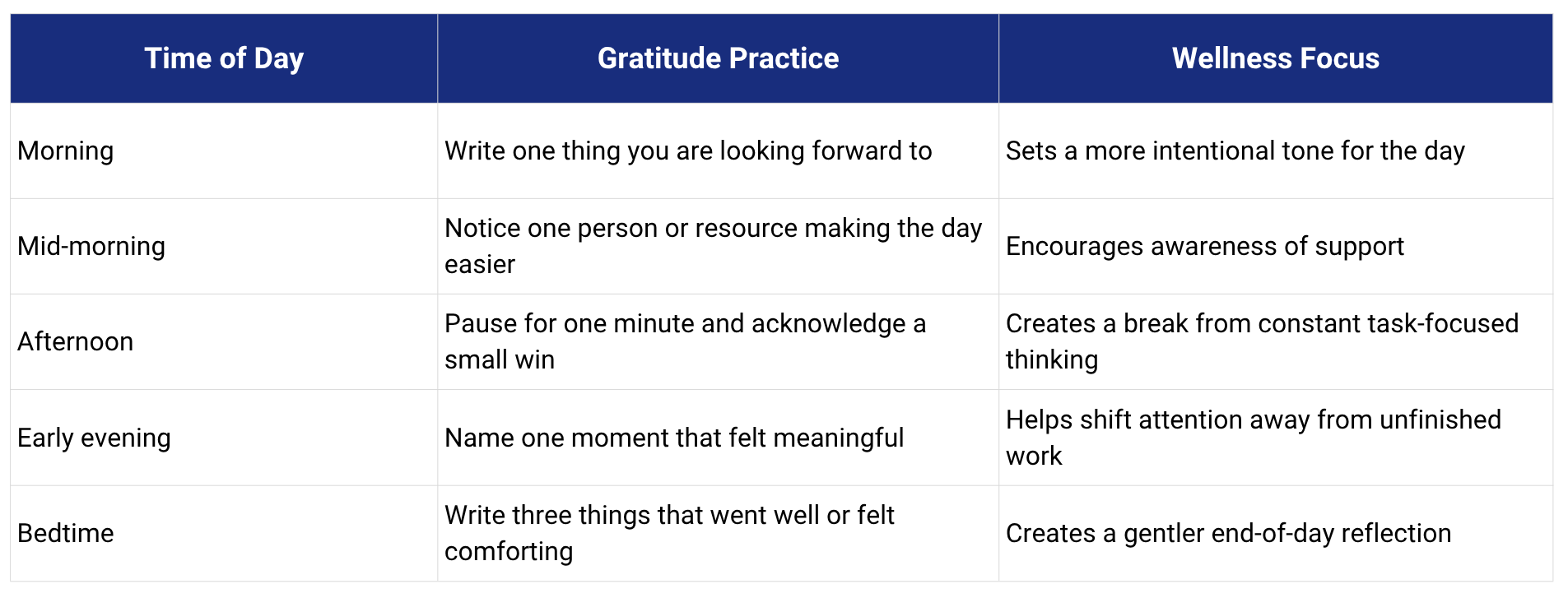
You do not need to complete all five. One consistent practice is enough to begin
.
If writing feels unnatural, speak your answer aloud, share it with a partner, or keep a note on your phone. Families can also practice gratitude together by asking one simple question at dinner: “What was one good thing about today?”
The ritual should feel like a pause, not an assignment.
Support the Mind by Supporting the Body
Gratitude becomes harder when you are exhausted, hungry, overstimulated, or running from one obligation to the next. That does not mean you are doing gratitude incorrectly; it means your mind is responding to the physical state it is in.
Sleep is one of the strongest foundations to protect during Q4. Late-night work sessions, travel, celebrations, and screen time can quickly push bedtime later while morning responsibilities stay exactly the same. A consistent wind-down period, lower evening stimulation, and a reasonably stable wake time can help create a more dependable rhythm.
Meals matter too. Skipping lunch because of a deadline and then trying to make it through the afternoon on caffeine can make the entire day feel more reactive. Regular meals with protein, fiber-rich carbohydrates, healthy fats, and fruits or vegetables provide a steadier foundation for everyday energy.
Movement can be simple. A short walk between meetings, stretching after work, or ten minutes of strength training can help break up long periods of sitting. The goal is not to “burn off stress” but to give the body regular opportunities to move.
Hydration deserves attention as well, especially when cooler weather makes thirst less obvious. Keeping water nearby during work can reduce the chance that several hours pass without drinking.
These habits do not guarantee a particular mood or level of focus. They simply help create better conditions for calm reflection and intentional decision-making.
Create Boundaries Before the Calendar Gets Too Full
Gratitude and boundaries belong in the same conversation because it is difficult to appreciate the season when every available hour has already been promised away.
Before Q4 becomes crowded, decide which commitments genuinely matter. Not every invitation needs a yes, every tradition needs to be maintained exactly as before, and every year-end goal needs to be completed at the expense of sleep.
A helpful question is: “Will I still be glad I said yes when this day arrives?”
If the answer is consistently no, the commitment may deserve another look.
Boundaries can also apply to work. Setting a realistic stopping time, turning off notifications during dinner, or keeping one evening free from work-related tasks can create space for relationships and recovery.
This does not mean becoming rigid or unavailable. It means giving your attention somewhere to rest.
Gratitude is easier to practice when your schedule contains moments that can actually be experienced rather than simply survived.
A Simple Q4 Gratitude and Wellness Framework
If you want a practical way to organize your routine, think in four areas: notice, nourish, move, and recover.
Notice: Create one gratitude moment each day. Keep it specific and realistic.
Nourish: Eat regular meals, drink consistently, and avoid relying entirely on caffeine to compensate for fatigue.
Move: Find a form of daily activity that fits the season and your schedule.
Recover: Protect sleep, allow quiet time, and leave some white space in the calendar.
These four areas support one another. Better rest can make reflection easier. A calmer schedule can support healthier meals. Movement can create a natural pause between work and home. Gratitude can remind you why some boundaries are worth keeping.
The routine does not have to look the same every day. Q4 is often unpredictable, so flexibility is part of consistency.
Where Targeted Nutritional Support Can Fit
Once gratitude, sleep, meals, movement, and boundaries have a place in the routine, some adults choose dietary supplements to complement their daily wellness habits.
1 Body Adrenal Support features an Ashwagandha Complex along with ingredients such as Shoden® Ashwagandha, L-Tyrosine, Rhodiola, Eleuthero, Schisandra, and B vitamins. The formula can be positioned as nutritional and botanical support for everyday stress-response wellness and calm energy rather than as a treatment for adrenal disorders or abnormal cortisol levels.†
1 Body Brain Support takes a cognitive wellness approach, featuring Lion’s Mane, Alpha GPC, phosphatidylserine, and L-theanine. According to the product positioning, the formula is designed to support memory, focus clarity, and mental energy as part of an established daily routine.†
Together, the products can complement different parts of a busy Q4 routine: Adrenal Support for adults looking to support everyday stress-response habits, and Brain Support for those seeking targeted cognitive nutrition during mentally demanding days.
Neither formula should replace adequate sleep, balanced nutrition, stress-management strategies, therapy, prescribed medication, or professional healthcare. Individual needs vary, particularly for people taking medications or managing health conditions.
Frequently Asked Questions
-
There is no universal timeline because routines become familiar at different speeds for different people. Keeping the practice small and attaching it to something you already do can make consistency easier.
Finish the Year With More Intention, Not More Pressure
The final months of the year do not have to become a race toward December. Q4 can instead be an opportunity to notice what is working, protect the routines that help you feel grounded, and decide which commitments truly deserve your energy.
A gratitude practice offers a simple place to begin because it asks for very little time. One sentence in the morning, one small acknowledgment in the afternoon, or three reflections before bed can create a repeated pause in a season that often moves too quickly.
Pair that practice with the basics your body needs: sleep, nourishment, movement, hydration, and realistic boundaries. You do not need to optimize every part of your life before the year ends.
The goal is not to finish Q4 having done everything. It is to finish the year still able to recognize the people, moments, and routines that made it meaningful.
Support Your Q4 Routine With 1 Body Adrenal Support and Brain Support
1 Body Adrenal Support and 1 Body Brain Support provide two complementary options for adults who want targeted nutritional support during a demanding season. Adrenal Support is designed to complement everyday stress-response wellness and calm energy, while Brain Support focuses on memory, focus clarity, and mental energy as part of an established cognitive wellness routine.†
Formula and wellness-supporting features include:
-
1 Body Adrenal Support features Shoden® Ashwagandha
-
Includes L-Tyrosine and Rhodiola
-
Includes Eleuthero and Schisandra
-
Provides B vitamins
-
Designed to complement everyday stress-response wellness†
-
Supports calm energy as part of a balanced routine†
-
1 Body Brain Support features Lion’s Mane
-
Includes Alpha GPC
-
Includes phosphatidylserine
-
Includes L-theanine
-
Formulated to support memory†
-
Designed to support focus clarity†
-
Supports everyday mental energy†
-
Both formulas can fit into an established daily wellness routine
-
Intended as nutritional support rather than treatment for stress or cognitive conditions
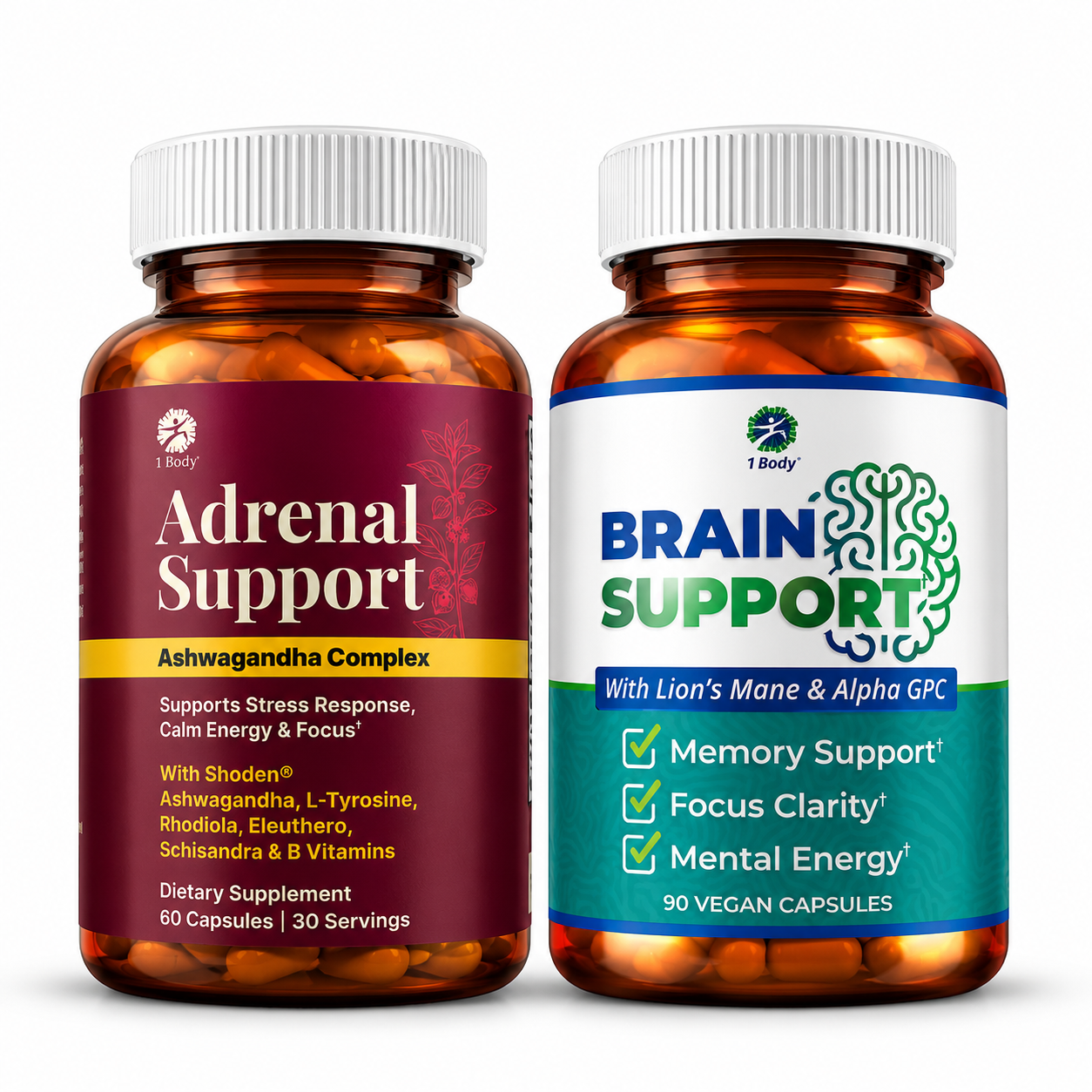
For adults heading into a demanding Q4, these two formulas can provide a simple nutritional layer alongside gratitude, sleep, balanced meals, movement, and healthy boundaries. Their straightforward wellness positioning also reflects 1 Body’s warm, accessible approach to combining nature-inspired ingredients with thoughtful formulation and transparent communication.
†These statements have not been evaluated by the Food and Drug Administration. These products are not intended to diagnose, treat, cure, or prevent any disease.
Reference
Emmons, R. A., & McCullough, M. E. (2003). Counting blessings versus burdens: An experimental investigation of gratitude and subjective well-being in daily life. Journal of Personality and Social Psychology, 84(2), 377–389. https://doi.org/10.1037/0022-3514.84.2.377
For all general inquiries, please contact us at help@1body.com
© Copyright. All rights reserved.