The Best Investment you'll ever Make is in Yourself

We’ve been taught that sleep is the finish line. Get your eight hours. Close your eyes. Power down. But if that were the full story, we wouldn't wake up feeling heavy, foggy, or emotionally flat despite "doing everything right."
The truth is: Falling asleep is not the same as recovering. You can be unconscious for eight hours and still miss the deep, restorative processes your body needs to heal. The difference is governed by nervous system signaling.
I. Sleep Is a State. Recovery Is a Process
Sleep simply means your consciousness has shut off. Recovery is a high-level biological operation that can only happen when the nervous system drops its guard.
-
The Brain: Clears metabolic waste (Glymphatic detoxification)
-
The Body: Repairs muscle fibers and resolves inflammation
-
The Endocrine System: Rebalances hormones and resets cortisol rhythms
If your nervous system stays in "fight-or-flight" mode (Sympathetic), you remain "asleep but on guard." You’re essentially hovering in light sleep, never dropping into the deep slow-wave and REM cycles where the real work happens.
II. The Sedation Trap
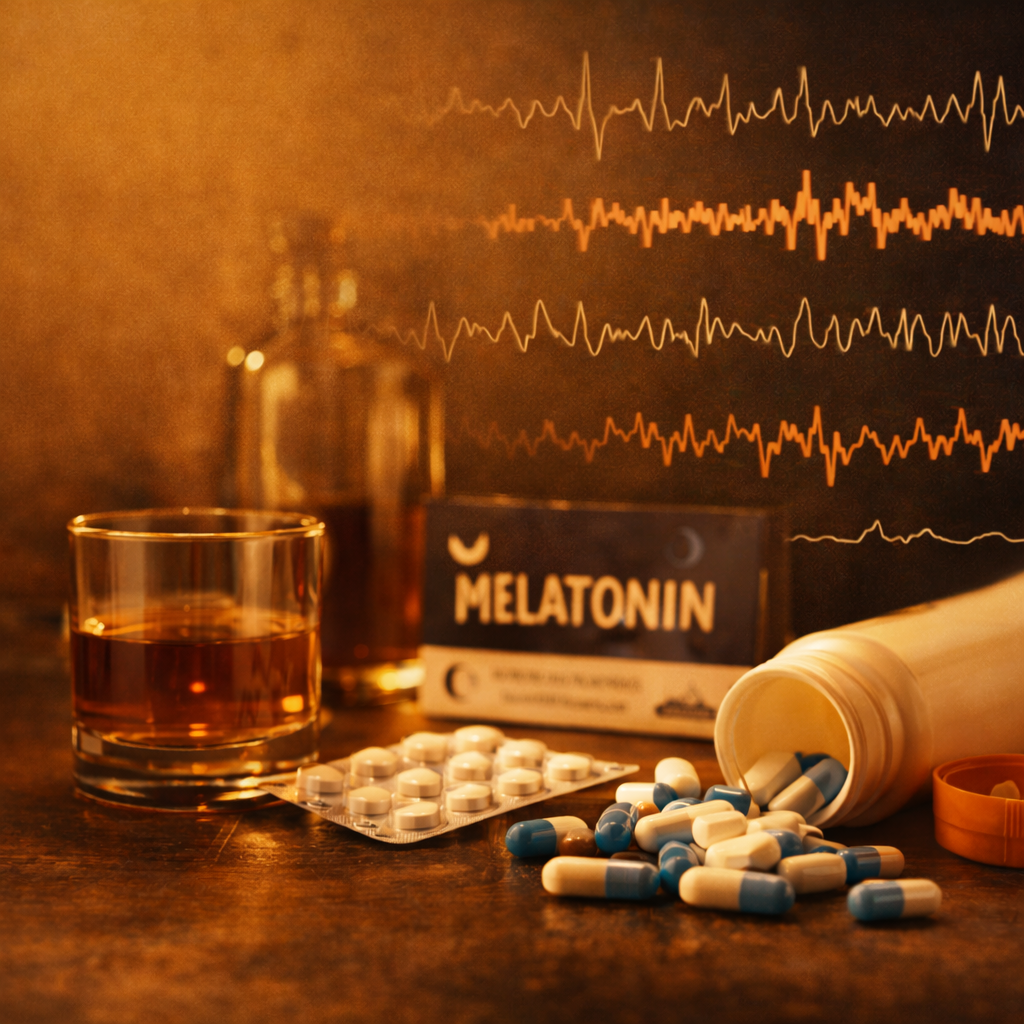
Many rely on alcohol, melatonin megadoses, or sleep medications to "get to sleep." These tools act as sedatives—they knock you out, but they do not signal safety.
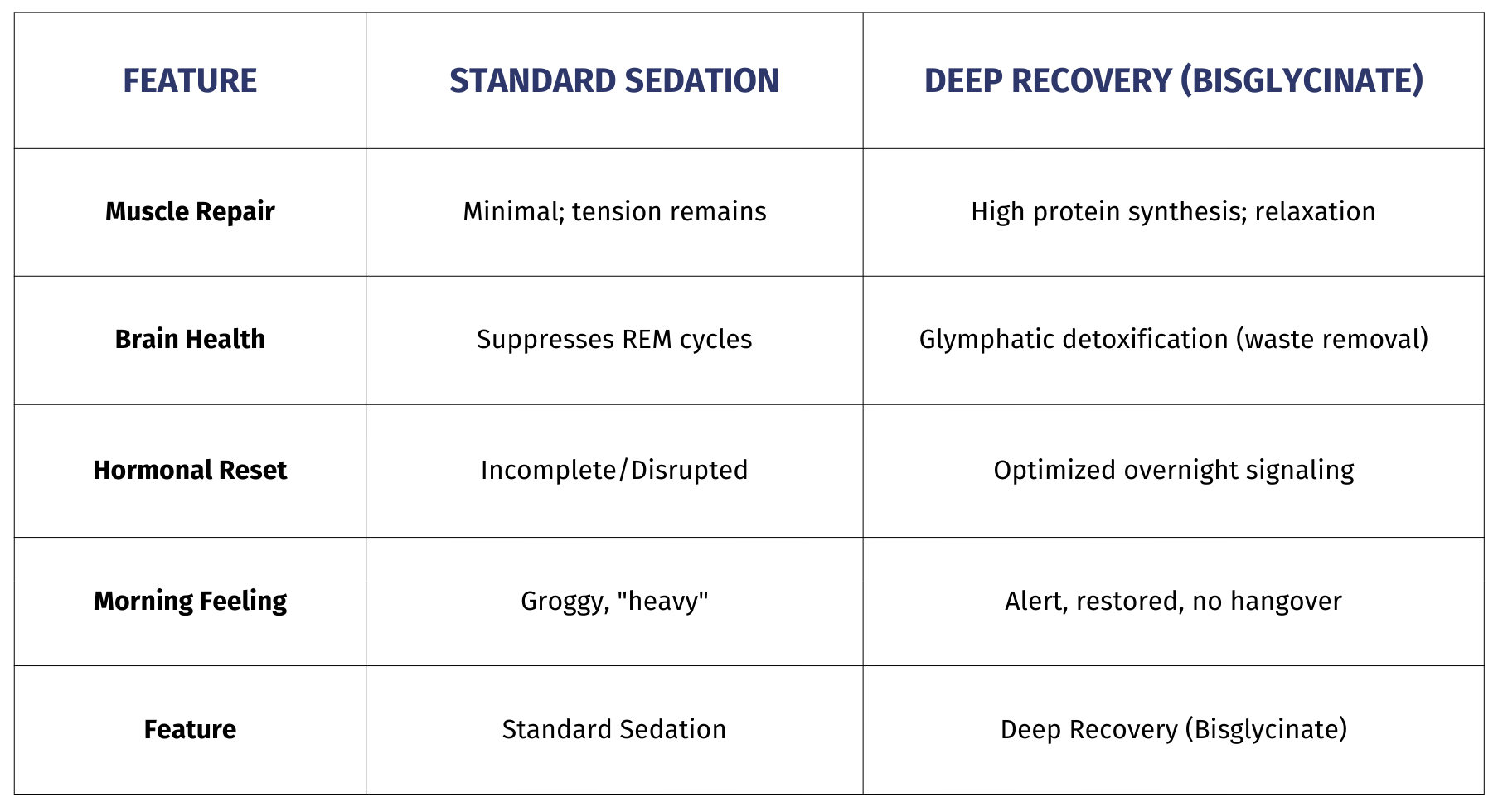
Sedation ≠ Recovery. Sedation suppresses brain activity; recovery requires specific, rhythmic brain wave patterns that sedatives actually disrupt.
III. The Cortisol Problem: The Silent Interrupter
High evening cortisol—driven by stress, blue light, or overtraining—tells your body: "Stay alert. Something might go wrong." This vigilance leads to fragmented sleep and muscle tension. To fix this, you don't need to be "knocked out"; you need to flip the Parasympathetic Switch.
IV. Magnesium Bisglycinate: The "Safety Signal" Duo
Magnesium is involved in 300+ enzymatic reactions, but Magnesium Bisglycinate is uniquely powerful because it is chelated with Glycine.
1. Glycine (The Neurotransmitter): Tells the brain, "You’re safe. You can stop scanning for threats."
2. Magnesium (The Catalyst): Reduces excess neuronal firing, supports GABA activity, and physically relaxes muscle tissue by allowing calcium to exit the cells.
Comparison: Sedation vs. Deep Recovery
1 Body Magnesium Bisglycinate Formula
1 Body Magnesium Bisglycinate is designed specifically for nighttime recovery, not just sleep initiation.
Why This Formula Works
-
Highly bioavailable Bisglycinate form
-
Gentle on the stomach (unlike citrate or oxide)
-
Supports nervous system down-regulation
-
Promotes muscle relaxation and brain detox
-
No dependency, no sedation, no morning hangover
This formula doesn’t override your system. It restores what stress has quietly depleted.
Recovery Is Where Results Are Built
Sleep is where you stop. Recovery is where you rebuild.
When recovery improves:
-
Workouts produce results instead of soreness
-
Stress becomes manageable instead of overwhelming
-
Focus sharpens
-
Mood stabilizes
-
Mornings stop feeling like a burden
This is why magnesium isn’t a “sleep aid.” It’s a recovery catalyst.
Frequently Asked Questions: Taking Control of Prostate Health
-
No. Magnesium Bisglycinate does not force sleep or shut down the brain. It supports your body’s natural relaxation pathways by lowering nervous system tension and cortisol, allowing sleep and recovery to occur naturally.
For all general inquiries, please contact us at help@1body.com
© Copyright. All rights reserved.