The Best Investment you'll ever Make is in Yourself


Building better health comes down to small, consistent habits that compound over time, creating a routine that supports long-term wellness without relying on short bursts of effort.
Why Small Habits Matter More Than Big Changes
When people set out to improve their health, they often think in extremes. A new routine, a strict plan, or a complete lifestyle overhaul can feel like the fastest path forward. While these approaches can create short-term momentum, they are often difficult to maintain once daily life takes over.
This is why more people are shifting toward consistent wellness habits, daily routines, and long-term health support as a more sustainable approach. Instead of relying on big, occasional efforts, the focus becomes small actions that are repeated consistently.
The idea is simple but powerful. A single action may not feel significant on its own, but when repeated over time, it begins to build momentum. This is the foundation of the compound effect, where small inputs gradually support larger outcomes.
Rather than chasing quick results, this approach encourages a steady, repeatable rhythm that fits naturally into your life.
The Science Behind Consistency and Daily Habits
Consistency is one of the most important factors in habit formation. Whether it is related to movement, nutrition, or general wellness, the body tends to respond better to patterns that are repeated regularly.
A study published in the European Journal of Social Psychology explored how habits form in real-world settings, suggesting that it takes an average of 66 days for a behavior to become automatic. This reinforces the idea that repetition, not intensity, plays a key role in long-term consistency.
In practical terms, this means that small daily actions may support a more stable routine compared to inconsistent, high-effort changes. Over time, these actions require less conscious effort, becoming part of your normal day rather than something you have to think about.
This shift from effort to automatic behavior is what allows habits to last.
Removing Friction Through Automation
One of the biggest challenges in maintaining consistency is not motivation, but friction. Friction can show up as forgetfulness, lack of time, or the mental effort required to keep track of everything.
Even simple tasks, like remembering to restock your wellness essentials, can create gaps in your routine. Over time, these small interruptions can make it harder to stay consistent.
This is where automation becomes valuable. By reducing the number of decisions you need to make, you create a system that supports your habits without adding extra effort.
For example, when parts of your routine are already planned or handled automatically, your mental energy can be directed toward more meaningful activities. Instead of constantly thinking about what to do next, your routine begins to guide you.
Automation does not replace discipline. It supports it by making consistency easier to maintain.
Supporting Your Routine with Consistency
As you begin to build a more consistent routine, the focus shifts from individual actions to the system that supports them. Health becomes less about isolated efforts and more about how those efforts fit together over time.
Consistency in Action: Building Sustainable Habits
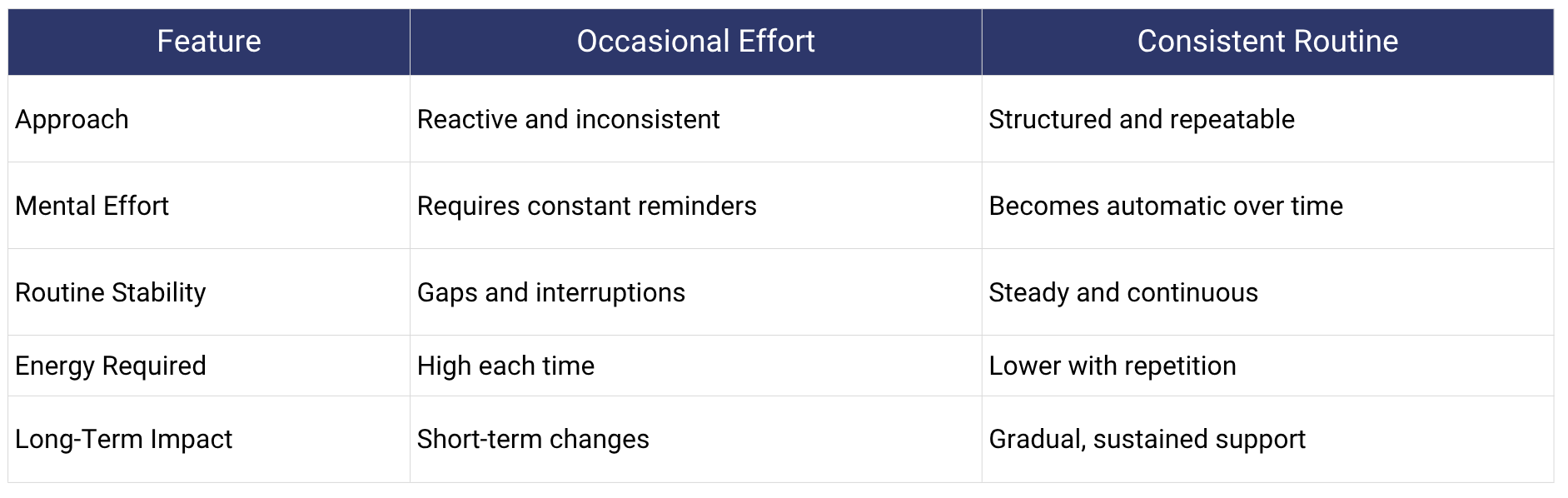
This perspective highlights an important shift. The goal is not to do more, but to make what you do easier to repeat.
Make Consistency Easier with Automation
As your routine becomes more structured, the next step is making it easier to maintain. This is where systems can play a meaningful role in supporting your habits.
Many people find that removing the need to constantly reorder or restock helps reduce interruptions in their routine. Instead of relying on memory or last-minute decisions, having a system in place allows your routine to continue without disruption.
1 Body Subscribe & Save is designed with this in mind. It helps turn your wellness routine into something that runs in the background, so you can focus on staying consistent rather than managing logistics.
By setting up regular deliveries, your essentials arrive when you need them. This removes one more layer of friction and helps support the habit you have already built.
Over time, this kind of consistency can make a noticeable difference, not because of any single action, but because of how those actions add up.
Frequently Asked Questions
-
Research suggests that forming a habit can take around 66 days on average, although this varies depending on the individual and the behavior. The most important factor is consistency, as repeated actions gradually become automatic over time.
Consistency Over Perfection
When it comes to health, consistency often matters more than intensity. Small actions, repeated over time, can support a routine that feels sustainable and realistic.
Rather than focusing on doing everything at once, building a system that supports your habits can make a meaningful difference. Over time, these small changes can create a more balanced and consistent approach to wellness.
Product Feature: Simplify Your Routine with Subscribe & Save
Make Consistency Part of Your Routine
1 Body Subscribe & Save is designed to help you stay consistent without added effort:
-
Automatic Deliveries Ensures your essentials arrive when you need them
-
Supports Routine Consistency Helps reduce gaps in your wellness habits
-
Flexible Scheduling Adjust, skip, or cancel at any time
-
Saves Time and Effort Removes the need to reorder manually
-
Built for Long-Term Habits Designed to support consistency over time
By removing friction from your routine, it becomes easier to stay aligned with your goals and maintain consistency.
Citation
Lally, P., van Jaarsveld, C. H., Potts, H. W., & Wardle, J. (2010). How are habits formed: Modelling habit formation in the real world. European Journal of Social Psychology, 40(6), 998–1009. https://doi.org/10.1002/ejsp.674
For all general inquiries, please contact us at help@1body.com
© Copyright. All rights reserved.