The Best Investment you'll ever Make is in Yourself


Feeling mentally “cloudy” is something many people experience, often without recognizing it right away. This quick 30-second self-check helps you become more aware of your current level of focus, recall, and mental sharpness. Brain fog is not a condition on its own, but rather a signal that cognitive processes may be under strain. Factors such as stress, sleep quality, and nutrition can all influence how clearly you think.
Alongside foundational habits, targeted nutrients found in products like 1 Body Brain Support are often included in routines designed to support cognitive performance.
What Brain Fog Really Feels Like
Brain fog is often subtle at first. It doesn’t always show up as complete forgetfulness or confusion. Instead, it tends to appear as small disruptions in everyday thinking.
You might find yourself rereading the same sentence multiple times without fully processing it. Conversations may require more effort to follow, or you may lose your train of thought mid-sentence. Tasks that normally feel simple can start to feel slightly heavier, as if your brain is working through resistance.
This “buffering” sensation is what many people describe as brain fog. It is not necessarily constant, and it can fluctuate throughout the day. Some people notice it more in the afternoon, while others feel it during periods of high stress or poor sleep.
Recognizing these patterns is the first step toward understanding your cognitive baseline.
The 30-Second Brain Fog Test
This quick test pulls from core cognitive functions like working memory, recall, and processing speed. Set a timer for 30 seconds and move through each task without overthinking.
1. Verbal Fluency Test (Language + Recall)
Say or write as many words as you can that start with the letter “F” in 10 seconds.
What it measures:
Verbal fluency and retrieval speed (commonly used in cognitive assessments)
2. Working Memory Test (Mental Tracking)
Start with the number 100 and subtract 7 repeatedly (100, 93, 86…). Go as far as you can in 10 seconds.
What it measures:
Working memory and mental processing (used in clinical cognitive screening)
3. Processing Speed Test (Visual + Focus)
Look around the room and quickly identify 3 objects that are blue.
What it measures:
Visual scanning and processing speed
4. Short-Term Memory Test (Recall)
Read this sequence once, then look away and repeat it: 7 – 2 – 9 – 4 – 6
What it measures:
Short-term memory capacity (digit span)
How to Interpret Your Results
-
Fast, smooth responses across tasks: Your cognitive systems are likely functioning efficiently right now
-
Some hesitation or needing to restart: Mild cognitive fatigue or distraction may be present
-
Frequent pauses, errors, or difficulty completing tasks: Your brain may be under temporary strain (sleep, stress, or mental overload)
Why These Tests Matter
These exercises are simplified versions of tasks used in neuropsychological evaluations. They don’t diagnose anything, but they do reflect how efficiently your brain is handling:
-
Information retrieval
-
Focus and attention
-
Mental flexibility
-
Short-term memory
When these feel slower than usual, it can show up as what many people describe as brain fog.
The 30-Second Mental Clarity Test
To get a quick snapshot of your current mental state, try the following three-part check. It is not a diagnostic tool, but it can help you become more aware of how your brain is performing in real time.
1. The Word Find Set a timer for five seconds and try to name five words that begin with the letter “B.” Notice whether the words come easily or if you hesitate between each one.
2. The Focus Shift Look at an object across the room, then quickly return your attention to this text. Pay attention to how fast your focus adjusts. Does it feel immediate, or slightly delayed?
3. The Recall Check Think back to what you had for dinner two nights ago. If the answer comes quickly, your recall may be more fluid. If it takes effort, it may reflect slower retrieval.
This quick exercise is less about performance and more about awareness. Even small delays can provide insight into how your brain is functioning in that moment.
Understanding Your Results
If all three tasks felt smooth and immediate, your cognitive processes may be operating efficiently at that moment. If one or more felt delayed or required extra effort, it doesn’t mean something is wrong—it simply reflects your current state.
Mental clarity exists on a spectrum. It can shift based on sleep, hydration, stress levels, and even your environment. A single test result is not as important as patterns over time.
Repeating this check weekly can help you notice trends. You may find that certain days feel sharper than others, which can guide adjustments in your daily routine.
Why Brain Fog Happens
Brain fog is often a signal rather than a standalone issue. It can be influenced by multiple factors working together.
Stress and Cortisol
Chronic stress can influence how the brain processes information. Elevated stress hormones may affect attention and working memory, making it harder to stay focused.
Sleep Quality
Sleep is when the brain consolidates memories and clears metabolic byproducts. Disrupted or insufficient sleep may impact clarity the next day.
Nutrient Availability
The brain relies on a steady supply of nutrients to support neurotransmitter activity. When intake is inconsistent, mental performance may feel less stable.
Cognitive Load
Constant multitasking or digital stimulation can overload attention systems. This may lead to slower processing and reduced mental clarity.
These factors often overlap, which is why brain fog can feel complex and difficult to pinpoint.
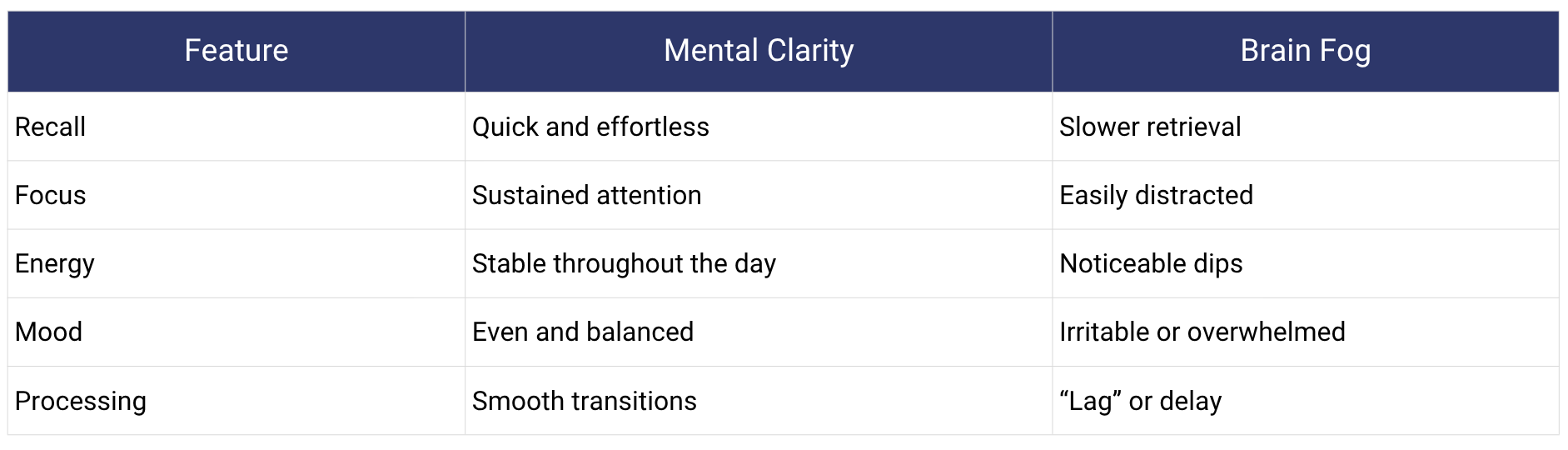
Understanding this contrast can help you better identify where you are on the spectrum at any given time.
Supporting Cognitive Clarity Through Daily Habits
Before considering supplements, foundational habits play a key role in supporting mental clarity.
Sleep Consistency
Maintaining a regular sleep schedule helps regulate circadian rhythms and supports cognitive recovery.
Balanced Nutrition
Whole foods provide essential nutrients that support brain function, including healthy fats, vitamins, and minerals.
Movement and Circulation
Physical activity supports blood flow, which plays a role in delivering oxygen and nutrients to the brain.
Mental Engagement
Activities like puzzles, reading, or learning new skills can help stimulate cognitive pathways.
These habits create the baseline upon which other strategies can build.
The Role of Targeted Nutrients
In addition to lifestyle habits, some people choose to incorporate targeted nutrients into their routine to support cognitive performance.
Ingredients such as Bacopa Monnieri and Alpha GPC are often discussed in relation to memory, focus, and mental processing. These compounds are included in many nootropic formulations due to their role in supporting neurotransmitter pathways.
1 Body Brain Support combines these types of ingredients into a single daily formula designed to complement a structured wellness routine. Rather than replacing foundational habits, it is often used alongside them to support consistency.
The goal is not to create instant changes, but to support the systems that contribute to mental clarity over time.
Supporting Research
Research has explored how certain nutrients may influence cognitive function.
A study published in Evidence-Based Complementary and Alternative Medicine examined Bacopa Monnieri and its relationship to cognitive performance, noting its potential role in memory and information processing over time.
These findings contribute to ongoing research into how nutritional compounds may interact with cognitive processes, though individual experiences may vary,
Frequently Asked Questions
-
Once or twice per week is usually enough. Tracking patterns over time provides more insight than a single result.
Conclusion: Small Signals, Bigger Awareness
Brain fog is not always obvious, but it often shows up in small, everyday moments. A slight delay in recall, a lapse in focus, or a feeling of mental heaviness can all be subtle indicators of how your brain is functioning.
By using simple tools like the 30-second clarity test, you can begin to notice these signals more clearly. This awareness allows you to make more intentional choices around your daily habits.
Whether it’s improving sleep, adjusting your routine, or incorporating targeted support like 1 Body Brain Support, the goal is to create consistency. Over time, these small adjustments can help support a more stable and balanced cognitive experience.
Featured Product: 1 Body Brain Support
If you’re looking to support your daily mental clarity routine, 1 Body Brain Support is designed to complement foundational habits like sleep, nutrition, and stress management.
Key features include:
-
Targeted nootropic ingredients such as Bacopa Monnieri and Alpha GPC
-
Supports focus and mental clarity as part of a consistent routine
-
Designed to complement cognitive performance without relying on stimulants
-
Easy-to-take daily format for long-term consistency
-
Works alongside lifestyle habits like sleep, nutrition, and mental engagement
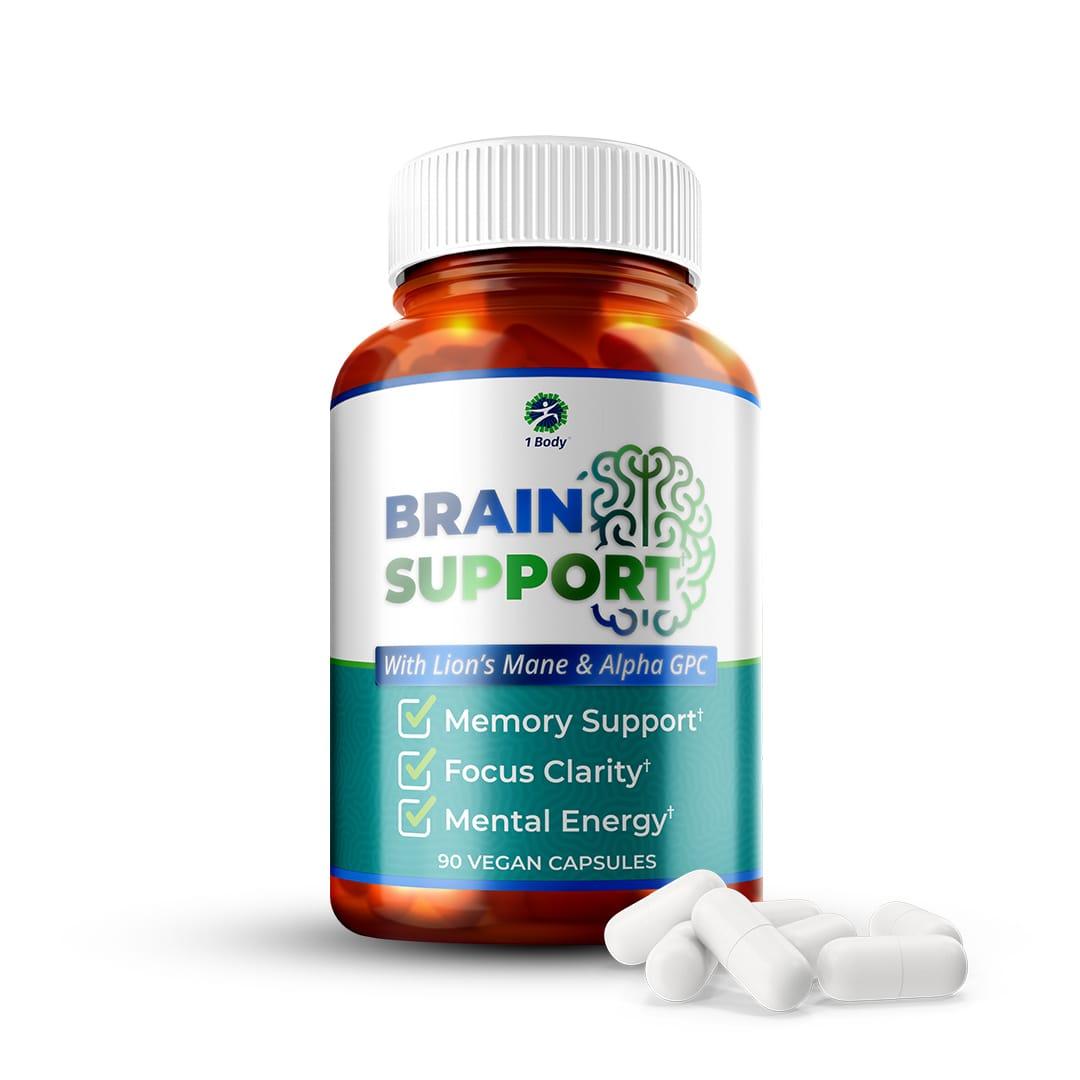
Rather than relying on short-term boosts, this type of formulation is often used to support a more structured and sustainable approach to cognitive wellness.
Citation: Stough C et al. The chronic effects of an extract of Bacopa monnieri on cognitive function in healthy human subjects. Psychopharmacology (Berl). 2008.
For all general inquiries, please contact us at help@1body.com
© Copyright. All rights reserved.