The Best Investment you'll ever Make is in Yourself


Modern life constantly asks the brain to switch between emails, messages, errands, deadlines, reminders, and unfinished tasks. That “100 open tabs” feeling can make it harder to stay focused, remember details, and feel mentally clear. With smarter routines, screen breaks, sleep support, hydration, and targeted nutrients, you can help support cognitive wellness and give your brain a more organized foundation for the day.
Why Modern Life Makes Your Brain Feel Overloaded
We have all had the same kind of day. You sit down to complete one simple task, but your mind immediately jumps somewhere else. An unread email pops into your thoughts. Then you remember a grocery item, a bill, a meeting, a conversation you still need to answer, and a project you meant to finish last week. Before you know it, the task in front of you feels heavier than it should, even though nothing physically changed.
That is the “100 open tabs” feeling. Your brain is technically working, but it feels cluttered. One tab is playing music somewhere in the background, another is frozen, three are asking for updates, and your processing speed is slowing down. In real life, this shows up as scattered attention, mental fatigue, forgetfulness, procrastination, and that frustrating feeling of being busy without making meaningful progress.
This kind of cognitive overload is not a character flaw. It is often a natural response to the way modern routines are built. Many people spend the day moving between screens, notifications, short-form content, meetings, messages, and personal responsibilities. Even when you are not actively multitasking, the brain may still be holding too many unfinished loops in the background. Over time, that constant switching can make mental clarity feel harder to access.
The Real Cost of Keeping Too Many Mental Tabs Open
Multitasking often feels productive because it creates motion. You answer one message, scan another document, check a notification, and jump back into a task. The problem is that the brain still has to switch contexts each time. Every switch requires attention, working memory, and decision-making. That is why a day full of small interruptions can leave you feeling more drained than a day spent deeply focused on one or two important tasks.
A well-known study published in Proceedings of the National Academy of Sciences looked at media multitasking and cognitive control. The researchers found that heavy media multitaskers were more susceptible to interference from irrelevant stimuli and irrelevant memory representations, and they performed worse on a task-switching test compared with lighter media multitaskers. This does not mean multitasking causes every focus issue, but it helps explain why constant information switching can be linked with attention challenges.
For everyday life, the takeaway is practical. When your brain is overloaded, it becomes harder to filter what matters from what does not. That can affect how well you remember details, how quickly you complete work, and how calm you feel while doing it. The more mental tabs you leave open, the more energy your brain spends managing clutter instead of moving through one clear task at a time.
How to Start Closing the Mental Tabs
The first step is to stop treating distraction like a personal failure. Instead, treat it like a system issue. If your day is designed around constant interruptions, your brain will respond accordingly. The goal is to build a routine that protects attention instead of constantly fragmenting it.
Single-tasking is one of the simplest places to start. Choose one task, set a short time window, and remove as many distractions as possible. Close unnecessary browser tabs, silence non-urgent notifications, and keep your phone out of reach when possible. Even 20 minutes of focused work can feel different when your attention is not being pulled in five directions.
Another helpful strategy is the “mental download.” If you keep remembering random tasks while trying to focus, write them down in one place instead of holding them in your head. This gives your brain a trusted parking lot for unfinished thoughts. Once the task is written down, you do not need to keep mentally refreshing it.
Screen breaks also matter. A five-minute reset away from your phone or computer can help reduce stimulation and give your mind a chance to settle. You do not need a dramatic routine. Stand up, drink water, stretch, look outside, or walk for a few minutes. The point is to interrupt the pattern of constant input.
Brain Support Strategy Guide
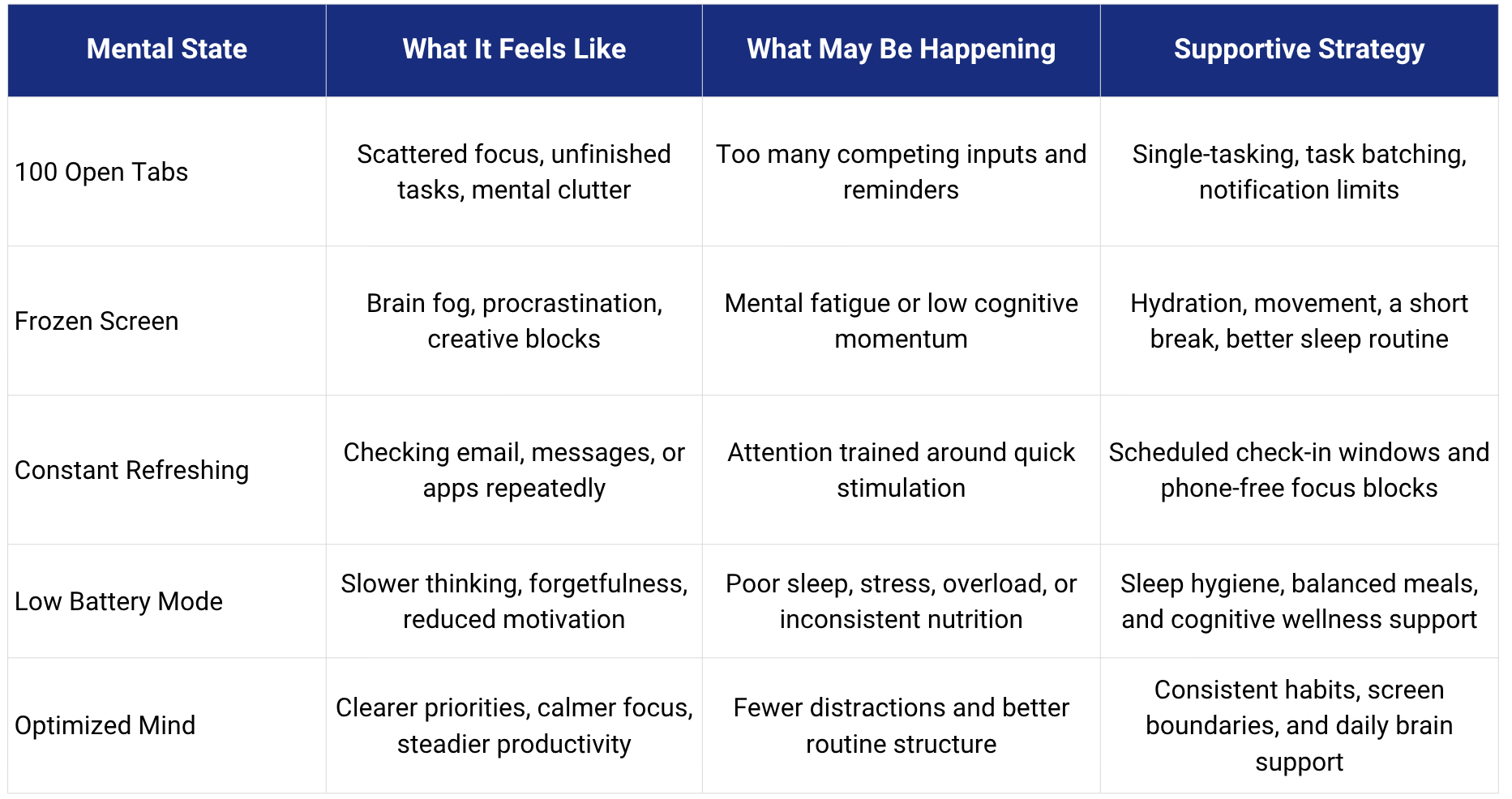
This table is not meant to diagnose anything. It is simply a practical way to understand common patterns many people experience during mentally demanding days. Once you can name the pattern, it becomes easier to choose the right reset.
Lifestyle Habits That Support Mental Clarity
Mental clarity is not created by one habit alone. It is usually the result of several basic routines working together. Sleep is one of the biggest foundations because the brain needs rest to support memory, attention, and emotional regulation. When sleep is inconsistent, your ability to focus can feel less dependable, even if you are motivated.
Hydration and nutrition also matter. The brain is highly active, and daily eating patterns can influence how steady your energy feels. Skipping meals, relying only on caffeine, or eating in a way that causes energy swings can make the “100 tabs” feeling worse. A balanced meal with protein, fiber, healthy fats, and colorful foods can help support a steadier foundation for focus.
Movement is another simple reset. Even a short walk can help shift you out of mental gridlock. This is especially useful when you feel stuck but keep forcing yourself to stare at the same screen. Instead of pushing through the frozen-tab feeling, try stepping away briefly and returning with a clearer starting point.
Finally, protect your attention the way you would protect your calendar. Not every notification deserves immediate access to your brain. Set specific times for email, group similar tasks together, and create small “deep work” windows where your focus has fewer opportunities to be interrupted.
Support Cognitive Wellness With 1 Body Brain Support
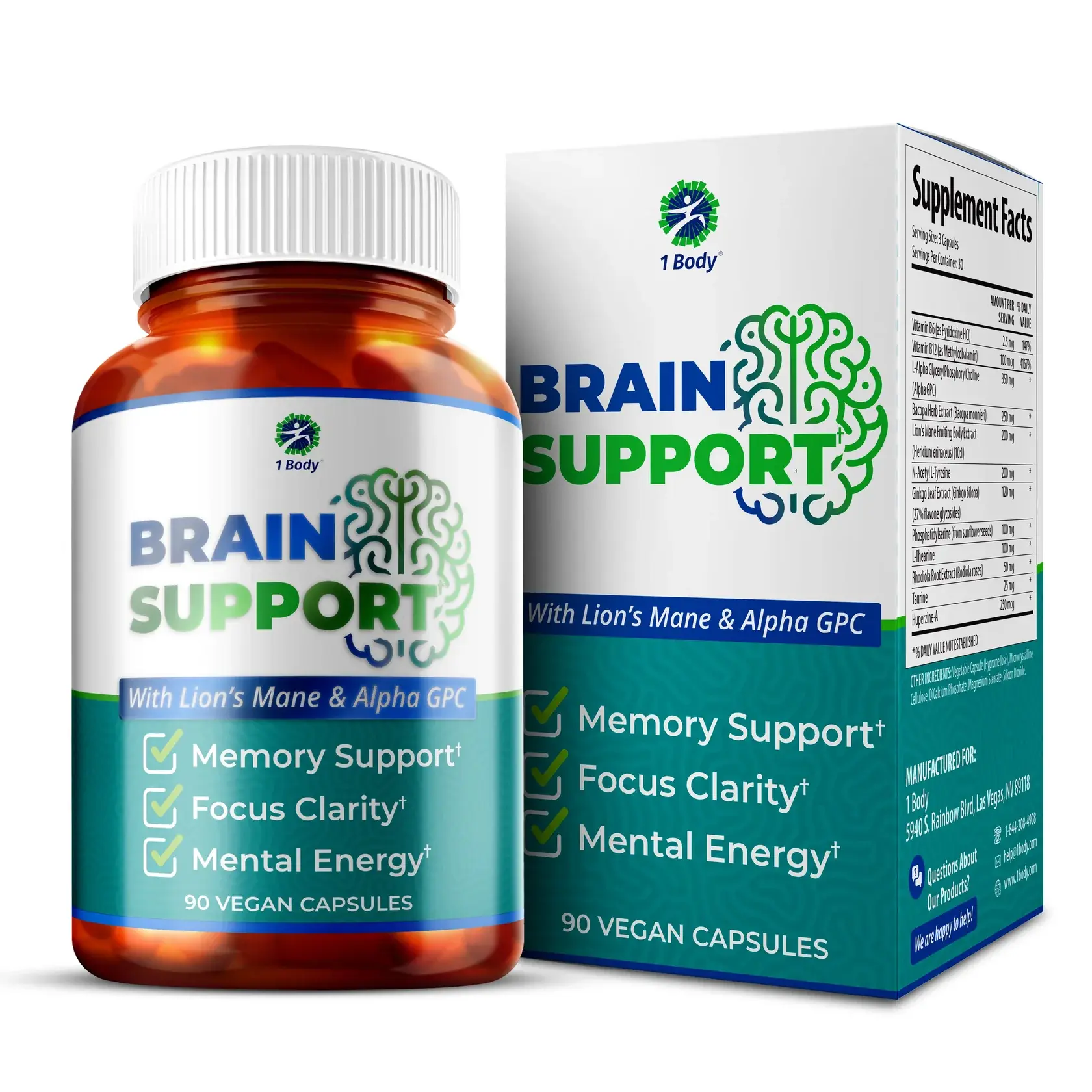
This is where 1 Body Brain Support fits naturally into the routine. Once you have created better habits around focus, sleep, hydration, and screen boundaries, targeted brain support can help complete the foundation. 1 Body Brain Support is designed to support mental clarity, focus, memory function, cognitive health, and daily brain wellness as part of a consistent routine.
Instead of relying only on caffeine or forcing your way through mental fatigue, 1 Body Brain Support offers a more thoughtful daily option for people who want to support the way their brain performs. It works best as part of a broader wellness routine, not as a shortcut around rest or healthy habits.
If your mind often feels cluttered by unfinished tasks, notifications, and constant context switching, this product can become part of your daily “close the tabs” strategy. Pair it with single-tasking, screen breaks, hydration, and sleep consistency to support a clearer, steadier approach to mental performance.
Frequently Asked Questions
-
Multitasking requires your brain to switch between different tasks, rules, and pieces of information. Even when the tasks feel small, frequent switching can drain attention and make it harder to stay mentally clear.
Clear the Clutter and Support Your Mind
The “100 open tabs” feeling is a sign that your brain may be carrying too much at once. Modern life makes it easy to confuse activity with productivity, but constant switching often leaves you feeling mentally tired without helping you move forward. Closing the tabs starts with practical changes: fewer distractions, more single-tasking, better sleep, hydration, movement, and routines that give your brain breathing room.
Supporting cognitive wellness is not about becoming perfectly focused every second of the day. It is about building a foundation that helps your mind feel clearer, calmer, and more organized. When you reduce unnecessary mental clutter and add targeted daily support, your brain has a better chance to focus on what actually matters.
1 Body Brain Support
1 Body Brain Support is a daily cognitive wellness supplement designed to support mental clarity, focus, memory function, and overall brain health. It is made for people who want to support their mind through busy workdays, constant distractions, and mentally demanding routines.
Benefits:
-
Supports mental clarity
-
Helps support focus and concentration
-
Supports memory function
-
Supports cognitive health and daily brain wellness
-
Fits into a routine focused on productivity and clear thinking
-
Pairs well with sleep, hydration, movement, and screen breaks
-
A smart daily addition for mentally demanding lifestyles
If your brain feels like a browser with too many tabs open, 1 Body Brain Support can be part of your daily reset strategy. Add it to a routine built around better focus habits, fewer distractions, and consistent wellness support so you can move through the day with a clearer mental foundation.
Citation: Ophir, E., Nass, C., & Wagner, A. D. (2009). Cognitive control in media multitaskers. Proceedings of the National Academy of Sciences, 106(37), 15583–15587. https://doi.org/10.1073/pnas.0903620106
For all general inquiries, please contact us at help@1body.com
© Copyright. All rights reserved.