The Best Investment you'll ever Make is in Yourself

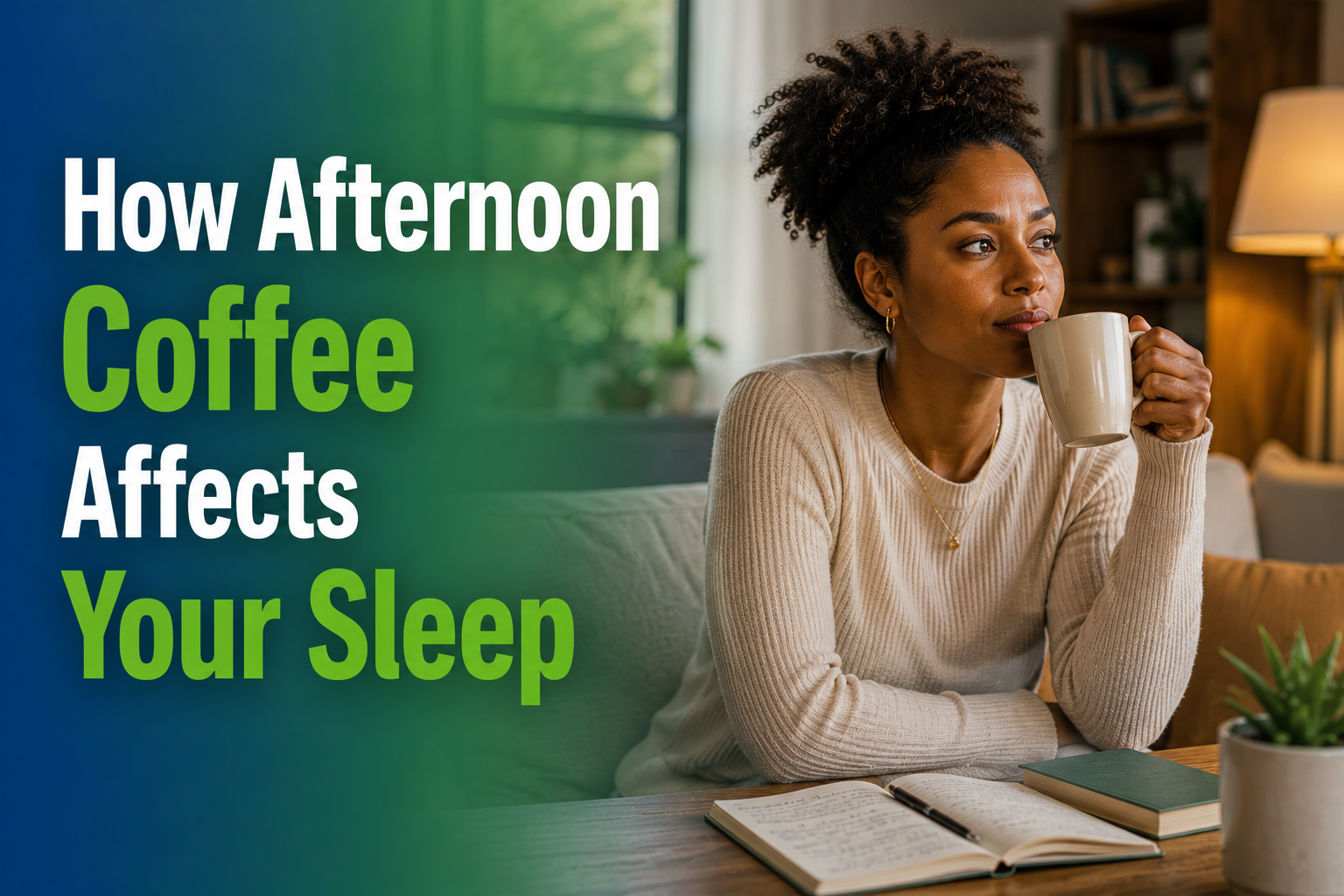
This comprehensive guide explores how afternoon caffeine consumption alters the human circadian rhythm, disrupts natural cortisol levels, and degrades overall sleep quality. By understanding the biological mechanics of late-day stimulants, individuals can implement practical lifestyle adjustments and targeted supplement strategies to restore their natural sleep-wake cycle and cultivate a more restorative, balanced sleep routine.
Why Your Afternoon Coffee May Be Working Against Your Body
We have all been there before. It is 3:00 PM on a sluggish Tuesday, your eyes are growing heavy in front of the computer screen, and your productivity is starting to plummet. The most natural reaction in the world is to head down to the local coffee shop or reach for an energy drink to power through the final stretch of the workday. While that afternoon caffeine fix provides an almost instant wave of alertness, it often initiates an invisible, internal chain reaction that severely disrupts your evening relaxation hours down the line. Many of us find ourselves tossing and turning at midnight, wondering why true relaxation feels so elusive, without ever connecting our nighttime restlessness to a beverage we consumed hours earlier.
The underlying issue stems from how long caffeine lingers within the human body. Caffeine has a surprisingly lengthy half-life, which averages anywhere from five to seven hours depending on your unique genetics and metabolic rate. This means that if you enjoy a large iced coffee or an espresso at 3:30 PM, up to half of that active stimulant is still circulating through your bloodstream and interacting with your brain at 9:30 PM. Instead of allowing your nervous system to slowly wind down and prepare for a balanced sleep routine, late-day stimulant habits keep your internal systems running on high alert, making it incredibly difficult to achieve a peaceful transition into deep rest.
Understanding Your Circadian Rhythm and Natural Energy Cycle
To truly appreciate why timing matters so much, it helps to understand how your body manages its internal scheduling. Every human being operates on a master internal clock known as the circadian rhythm, a 24-hour cycle regulated by the brain that dictates sleepiness, alertness, body temperature, and hormone production. A primary driver of this natural sleep-wake cycle is the delicate, fluctuating balance of your cortisol levels. In a perfectly synchronized system, cortisol peaks early in the morning to give you that bright, focused drive to start your day, and then gradually declines as the sun goes down to make room for melatonin, the hormone responsible for telling your body it is time to sleep.
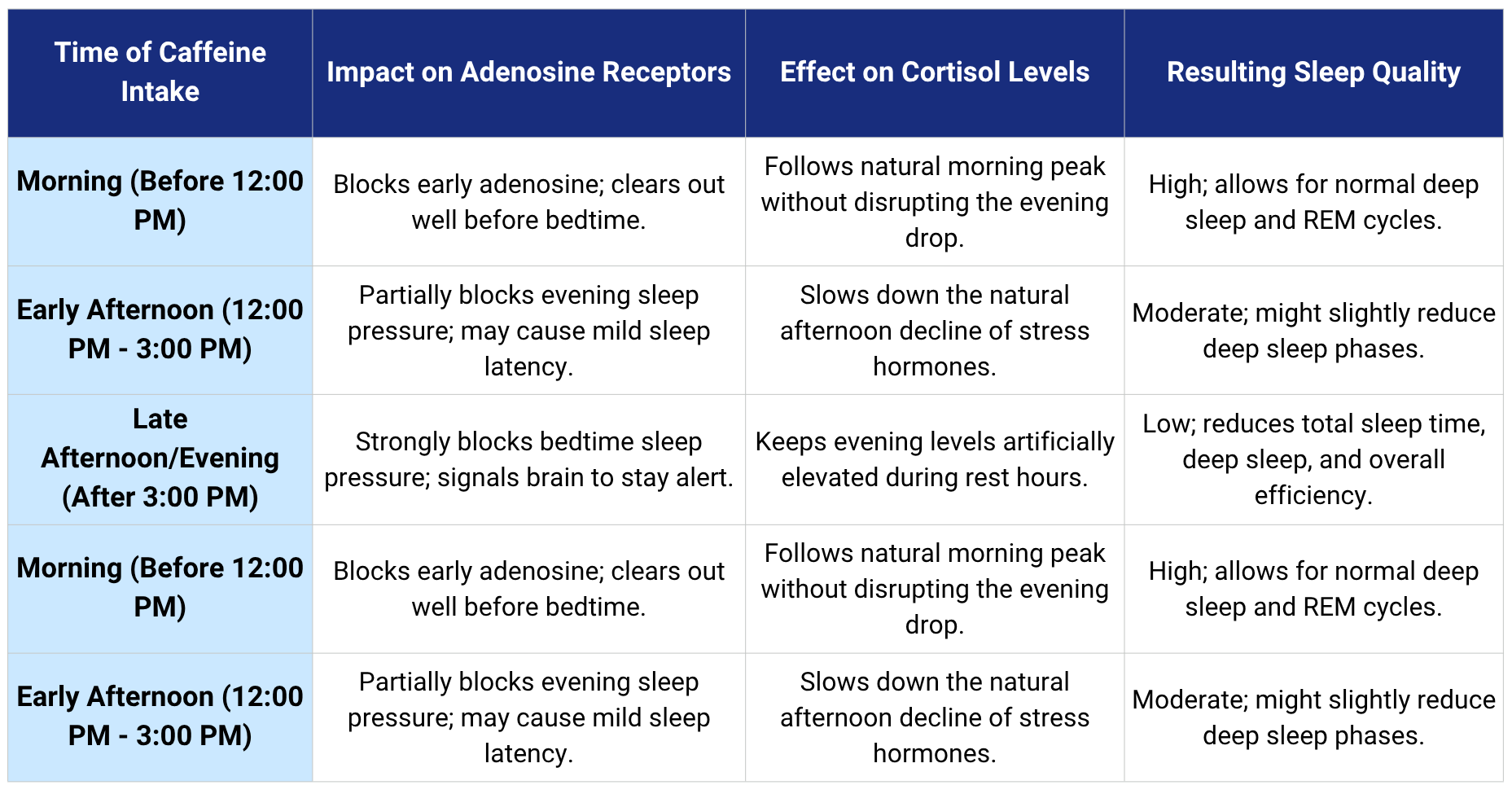
When we introduce stimulants into our afternoon schedule, we inadvertently throw this beautiful, synchronized rhythm completely out of alignment. A landmark study conducted by Drake and colleagues demonstrated that caffeine consumed even six hours before going to bed can significantly disrupt sleep, reducing total sleep time by more than an full hour and noticeably lowering sleep efficiency. This research emphasizes that even if you feel like you can fall asleep with ease after an afternoon drink, your internal biological clock is still experiencing measurable disruption. When external choices keep your system stimulated during hours meant for winding down, your body struggles to achieve the naturally low cortisol baseline required for deep, uninterrupted rest.
How Late-Day Caffeine Can Affect Sleep Quality
Caffeine operates primarily by acting as an adenosine receptor antagonist. Throughout the day, a chemical called adenosine continuously builds up in your brain, creating a natural phenomenon known as sleep pressure, which makes you feel progressively sleepier as the evening approaches. Because caffeine shares a highly similar molecular structure to adenosine, it binds to these receptors and effectively blocks them, tricking your brain into thinking you are completely refreshed when you are actually exhausted. This artificial blocking mechanism keeps healthy cortisol levels from stabilizing and settling, leaving many individuals feeling simultaneously "wired but tired" when their head hits the pillow.
Beyond making it harder to fall asleep, late-day stimulants alter the actual architecture of your sleep cycles. A typical night of rest is divided into distinct stages, including deep slow-wave sleep, which is vital for physical recovery, and rapid eye movement (REM) sleep, which supports memory consolidation and emotional well-being. Consuming caffeine too late into the day significantly shortens the duration of these deeply restorative phases. As a result, you might manage to sleep for seven or eight hours but still wake up feeling groggy, unrefreshed, and desperate for another stimulant fix, which perpetuates a frustrating cycle of exhaustion.
Healthy Habits That Support Your Internal Clock
Breaking free from the afternoon energy crash does not mean you have to give up your favorite morning rituals, but it does require adopting intentional habits that support your body's natural design. Establishing a strict caffeine curfew is one of the most effective boundaries you can implement for your health. For most individuals, cutting off all major stimulants by 12:00 PM or 1:00 PM gives the liver ample time to process and clear the compound long before it can interfere with evening relaxation. If you find yourself needing a comforting ritual during the mid-day slump, consider swapping your standard espresso for a warm cup of herbal tea, such as rooibos, peppermint, or chamomile, which satisfies the psychological craving without fueling nighttime wakefulness.
Additionally, you can make use of natural lifestyle cues to stimulate alertness without relying on chemical assistance. Stepping outside into bright, natural sunlight for ten to fifteen minutes in the afternoon sends a powerful signal to your master internal clock that it is still daytime, helping lift your energy naturally. Making sure you stay thoroughly hydrated throughout the workday is another simple yet overlooked strategy, as mid-day fatigue is frequently just a subtle sign of mild dehydration rather than a true lack of energy. Combining proper hydration with light movement, like a quick walk around the block or a brief stretching session, can revitalize your circulation and keep your focus sharp without compromising your sleep quality later on.
Support Your Evening Routine with 1 Body Cortisol Balance
While adjusting your daytime habits and optimizing your environment are foundational steps toward better rest, sometimes your body needs an extra layer of targeted nourishment to fully correct an out-of-sync system. Years of high-stress modern living, chaotic work schedules, and a reliance on late-day stimulants can leave your nervous system in a state of chronic hyper-reactivity, making it incredibly difficult to ease into a genuinely balanced sleep routine through sheer willpower alone. When your internal clock has been repeatedly disrupted, providing your body with natural, grounding nutrients can help bridge the gap between daytime stress and evening tranquility.
This is precisely where integrating a premium, scientifically thoughtful formula like 1 Body Cortisol Balance can transform your evening routine. This supplement is carefully crafted to support healthy cortisol levels and gently guide your mind and body into a state of profound relaxation. Featuring a powerful blend of adaptogenic herbs and essential minerals, including clinically studied Ashwagandha and highly bioavailable Magnesium, it works harmoniously to calm a racing mind, alleviate physical tension, and quiet the lingering effects of daytime stressors. By helping your body stabilize its natural stress responses as darkness falls, this soothing blend empowers your natural sleep-wake cycle to take over smoothly, facilitating the deep, restorative sleep your body deserves.
Frequently Asked Questions
-
Caffeine has an average half-life of five to seven hours, meaning that half of the total amount you consume remains active in your bloodstream long after your final sip. It can take up to an entire 10 to 12 hours for the stimulant to be fully cleared from your system, which is why late-afternoon consumption directly interferes with your ability to rest deeply.
Working With Your Body Instead of Against It
Achieving deep, life-giving rest is not about fighting against your body's signals, but rather learning to listen to them and honor the natural rhythms that keep you vibrant. While the temporary lift of an afternoon coffee can feel essential in the moment, working with your internal biological clock by establishing a caffeine curfew and embracing calming lifestyle practices will yield far greater, more sustainable energy in the long run. By supporting your natural sleep-wake cycle and nourishing your nervous system with mindful daytime habits and soothing evening support, you can look forward to waking up truly refreshed, energized, and ready to embrace each day with natural vitality.
1 Body Cortisol Balance
Optimizing your internal clock requires a holistic approach that balances daytime habits with targeted nightly nourishment. 1 Body Cortisol Balance provides premium, adaptogenic support specifically formulated to ease your body out of the stressful fight-or-flight response and into a state of calm evening relaxation. By nourishing your system with a synergistic blend of Ashwagandha, Magnesium, and calming botanicals, this daily supplement works to support healthy cortisol levels and protect your delicate sleep architecture from the disruptive aftermath of daily stressors and caffeine habits.
Key Benefits:
-
Promotes Healthy Cortisol Levels: Expertly formulated with adaptogens like Ashwagandha to help modulate the body's natural stress response and support adrenal wellness.
-
Encourages Evening Relaxation: Infused with Magnesium and soothing nutrients that help calm a hyperactive nervous system and ease muscular tension before bed.
-
Supports a Balanced Sleep Routine: Helps prepare your mind and body for deep, restorative sleep phases without relying on heavy, habit-forming sedatives.
-
Fights Mid-Day Disruption: Assists in smoothing out the harsh ups and downs of stress hormones, helping you maintain steady energy and clarity during the day.
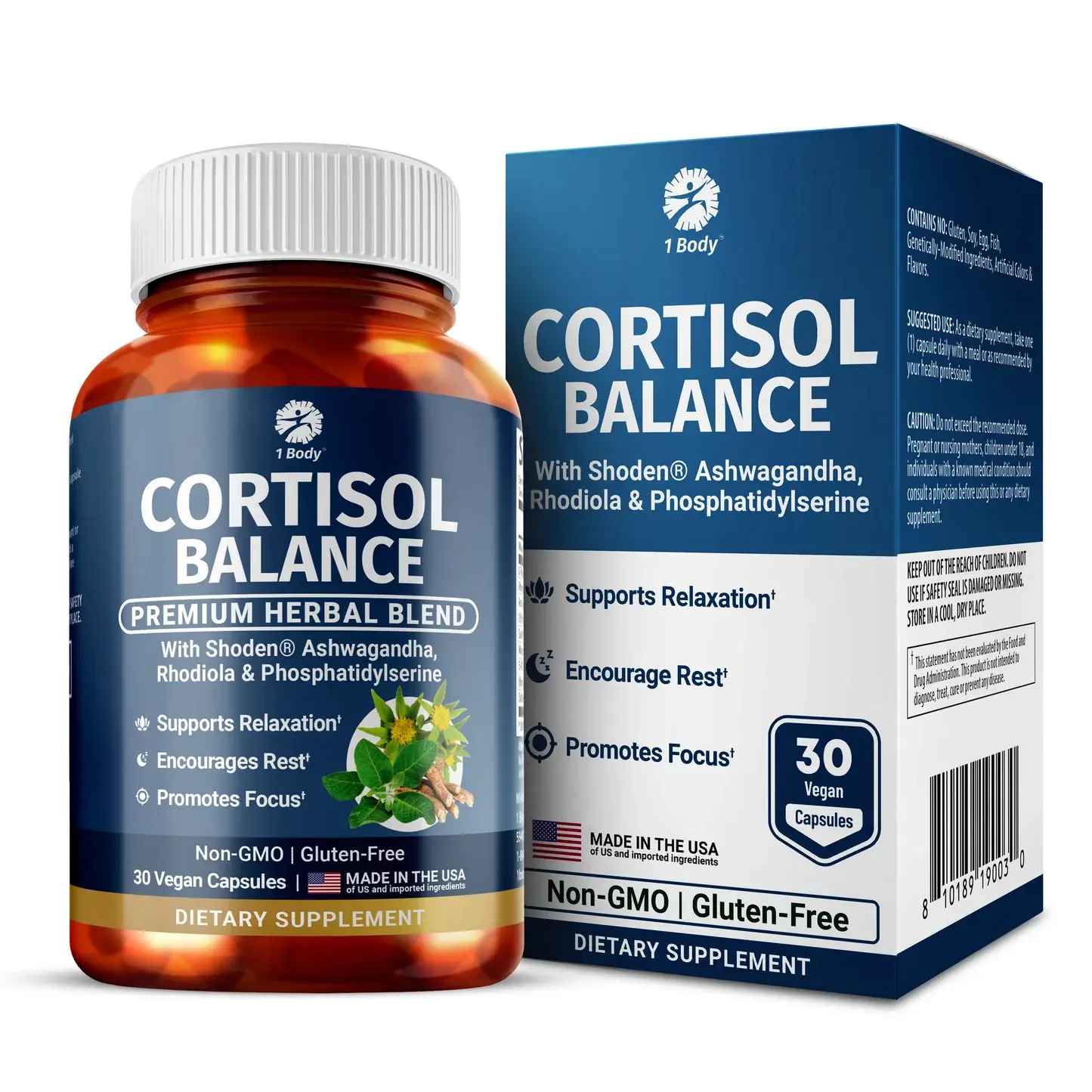
If you are ready to break the frustrating cycle of daytime exhaustion and nighttime restlessness, investing in your adrenal wellness is the perfect place to start. Choosing 1 Body Cortisol Balance means giving your body the natural, grounding tools it needs to quiet mental chatter, lower physical tension, and reclaim the deeply restorative rest that fuels a healthy, vibrant life.
References
Drake, C., Roehrs, T., Shambroom, J., & Roth, T. (2013). Caffeine effects on sleep taken 0, 3, or 6 hours before going to bed. Journal of Clinical Sleep Medicine, 9(11), 1195-1200. https://doi.org/10.5664/jcsm.3170
For all general inquiries, please contact us at help@1body.com
© Copyright. All rights reserved.