The Best Investment you'll ever Make is in Yourself

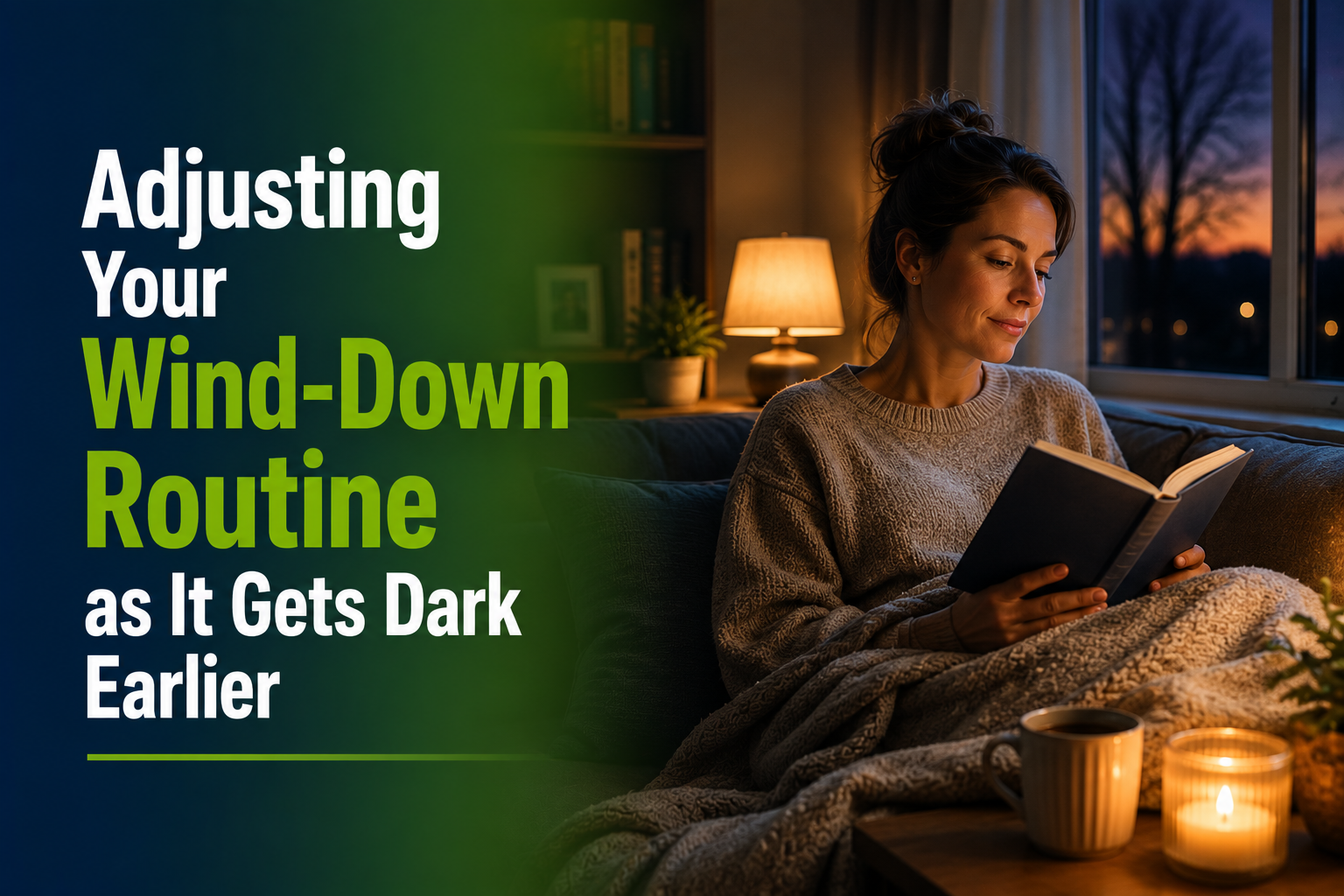
Earlier sunsets can make you feel tired before your evening is truly over, especially when indoor lighting, screens, activity levels, and bedtime habits send mixed signals. A steady wind-down routine built around warm light, gentle movement, consistent timing, and thoughtful nutritional support may help your evenings feel more settled as the seasons change.
When daylight begins disappearing before dinner, the whole evening can feel slightly out of step. You may notice your energy dipping while you are still finishing work, preparing a meal, helping with homework, or trying to enjoy a little time for yourself. Then, when you finally get into bed, your mind may still feel busy and your body may not seem ready to settle.
This seasonal mismatch is understandable because the body uses light, timing, movement, food, and familiar habits as cues that help organize the day. When those cues change quickly, your usual evening routine may need a few gentle adjustments rather than a complete overhaul.
A fall or winter wind-down routine does not have to feel strict or complicated. Small changes to evening light exposure, screen habits, physical tension, and bedtime consistency can create a smoother transition between an active day and a quieter night. The goal is not to force sleep on command, but to give your body clearer signals that the day is gradually coming to a close.
Why Earlier Darkness Can Change the Way Your Evening Feels
Light is one of the strongest environmental signals connected with the body’s internal timing system. When mornings become dimmer and evenings become darker earlier, the contrast between day and night changes, while your work, family, meal, and bedtime schedules may stay exactly the same.
That difference can leave you feeling sleepy at an inconvenient time, more alert later than expected, or simply unsure about when to begin slowing down. The clock may say it is only 6:00 p.m., but a dark window can make the evening feel much later.
A 2013 study by Wright and colleagues examined how exposure to a natural light-dark cycle affected human circadian timing. After spending a week camping without electric lighting, participants’ internal timing shifted closer to sunset and sunrise, suggesting that everyday light exposure plays an important role in how the body organizes sleep and wakefulness.
The research does not mean everyone needs to abandon indoor lighting or follow sunset exactly. It simply supports a practical idea: the timing and intensity of the light around you can influence how your evening feels.
Modern homes can make this transition more confusing because darkness outside is often followed by bright overhead bulbs, televisions, laptops, tablets, and phones inside. Your eyes may register that the outdoor day has ended while your indoor environment continues to feel active and brightly lit.
Instead of treating earlier darkness as a signal to go to bed immediately, create a gradual transition that matches your real schedule. The aim is to soften the evening without making yourself feel sleepy before your responsibilities are finished.
Separating Early Fatigue From Bedtime Readiness
Feeling tired at 6:00 p.m. is not always the same as being ready to sleep for the night. Sometimes an afternoon energy dip becomes more noticeable once the room grows dark, particularly after a long workday, a heavy meal, limited movement, or too little outdoor light earlier in the day.
Going to bed much earlier than usual may seem appealing, but a sudden schedule change can leave some people awake in the middle of the night or frustrated when sleep does not come as easily as expected. Before changing your bedtime significantly, pause and notice what kind of tiredness you are experiencing.
Heavy eyes and repeated yawning may feel different from mental overload, boredom, muscle stiffness, or the desire to lie down simply because the house looks dark. A short walk, a glass of water, a balanced meal, a conversation with someone you care about, or a few minutes of comfortable movement may help you recognize what your body actually needs.
This is also a good time to consider your morning routine. Opening the curtains soon after waking, spending a little time outdoors when conditions allow, or working near a bright window may help make the daytime portion of your routine feel more distinct.
A clearer daytime environment and a softer evening environment often work better together than focusing only on the final hour before bed. Your wind-down routine begins with the signals you receive throughout the day, not only with what happens once you are already under the covers.
Building a Wind-Down Routine Around Light and Consistency
A comfortable evening routine usually works best when it begins before you are completely exhausted. Rather than waiting until bedtime to switch from full activity to complete stillness, create a transition period of about one to two hours in which the environment gradually becomes quieter, warmer, and less stimulating.
This does not mean every night must follow an exact script. It simply means repeating a few recognizable actions in a similar order so your evening has a familiar rhythm.
Begin with lighting. Turn off bright overhead lights when practical and use lamps with warm-toned bulbs in the rooms where you spend the evening. Keep enough light for safety, cooking, reading, and household tasks, but avoid making every room as bright as it was at midday.
When you use screens, lower the brightness, reduce unnecessary scrolling, and choose an endpoint rather than carrying your phone into bed without a plan. You do not have to remove every screen from your evening, but it can help to make screen use intentional instead of automatic.
Next, give your body a chance to release the physical shape of the day. Many people spend hours sitting, driving, typing, lifting, or standing in one position, so stiffness may become more noticeable after dinner.
Gentle stretching, a comfortable walk, slow breathing, or a warm shower can mark the shift into a quieter part of the evening without turning relaxation into another demanding task. The activity should feel manageable rather than intense.
Finally, protect a consistent bedtime range. You do not need to fall asleep at the exact same minute every night, but large differences between weekdays and weekends may make seasonal transitions harder to navigate.
A familiar sequence such as dimming the lights, preparing tomorrow’s essentials, washing up, stretching, reading, and turning out the light can become a dependable signal that the day is ending. What matters most is choosing a sequence that fits your household and feels realistic enough to repeat.
Evening Habits and Their Role in a Calmer Transition
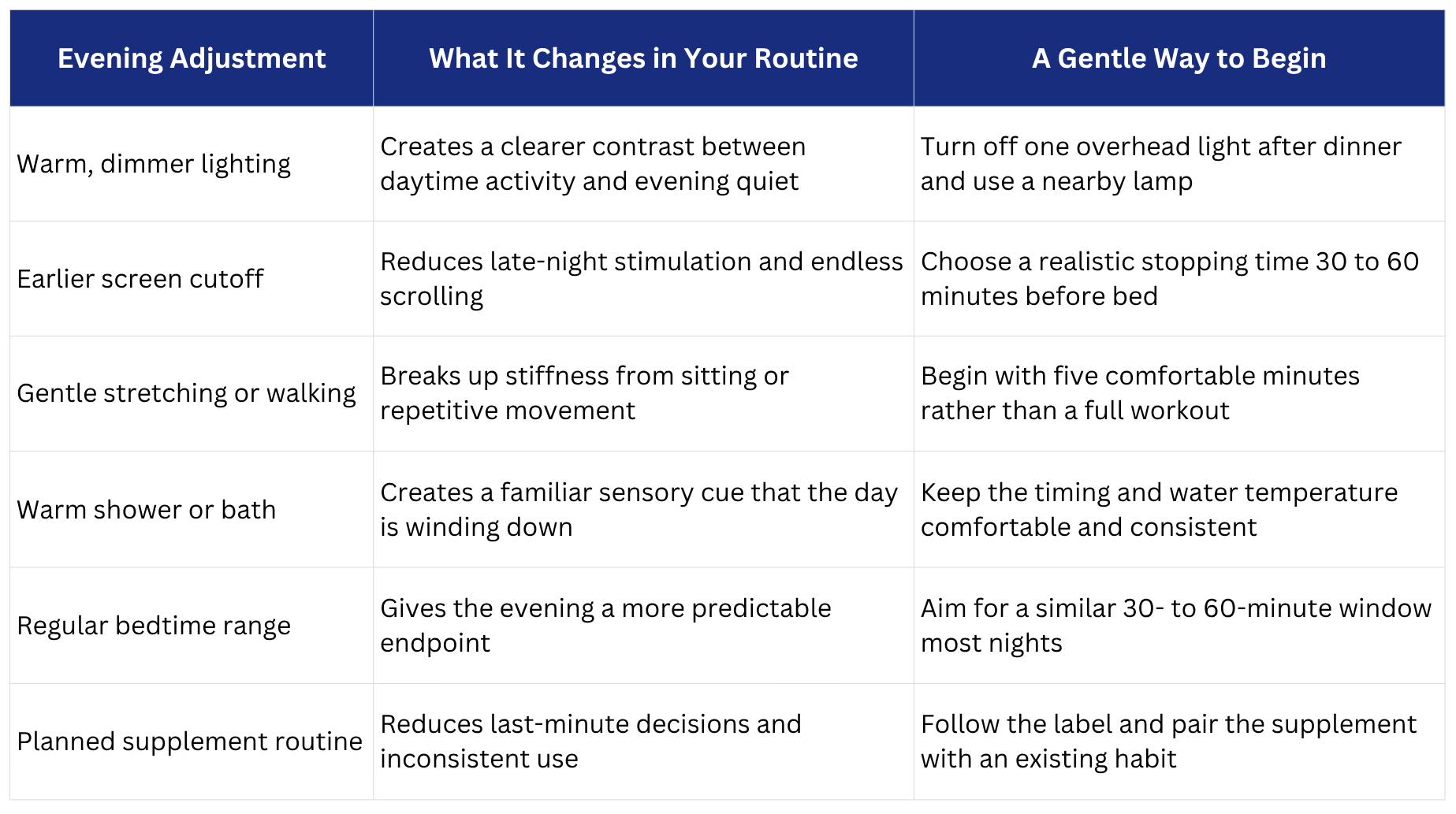
The best routine is the one you can repeat without feeling controlled by it. A beautifully organized checklist is not helpful when it creates pressure, so begin with two or three adjustments and let them become familiar before adding anything else.
Common Seasonal Routine Mistakes to Avoid
One common mistake is dimming the house too early and then trying to push through several more hours of demanding work. This can make you feel sluggish while your mind is still responsible for unfinished tasks, so match the lighting transition to the point when your day is genuinely beginning to slow.
Another mistake is relying on late-night screen time as your only form of relaxation. Watching a favorite show can be enjoyable, but switching continuously between videos, messages, news, emails, and social media often keeps the evening full of novelty.
Give your routine at least one screen-free element, even when it is only preparing tea, stretching, reading a few pages, or setting out clothes for the next morning. This small pause can help separate entertainment from the final transition toward bedtime.
It is also easy to expect one supplement, one bath, or one perfect bedtime to correct a routine that has been inconsistent for weeks. Evening comfort is shaped by the broader pattern of the day, including morning light, caffeine timing, physical activity, stress, meals, and the amount of time available to decompress.
Supplements can complement those habits, but they should not be described as cures for insomnia, anxiety, pain, or other health conditions. Persistent sleep difficulties, unexplained fatigue, discomfort, or significant mood changes deserve guidance from a qualified healthcare professional.
Adding Thoughtful Mineral Support to Your Evening
Once your light, movement, screen, and timing habits are in place, you may decide to include a simple supplement step in your routine. 1 Body Magnesium Glycinate Complex is designed for people who want a magnesium product that can fit naturally into an established evening wellness plan rather than replace the habits that make that plan work.
The formula features magnesium glycinate along with MCT oil and trace minerals, according to the product information provided. Magnesium glycinate is a chelated form of magnesium, meaning the mineral is bound to the amino acid glycine, and it is often selected by people looking for a straightforward magnesium supplement for regular use.
The product creative highlights high bioavailability, healthy muscle and bone support, and U.S. manufacturing. These statements should remain consistent with the latest product label, Supplement Facts panel, and approved product page before the article is published.
A supplement routine is most useful when it is predictable and appropriate for the individual. Follow the serving directions, avoid taking more than the label recommends, and speak with a qualified healthcare professional if you use prescription medication, have kidney concerns, are pregnant or nursing, or are managing an ongoing health condition.
Frequently Asked Questions
-
Earlier darkness can make the evening feel later than the clock suggests, while reduced daytime light, meals, stress, and activity may also affect alertness. A brighter morning and a gradual evening lighting transition may help create clearer daytime and nighttime cues.
Let Your Routine Change With the Season
Earlier sunsets do not have to take control of your evening. They are simply a reminder that the environmental cues around you have changed and that your routine may need a little adjustment to remain comfortable, practical, and aligned with your everyday responsibilities.
Start with the foundations by making daytime feel bright, allowing evening light to soften gradually, giving physical tension somewhere to go, and protecting a steady bedtime range. These habits do not need to be perfect, and missing one evening does not undo the routine you are building.
When those pieces begin working together, a carefully chosen supplement can become one supportive part of the ritual rather than carrying the full responsibility for how you feel or rest. A seasonal wind-down routine should feel reassuring, flexible, and easy enough to return to night after night.
1 Body Magnesium Glycinate Complex
1 Body Magnesium Glycinate Complex offers a simple way to include magnesium in a consistent evening wellness routine. Its magnesium glycinate base, MCT oil, and trace minerals are designed to fit alongside thoughtful lighting, gentle movement, and dependable bedtime habits without being positioned as a treatment or guaranteed sleep solution.
-
Provides magnesium in a glycinate form
-
May help support normal muscle and nerve function as part of adequate magnesium intake
-
Can complement a calm and repeatable wind-down routine
-
Includes MCT oil and trace minerals in the formula
-
Offers a convenient addition to an established evening schedule
-
Product materials highlight high bioavailability
-
Product creative identifies U.S. manufacturing
-
Easy to pair with an existing habit such as dinner or evening self-care

For someone who is already improving evening light exposure, screen habits, movement, and bedtime consistency, 1 Body Magnesium Glycinate Complex may be a practical addition to consider. Choose it according to the current label, your individual nutritional needs, and professional guidance, then use it consistently rather than expecting an immediate or guaranteed result.
Reference
Wright, K. P., Jr., McHill, A. W., Birks, B. R., Griffin, B. R., Rusterholz, T., & Chinoy, E. D. (2013). Entrainment of the human circadian clock to the natural light-dark cycle. Current Biology, 23(16), 1554–1558. https://doi.org/10.1016/j.cub.2013.06.039
For all general inquiries, please contact us at help@1body.com
© Copyright. All rights reserved.