The Best Investment you'll ever Make is in Yourself


The Problem: Afternoon fatigue is rarely about laziness or a lack of caffeine. It’s often caused by “locked” energy—calories you’ve eaten but cannot efficiently convert into usable fuel. The Science: B vitamins act as essential co-enzymes that help convert carbohydrates, fats, and proteins into ATP, the cellular energy that powers focus and stamina. The Fix: Optimizing intake of B1, B6, and B12 ensures your lunch becomes productive energy instead of brain fog and sluggishness.
You eat a balanced lunch. Maybe it’s grilled chicken, vegetables, and rice. You expect to feel steady and fueled. Instead, around 2:00 PM, your eyelids feel heavy, your focus drifts, and suddenly another cup of coffee seems like the only solution.
But what if the problem isn’t caffeine? What if it’s chemistry?
The midday slump is often a sign that your body is struggling to convert nutrients into usable cellular energy. In other words, you have fuel in the tank—but your engine isn’t firing efficiently.
The Energy Conversion Problem
When you eat, your body breaks food down into glucose, fatty acids, and amino acids. Those molecules are then transported into your cells, where they enter the mitochondria—the tiny energy factories responsible for producing ATP (adenosine triphosphate). ATP is the molecule that powers everything from muscle contractions to neurotransmitter signaling.
Here’s the key detail: those metabolic pathways require specific micronutrients to function. Without them, energy production slows down, and partially processed fuel accumulates. You’ve eaten the calories, but your body cannot fully access them.
This is what many people experience as the “2 PM crash.”
It isn’t always about eating too much. It isn’t always about blood sugar alone. Often, it’s about enzymatic efficiency.
How Your Body Processes Lunch
Think of your food as firewood. It contains stored energy. But to turn that wood into heat, you need a match. B vitamins act as that spark. They serve as co-enzymes—helpers that allow metabolic reactions to proceed.
Inside the mitochondria, carbohydrates move through glycolysis and the Krebs cycle. Fats enter beta-oxidation pathways. Proteins are broken into amino acids and converted into metabolic intermediates. Each of these steps depends on B vitamins to function smoothly.
Without adequate B vitamins, these pathways bottleneck. Energy production becomes inefficient. You feel sluggish not because you didn’t eat, but because your cells cannot fully process what you consumed.
The Critical Trio: B1, B6, and B12
While all B vitamins contribute to energy metabolism, three play especially critical roles in preventing afternoon fatigue.
B1 (Thiamine)
Thiamine is essential for breaking down glucose into usable fuel. It helps convert carbohydrates into energy by supporting enzymes involved in carbohydrate metabolism. When thiamine levels are low, glucose cannot be efficiently processed, leading to mental fog and reduced stamina. Even mild insufficiency can make high-carb meals feel like they slow you down instead of power you up.
B6 (Pyridoxine)
B6 plays a role in amino acid metabolism and neurotransmitter production. It helps regulate mood, cognitive clarity, and steady energy levels. Because B6 influences the production of serotonin and dopamine, it impacts not only physical energy but also mental resilience. When B6 intake is inadequate, irritability and low motivation can accompany fatigue.
B12 (Cobalamin)
B12 supports red blood cell formation and DNA synthesis. Red blood cells transport oxygen throughout the body, including to the brain. Inadequate B12 can impair oxygen delivery, leading to fatigue and difficulty concentrating. B12 is also critical for nerve function and long-term stamina.
Here’s how they work together:
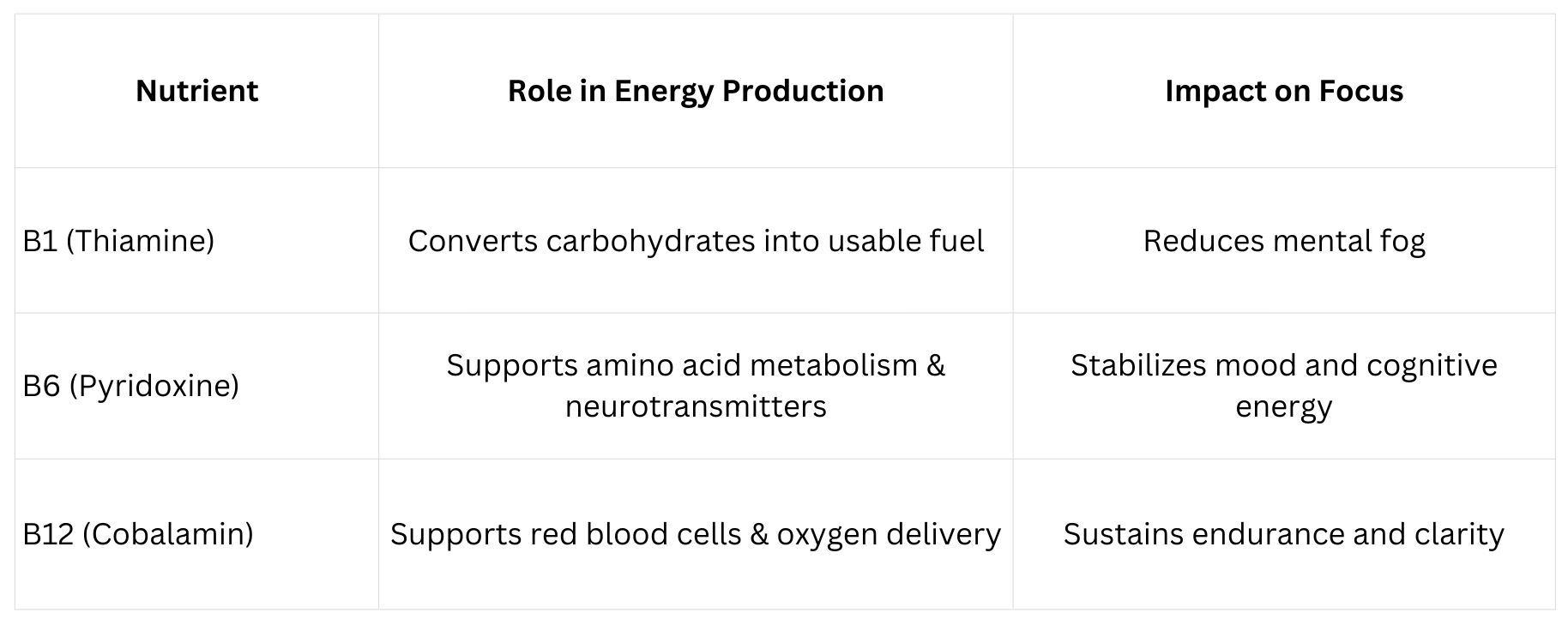
When these nutrients are present in optimal amounts, your body can transform lunch into lasting productivity rather than temporary fullness followed by fatigue.
The VBC Advantage
A high-quality Vitamin B-Complex (VBC) supplement provides a full spectrum of B vitamins in bioavailable forms, helping ensure that every meal you eat contributes to energy production rather than sluggishness. The goal is not stimulation. It’s optimization.
Caffeine forces alertness temporarily by stimulating the nervous system. B vitamins support the biochemical pathways that create real, sustained energy at the cellular level. One pushes the gas pedal. The other fuels the engine.
When your metabolism functions efficiently, the afternoon slump often fades—not because you’re wired, but because your cells are producing ATP effectively.
Common Signs of a Nutrient-Based Slump
Not all fatigue is created equal. A nutrient-based slump has a specific pattern, and once you recognize it, it becomes easier to address the root cause instead of masking the symptoms.
Feeling tired shortly after eating is one of the clearest signs. Instead of feeling fueled by your meal, you feel heavy or sleepy within an hour or two. This often happens when your body can break food down into glucose but struggles to efficiently convert that glucose into ATP. The result is a post-meal dip rather than sustained energy.
Brain fog in the early afternoon is another hallmark symptom. You may find yourself rereading emails, struggling to concentrate in meetings, or losing your train of thought mid-task. This isn’t necessarily about how much you ate; it’s about how well your mitochondria are producing cellular energy. When energy production is inefficient, the brain—one of the most energy-demanding organs in the body—feels it first.
Irritability or low motivation post-lunch can also signal a metabolic bottleneck. Energy metabolism and neurotransmitter production are closely connected, particularly through nutrients like B6 and B12. When these nutrients are suboptimal, mood and drive can dip alongside physical stamina. It’s not just physical tiredness; it’s a lack of mental momentum.
Dependence on caffeine for basic alertness is another clue. If you need coffee not as a performance enhancer but simply to feel functional, it may indicate that your natural energy pathways are under-supported. Caffeine stimulates the nervous system, but it doesn’t improve the biochemical conversion of nutrients into fuel. Over time, relying solely on stimulation can mask the underlying inefficiency.
Energy crashes despite adequate calorie intake round out the pattern. You’re eating enough—sometimes even more than enough—but your stamina doesn’t reflect it. This disconnect between intake and output suggests the issue may not be quantity of food, but quality of conversion. Without sufficient co-enzymes, particularly B vitamins, the metabolic machinery slows down, and energy release becomes uneven.
When these symptoms cluster together—post-meal fatigue, brain fog, irritability, caffeine dependence, and repeated crashes—it often points to a nutrient gap rather than a caloric one. In other words, your body may have the fuel, but it lacks the biochemical tools to efficiently use it. Addressing nutrient conversion supports the system that generates real, sustainable energy instead of chasing temporary stimulation.
Frequently Asked Questions
-
This may be due to reactive blood sugar shifts or insufficient B vitamins needed to metabolize glucose efficiently. Without proper enzymatic support, energy release becomes unstable.
The Bottom Line
The midday crash isn’t a character flaw, and it’s not proof that you need another cup of coffee. More often than not, it’s your body signaling that it lacks the micronutrient support required to efficiently convert food into usable energy. You can eat a perfectly balanced lunch and still feel foggy if the metabolic “spark plugs” aren’t firing properly. Energy doesn’t come from calories alone—it comes from your ability to transform those calories into ATP at the cellular level.
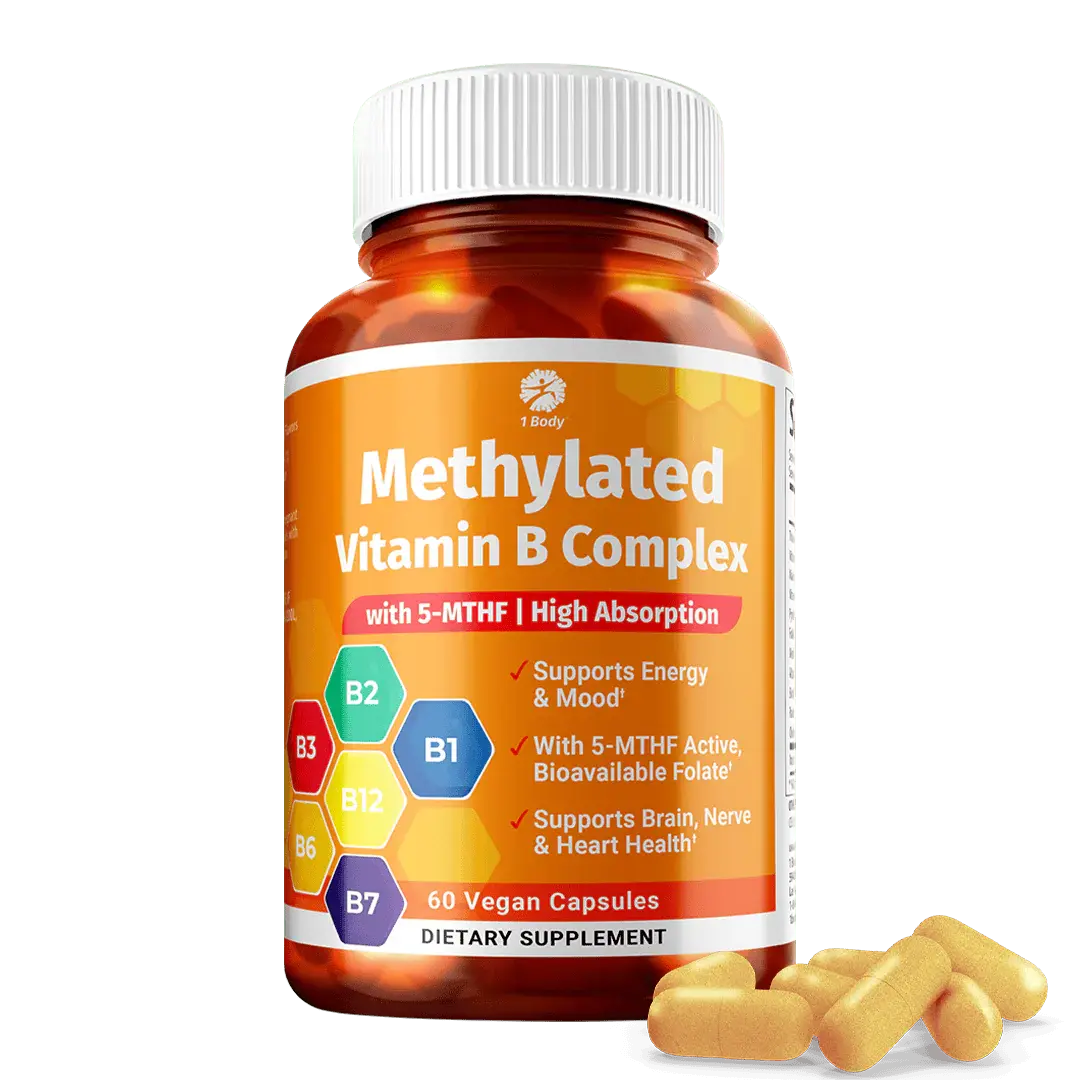
That’s exactly where 1 Body Methylated Vitamin B Complex (VBC) makes the difference. Formulated with bioavailable, methylated forms like 5-MTHF and active B12, VBC supports the enzymatic pathways that power real, sustained energy production. Instead of forcing alertness the way caffeine does, it helps optimize the chemistry that creates natural drive, clarity, and stamina. With key nutrients like B1 for carbohydrate metabolism, B6 for neurotransmitter balance, and B12 for oxygen transport and long-term vitality, VBC ensures your meals become momentum—not mental fog.
If you’re tired of chasing stimulation and crashing two hours later, it may be time to shift the strategy. Don’t just stimulate the nervous system—support the system that generates fuel. With a high-quality methylated Vitamin B Complex, the difference isn’t another espresso shot. It’s better metabolic chemistry working for you all day long.
For all general inquiries, please contact us at help@1body.com
© Copyright. All rights reserved.